

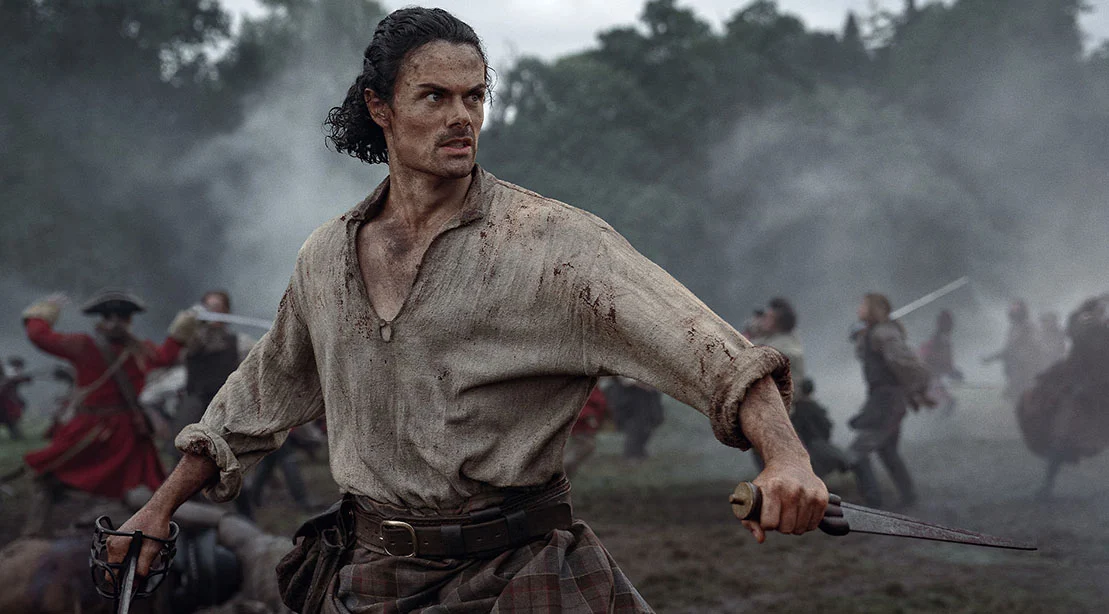
The world of prestige television demands more than just acting prowess; it requires an athlete’s discipline, a nutritionist’s precision, and the grit of a stunt performer. For Jamie Roy, the breakout star of Outlander: Blood of My Blood, the transition from a sculpted screen presence to a battle-hardened clan warrior was a calculated, multi-year endeavor. As Roy prepares to reprise his role as the formidable Brian Fraser for the highly anticipated second season, the actor has revealed the blueprint behind his physical transformation—a journey defined by scientific programming, functional strength, and the uncompromising guidance of Ultimate Performance coach Giulio Palau.
The Evolution of Brian Fraser: A Strategic Shift
When Jamie Roy first stepped into the boots of Brian Fraser for the series’ inaugural season in 2025, the objective was aesthetic precision. The character, defined by his youth and vitality, required a lean, chiseled physique that could hold the audience’s attention in high-definition close-ups. Under the tutelage of Palau, Roy focused on caloric restriction and muscle maintenance to achieve a low body fat percentage that highlighted his muscular definition.
However, Season 2 necessitated a paradigm shift. The narrative stakes have evolved, thrusting Brian Fraser into the center of visceral, high-stakes combat. With a script demanding intense sequences involving heavy weaponry and grueling physical confrontations, "looking the part" was no longer sufficient. Roy needed to be functionally explosive. The transition from the "heartthrob" aesthetic to the "warrior" build required more than just adding weight; it required adding mass that could endure the rigors of a film set while maintaining the mobility required for complex swordplay and combat choreography.
Chronology of a Transformation: From Fat Loss to Hypertrophy
The transformation of Jamie Roy was not a haphazard sprint to the gym, but a meticulously phased progression designed to manipulate body composition with surgical accuracy.
Phase I: The Lean Foundation
Before the heavy iron was introduced, the priority was establishing a baseline. Palau initiated a structured fat-loss phase, utilizing a calculated caloric deficit to bring Roy into the 10-12% body fat range. This phase was crucial for setting the "canvas" upon which the muscle would be built. By stripping away excess body fat, the team ensured that the subsequent mass-building phase would be as lean as possible, avoiding the pitfalls of "dirty bulking" that often plague actors rushing to prepare for a role.
Phase II: The Maintenance Equilibrium
Once the target body fat percentage was achieved, Roy entered a critical maintenance phase. This period allowed his body to stabilize at its new composition, preventing metabolic adaptation and ensuring that he remained in peak health. This phase served as a bridge, preparing his joints and central nervous system for the impending shift in volume and intensity.
Phase III: The Hypertrophy Surplus
Entering the current stage of production, Roy transitioned into a controlled caloric surplus. This is where the "buff" transformation truly took hold. By strategically increasing his intake to provide the building blocks for muscle tissue, Palau and Roy focused on hypertrophy—the physiological process of increasing muscle cell size. This was not about mindless weight gain; it was about feeding the muscles to support the increased intensity of his workouts.
The Science of the "Warrior" Physique
The success of Roy’s physique, according to Palau, lies in the fundamental principles of exercise science, stripped of fitness-industry fads. "His training plan focused on the fundamentals: every basic joint action trained every week," explains Palau. By prioritizing multi-joint movements—squats, hinges, pushes, and pulls—the pair ensured that Roy’s gains were rooted in compound exercises that offer the highest return on investment for both hypertrophy and strength.
Intensity as the Catalyst
Central to this phase was the concept of "Reps in Reserve" (RIR). Rather than training to absolute failure on every set—a method that often leads to burnout and injury—Palau utilized RIR to modulate intensity.
"For hypertrophy training, the specific rep ranges are secondary to the overall intensity of working sets," notes Palau. In the early weeks of a phase, the goal was to stay at 2–3 RIR, meaning Roy finished his sets with the capacity to perform two or three more reps with perfect form. As the weeks progressed, the intensity was scaled to 0–1 RIR. This progressive overload forced the body to adapt to increasing demands, stimulating muscle protein synthesis without crossing the threshold into overtraining.
The Standardized Technique Protocol
In an era of social media fitness, where "ego lifting" is rampant, Palau insisted on a rigorous standard of execution. Technique, he argues, is the only variable that allows for the accurate measurement of progress. To ensure Roy maintained this standard while filming on location, the actor employed a video-feedback loop. By sending footage of his working sets to Palau, Roy received remote coaching that allowed for real-time adjustments to his form. This collaborative process ensured that every repetition contributed directly to muscular development rather than joint stress.
Functional Implications: Why Muscle Matters
The transformation was not purely for the vanity of the screen; it was a professional requirement. The "Outlander" set is notoriously demanding, characterized by long hours, unpredictable weather, and the physical toll of wielding authentic, weighted props.
In a recent interview, Roy shared that the difference between his Season 1 and Season 2 performance was night and day. The additional muscle mass did more than just fill out his costume—it provided the structural integrity needed for "violent confrontations and sword-wielding high jinks." By increasing his functional capacity, Roy found that the physical exhaustion typically associated with long production days was significantly mitigated. His muscles were not just accessories; they were his armor.
Expert Perspectives: The Role of the Coach
The partnership between Roy and Palau underscores the importance of the athlete-coach dynamic in the entertainment industry. In an environment where actors are often subjected to crash diets and unsustainable training regimes, the approach taken by Ultimate Performance stands out for its longevity and health-first philosophy.
Palau’s professional perspective highlights a key takeaway for anyone seeking a physical overhaul: consistency is the primary driver of change. "Jamie is a great client because he is consistent and disciplined," Palau notes. The actor’s willingness to adhere to a structured protocol—regardless of the stresses of filming—was the deciding factor in the quality of the final result. Roy’s success serves as a blueprint for the modern actor: one who views their body as a tool that must be sharpened, maintained, and prepared for the specific challenges of the script.
Looking Ahead: The Premiere
As the premiere of Outlander: Blood of My Blood Season 2 approaches on September 18, 2026, audiences will be watching a performer who has invested deeply in the physical demands of his craft. The visual result of these hundreds of hours in the weight room will be on full display, but the true accomplishment lies in the discipline that remained unseen.
Jamie Roy’s evolution from the sculpted lead of Season 1 to the battle-ready warrior of Season 2 is a testament to the fact that, in Hollywood as in the gym, results are the product of consistent, intelligent, and focused effort. As he continues to share his journey with fans, he reinforces a powerful message: whether you are portraying a legendary clan leader or simply aiming for personal excellence, the foundation remains the same—intensity, form, and an unwavering commitment to the process.
For those interested in following Jamie Roy’s continued progress and behind-the-scenes insights, he remains active on Instagram, where he periodically documents the rigors of his training and his life on the Outlander set.
 Lina Hope
 rifanmuazin
 Laily UPN
