

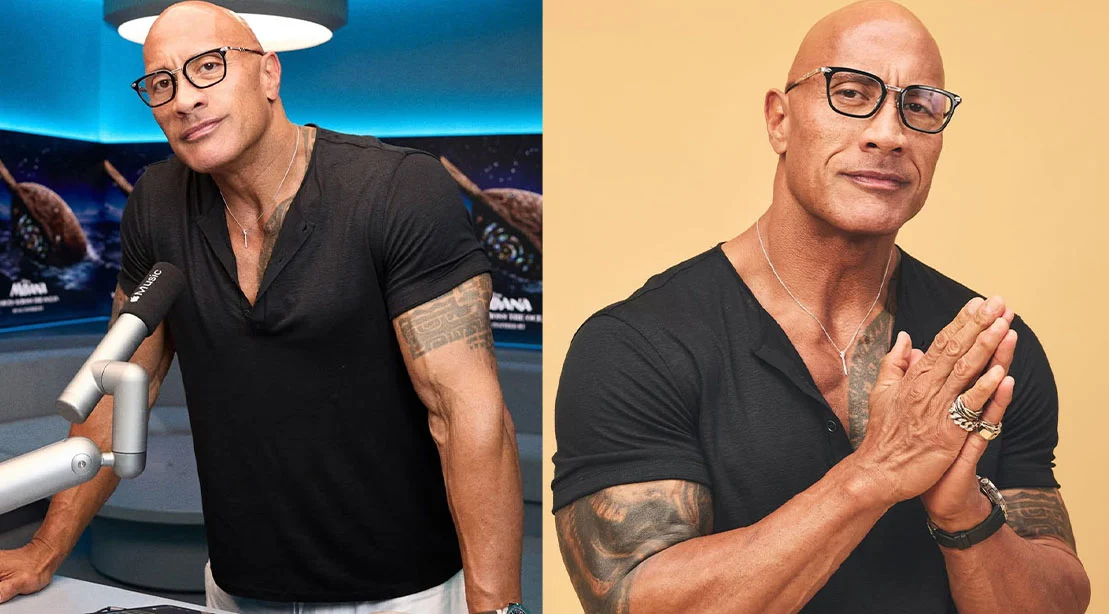
In the high-stakes world of Hollywood, physical transformation is often the price of admission for A-list actors. However, few performers navigate the extreme fluctuations of body composition with the transparency and discipline of Dwayne “The Rock” Johnson. Known for his legendary physique and status as a former WWE Champion, Johnson has once again shifted his physical landscape, shedding 50 pounds to transition from the raw, heavyweight intensity of a UFC icon to the mysterious, agile persona required for his latest project, Lizard Music.
The Main Facts: A Tale of Two Roles
The catalyst for this radical shift began with the 2025 production The Smashing Machine, a biographical drama directed by Benny Safdie. To embody the physicality of UFC legend Mark Kerr—a man defined by his formidable presence inside the Octagon—Johnson pushed his frame to a staggering 282 pounds. This was a period of deliberate hypertrophy, requiring a calorie surplus and a training regimen designed to build raw mass.
However, the industry is rarely static, and neither is Johnson’s career. Immediately following his work with Safdie, the duo reunited for the fantasy adventure Lizard Music. Based on the celebrated novel, the film follows a young boy named Victor who stumbles upon a hidden society of musical lizards. To portray “Chicken Man,” a pivotal and enigmatic guide in the story, Johnson required a leaner, more mobile, and physically grounded appearance. The result? A year-long, disciplined weight loss journey that brought him down to 235 pounds—a weight he has not sustained since his collegiate football days at the University of Miami.
Chronology: The Year of Metabolic Realignment
The process of dropping 50 pounds while maintaining the structural integrity of a professional athlete’s physique is a task that requires patience and metabolic precision. Johnson documented this journey for his 381 million Instagram followers, providing a roadmap for those interested in the science of body recomposition.
Phase 1: The Heavyweight Foundation (2024–2025)
During the filming of The Smashing Machine, Johnson’s objective was total mass. The training was centered around heavy compound movements, high-volume caloric intake, and a focus on recovery to sustain the 282-pound frame. This phase was about embodying the psychological and physical weight of a fighter.
Phase 2: The Transition and Taper (Early 2025)
As filming for The Smashing Machine concluded, the transition to Lizard Music began. Johnson did not resort to “crash dieting” or pharmaceutical shortcuts. Instead, he initiated a year-long, measured decline in body weight. This phase was marked by a shift in macronutrient distribution and a recalibration of his energy expenditure.
Phase 3: The Current Equilibrium (Present Day)
Now sitting at 235 pounds, Johnson reports feeling a level of vitality he hasn’t experienced in decades. By moving away from the extreme weight required for a heavyweight fighter, he has entered a phase of performance optimization, where the focus has shifted from raw size to metabolic health and functional longevity.
Supporting Data: The Science Behind the Cut
Dwayne Johnson’s approach to this weight loss provides a masterclass in sensible, sustainable fitness. In an era saturated with trending weight-loss medications and rapid-result fads, Johnson emphasized that his transformation was rooted in traditional, consistent physiological management.
Carbohydrate Partitioning
A core component of Johnson’s strategy involved the meticulous timing of his carbohydrate intake. Rather than eliminating carbs entirely, he focused on “partitioning”—consuming them strictly around his training windows. By fueling his workouts with glycogen and tapering off as the day progressed, he optimized his body’s ability to use energy efficiently, preventing unnecessary insulin spikes during sedentary periods.
The Elimination of Refined Sugars
Perhaps the most transformative change, according to the actor, was the absolute removal of refined sugars from his diet. For an athlete accustomed to a massive calorie surplus, this shift proved essential for managing inflammation and stabilizing blood glucose levels.
Strict Fat Management
Johnson kept his daily fat intake tightly regulated at 50 to 60 grams per day. By maintaining a lean, high-protein intake while strictly controlling fat and carbohydrate sources, he ensured that the weight lost was primarily adipose tissue (fat) rather than lean muscle mass.
Official Responses: The Philosophy of “You vs. You”
Johnson’s commentary on his journey has served as a beacon for his massive digital audience, many of whom have become increasingly concerned about the rise of celebrity reliance on prescription weight-loss tools.
“I wanted to take my time, drop the weight in a smart, wise, and healthy way—nothing extreme,” Johnson stated. His philosophy is grounded in the idea of “You vs. You,” a mantra that prioritizes internal benchmarks over external validation. By choosing the long road, Johnson has managed to avoid the common pitfalls of rapid weight loss, such as muscle atrophy, lethargy, and hormonal disruption.
The actor’s candidness regarding his health markers is particularly striking. He noted that at 235 pounds, he is experiencing:
- Improved Cardiovascular Health: Better endurance and heart rate recovery.
- Reduced Systemic Inflammation: A direct result of cleaner fuel and lower body fat.
- Joint Integrity: Less mechanical stress on his knees, ankles, and spine—an essential factor for a performer who continues to engage in high-intensity action sequences.
- Enhanced Insulin Sensitivity: A critical biomarker for long-term metabolic health.
Implications: The Shifting Standards of Hollywood
The public reaction to Johnson’s transformation highlights a growing appetite for authentic fitness journeys in the media. In a landscape where audiences are becoming increasingly skeptical of “instant” transformations, seeing a global superstar embrace a year-long, patient approach to health serves as a significant cultural counter-narrative.
Impact on Future Roles
By demonstrating the ability to move between vastly different physical states, Johnson has solidified his reputation as a character actor who is willing to undergo intense physiological changes for the sake of art. His willingness to drop 50 pounds suggests that his future project choices may lean more toward roles that require agility and nuance rather than just pure, intimidating size.
The Message to the Fitness Industry
The broader implication of this story is the validation of “tried and tested” methodologies. Johnson’s success at 52 years old proves that discipline, macronutrient awareness, and time-based progression remain the gold standard for body recomposition. It effectively challenges the “magic pill” narrative that has permeated modern wellness culture.
Furthermore, Johnson’s mention of feeling “light in the ass”—a humorous nod to his football days—reminds his audience that athleticism is not a static state. As the body ages, the definition of “peak performance” must evolve. By prioritizing inflammation reduction and metabolic health over pure mass, Johnson is setting a blueprint for longevity that his fans can emulate.
Conclusion: A Blueprint for Longevity
The transformation of Dwayne Johnson from 282 pounds to 235 pounds is more than just a casting requirement for Lizard Music. It is a comprehensive study in how an elite performer manages his most valuable asset: his body. By focusing on the fundamentals—nutrient timing, sugar elimination, and consistent, progressive training—Johnson has proven that even at the highest levels of fame, the laws of biology remain constant.
As he steps into the role of “Chicken Man,” he brings with him not only a new look but a refined sense of health. For his millions of followers, the takeaway is clear: the most impressive transformations are not the ones that happen overnight, but the ones that are built, day by day, with intention and integrity. In a world of shortcuts, The Rock continues to remind us that the most reliable path to success is the one that requires the most patience.
 Lina Hope
 rifanmuazin
 Laily UPN
