

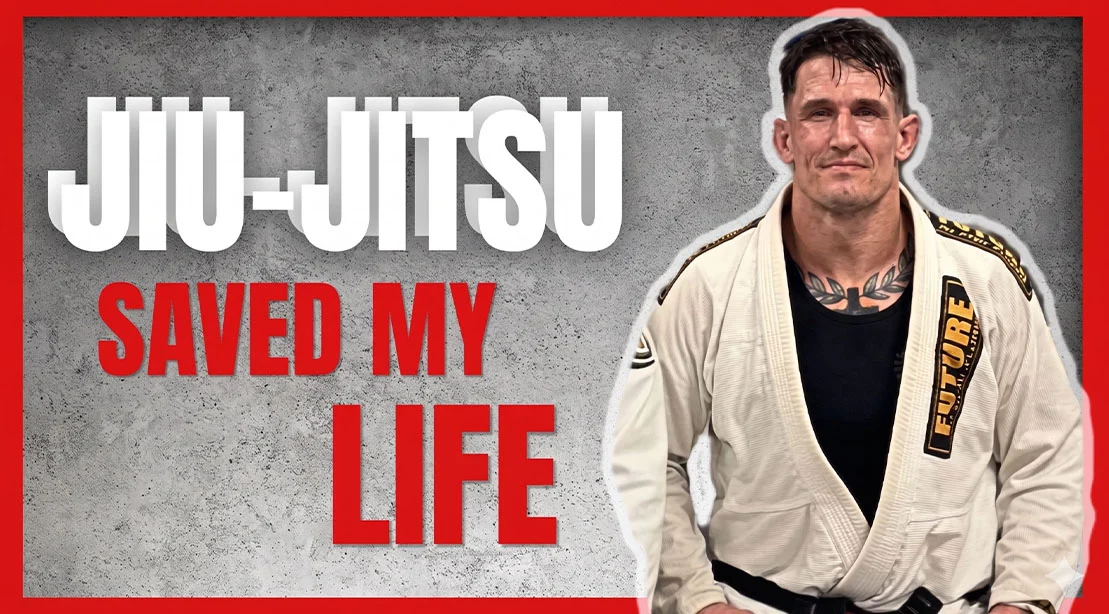
In the latest installment of the Fit to Serve podcast, host Tim Wilkins sat down with a man whose life trajectory serves as a masterclass in adaptation, perseverance, and the transformative power of community. Jeric Fry, a retired United States Marine and the visionary founder of the Veteran Bushido Brotherhood (VBB), shared a deeply personal narrative that transcends the typical veteran transition story.
Fry’s journey—from the grueling physical requirements of Marine Corps enlistment to the dark, isolating depths of civilian transition, and finally to the rebirth found on the jiu-jitsu mats—offers a profound roadmap for those navigating the often-turbulent path from service member to civilian. While the full interview on the Muscle & Fitness YouTube channel provides the complete emotional context, the following synthesis explores the critical milestones and lessons that defined Fry’s path.
The Path to Service: Reality Versus Expectation
For many young Americans, the decision to enlist is fueled by a desire for immediate action. Jeric Fry was no exception. Raised in a blue-collar household in western Pennsylvania, Fry possessed the work ethic necessary for military life, but he entered the recruiter’s office with a cinematic vision of his future. He anticipated immediate deployment and a rapid entry into the heat of combat.
The Crucible of Preparation
As Fry quickly discovered, the military machine operates on a cadence of meticulous preparation. There is no "fast track" to the front lines; rather, there is an exhaustive cycle of education, rigorous testing, and specialized training. Fry’s journey was characterized by a long, sustained period of preparation—a process that tested his patience as much as his resolve.
His upbringing in the industrial heartland of Pennsylvania had instilled in him a grit that proved invaluable during this time. However, even with that foundation, boot camp presented its own unique challenges. Reflecting on his initial physical state, Fry admitted, "I went there a little heavy. There was running every day and constant movement, constant cardio, but I got used to it." This transition into peak physical condition served as his first lesson in the necessity of adaptability—a trait that would later save his life during his post-military years.
The Weight of Responsibility: The Gunner’s Burden
The transition from a civilian mindset to that of a combat-ready Marine is not merely physical; it is an existential shift. For Fry, the stakes were never abstract. Serving as a gunner, he carried the heavy psychological load of knowing that the lives of his fellow Marines—and the success of mission-critical objectives—rested squarely on his shoulders.
The Reality of the War Zone
The gravity of his role truly crystallized when he found himself aboard a naval vessel, tasked with a high-stakes mission to rescue American citizens caught in the crossfire of a foreign conflict. Fry recalls the dissonance of the experience: "It was a legitimate war zone. We were sitting there in a beautiful sea, and buildings were disappearing."
In these moments, the abstract concept of "serving one’s country" evaporated, replaced by the immediate, visceral reality of combat. Throughout the podcast, Fry emphasizes that he frequently questioned his choices leading up to those moments. The pressure to be "great"—to be perfect, because a mistake meant death—created a mental environment of constant, high-octane alertness. This pressure, while necessary for the mission, created a neurological baseline that would prove difficult to downregulate once he returned home.
Fitness as an Anchor: The "Man Stuff" Mentality
Throughout his deployment, Fry found solace in the simple, rhythmic structure of military life. In an environment defined by chaos, the routine of working, lifting weights, and camaraderie provided a necessary ballast. Fry describes this period with a degree of nostalgia, labeling it "man stuff"—a shorthand for the raw, uncomplicated brotherhood he shared with his unit.
Generational Resilience
Fry’s commitment to physical fitness was not a newfound interest; it was a lineage. He recounts stories of his grandfather, a man who at 75 years old could still perform flyes with 75-pound dumbbells. This observation provided Fry with a profound, albeit indirect, lesson: physical health is not merely an aesthetic pursuit or a temporary hobby; it is a fundamental anchor for the human spirit.
"No matter what else fails in my life, fitness keeps me centered," Fry explained. This philosophy became the bedrock of his post-service life. When the world outside the military seemed to lack order, the iron remained predictable. This anchor allowed him to survive the darkest chapters of his transition.
The Silent Crisis: Navigating the Civilian Void
When Jeric Fry hung up his uniform, he faced a phenomenon common to many veterans: the loss of identity. Without the structure of the Corps, and lacking a college degree to pivot into the corporate world, Fry felt adrift. The transition from a highly regimented environment to the "every man for himself" culture of civilian business was jarring.
The Descent
The lack of purpose and community led to a cascade of negative outcomes, including depression, debilitating survivor’s guilt, and PTSD. Fry turned to alcohol as a coping mechanism, a common trap for those who have spent their formative years in high-stakes environments and suddenly find themselves in a quiet, mundane world.
He eventually found employment digging holes for a plumbing company, but the work did little to soothe his internal turmoil. "I was the coolest I was ever going to be at 25 years old," he reflected, highlighting the profound sense of stagnation he felt. He had gone from protecting lives in a war zone to digging trenches for pipes, a transition that felt like a regression of his very soul.
Reclaiming Purpose: The Barber Shop and the Mat
The turning point for Fry came when he decided to stop waiting for opportunities to be handed to him. Recalling his time as a barber at Quantico, he took a leap of faith. He walked into a local barbershop with his tools, refusing to take "no" for an answer. He returned repeatedly after his plumbing shifts until he was finally given a chair.
The Birth of the Veteran Bushido Brotherhood
The success he found as a barber was the spark, but the true catalyst for his healing was his introduction to Brazilian Jiu-Jitsu. On the mats, he encountered other veterans—men who were also struggling to navigate the civilian landscape.
This environment of shared vulnerability and mutual striving led to the creation of the Veteran Bushido Brotherhood (VBB). The VBB is more than a gym; it is a nonprofit organization dedicated to helping veterans reclaim their sense of self through the discipline of martial arts. For Fry, the VBB provided the mission he had been missing since his honorable discharge.
"I’m here to spread this message, not because I want to or because I have an ego, but because I have to," Fry explained. "Because it saves lives."
Implications: The Future of Veteran Support
The story of Jeric Fry serves as a critical case study for how we approach veteran integration in the United States. His experience highlights several key implications for future service members and the organizations that support them:
- Identity Must Be Proactive: Transition programs often focus on resume building and job placement. However, as Fry’s journey shows, the internal transition—the loss of the "warrior identity"—is the primary hurdle. Programs must prioritize mental health and community-building as much as professional development.
- The Necessity of Physical Community: The isolation of the civilian world is the enemy of the veteran. Whether through sports, martial arts, or group fitness, the "anchor" of physical activity is most effective when practiced within a group of peers who understand the unique psychological burden of service.
- Self-Initiated Opportunity: Fry’s decision to walk into a barbershop with his tools is a powerful metaphor. While systemic support is vital, the individual must also be empowered to create their own "mission" in civilian life.
Conclusion
Jeric Fry’s transformation from a lost, struggling veteran to a community leader illustrates the potential for healing even after hitting rock bottom. By blending the discipline he learned as a Marine with the community he fostered through the Veteran Bushido Brotherhood, Fry has proven that the skills required to survive the battlefield—adaptability, physical conditioning, and brotherhood—are the very same skills required to master the civilian experience.
For those looking to understand the complexities of the veteran experience, or for veterans seeking a way to re-center their own lives, the full Fit to Serve interview with Tim Wilkins is an essential resource. It stands as a testament to the fact that while the war may end, the fight to build a meaningful, purposeful life is a lifelong engagement—and one that is best fought together.
 Lina Hope
 rifanmuazin
 Laily UPN
