

By Rhea Nayyar
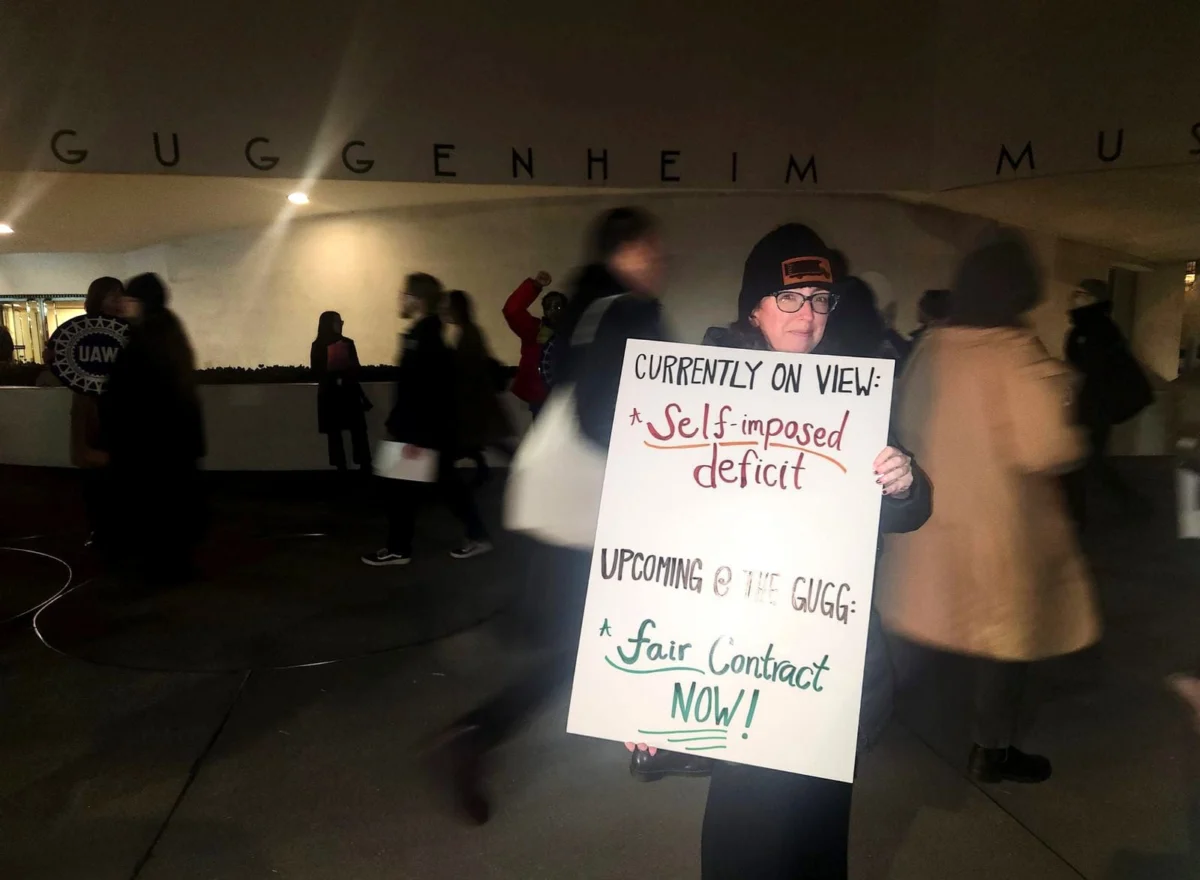
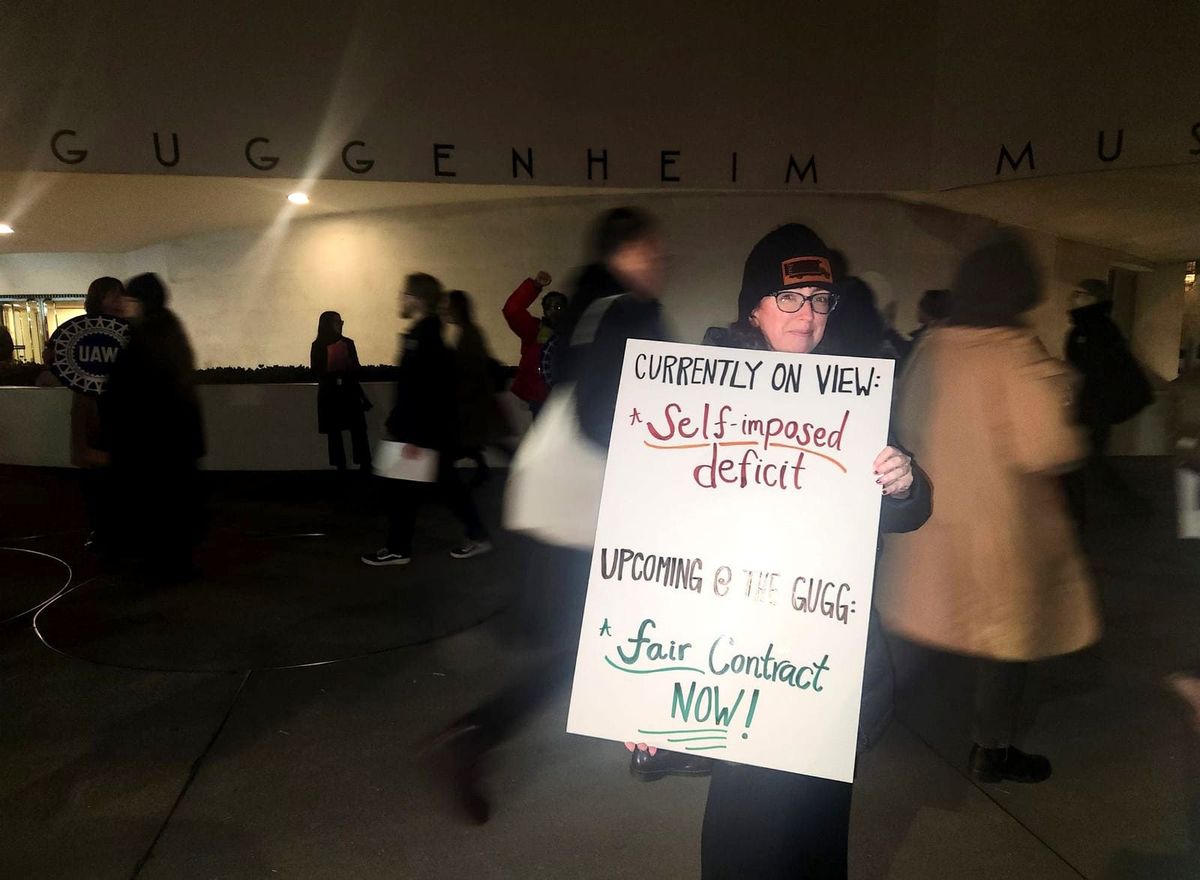
As negotiations for a second collective bargaining agreement enter their sixth month, the labor atmosphere at the Solomon R. Guggenheim Museum in New York City has reached a critical juncture. Unionized staff, organized under UAW Local 2110, have voted to authorize a strike, signaling a deepening rift between the institution’s rank-and-file employees and its executive leadership. The vote comes as a direct response to what staff describe as stagnant wages, unsustainable healthcare costs, and a precarious working environment following a wave of abrupt layoffs last year.
The Catalyst: A History of Institutional Instability
The current tension is rooted in the events of February 2025, when the Guggenheim Museum abruptly laid off 20 employees. The decision, which sent shockwaves through the museum’s workforce, impacted 14 unionized positions and was executed with little warning.
For the union, the layoffs were not merely a fiscal necessity, but a breach of professional standards. Drew Reynolds, a museum educator and union chair, described the process as “chaotic.” According to testimonies from those affected, staff members were escorted from the premises without advance notice and were denied the benefit of union representation during the termination process.
The immediate aftermath of these cuts placed a significant burden on the remaining workforce. “The cuts to staff created hardships for those of us remaining because we were forced to pick up a lot of extra work,” Reynolds explained in a press statement. “Workers took the brunt of the cuts while museum leadership did not give up a penny in their salaries.”
This sentiment of inequity has become the central pillar of the union’s current bargaining strategy. The union has since filed a formal grievance with the National Labor Relations Board (NLRB), seeking not only accountability for the 2025 terminations but also legally binding protections to ensure that future restructuring efforts cannot be conducted with the same lack of transparency or security.
Chronology of Negotiations
The struggle for a second contract has been a protracted affair, beginning in earnest this past December. Since that time, the bargaining committee has sought to secure improvements that address both the emotional toll of the layoffs and the economic realities of living in New York City.
- December 2025: Formal negotiations for the second contract begin between UAW Local 2110 and Guggenheim management.
- February 2026: The union continues to press for job security measures following the one-year anniversary of the 2025 layoffs.
- March 2026: Tensions peak during the VIP reception for artist Carol Bove’s solo exhibition. Union members hold a highly visible rally outside the museum, highlighting the disparity between the opulence of the event and the financial struggles of the staff behind the scenes.
- May 2026: With bargaining progress stalling, the union membership holds an official strike authorization vote. The authorization passes, granting the committee the power to call for a work stoppage if the museum does not present an acceptable final offer.
The Economic Divide: Data and Disparity
At the heart of the standoff is a fundamental disagreement over compensation. The Guggenheim’s current proposal is a four-year contract featuring a 3% pay increase retroactive to January, followed by 2.75% increases for the subsequent three years.
The union’s bargaining team, however, has rejected these figures as insufficient. Their argument is grounded in objective economic data. With New York City’s current inflation rate hovering at 5.1%, the museum’s proposal would effectively result in a wage cut in real terms. Furthermore, the union points out that the cost of living in the city has far outpaced the proposed annual adjustments.
According to data released by the Mayor’s Office in early 2026, the minimum income required for a single adult with no children to survive in New York City is $70,334. Data from the union indicates that over half of the Guggenheim’s workforce currently earns less than $71,000 annually. Meanwhile, entry-level positions remain beneath the $50,000 threshold.
The union is countering with a demand for a three-year agreement: a 5% retroactive increase for 2026, followed by 4.25% annual increases for the remaining two years. They argue these figures are necessary to keep pace with inflation and the rising cost of living, which has been exacerbated by soaring healthcare premiums.
The union is also pushing for a “modest reduction” in healthcare costs for employees earning less than $75,000. Currently, annual coverage for a single adult begins at $1,600, a figure that balloons to nearly three times that amount for staff supporting families.
The Optics of Executive Leadership
The friction is compounded by the Guggenheim’s recent hiring decisions. While the rank-and-file staff grapple with stagnant wages, the institution has proceeded with significant executive-level recruitment. Most notably, the Foundation recently appointed Melissa Chiu as the museum’s incoming director, a role she is slated to assume this September.
To many union members, these high-level investments represent a failure of leadership to prioritize the museum’s most valuable asset: its people. The contrast between the search for elite administrative talent and the refusal to meet cost-of-living standards for educators, archivists, and security staff has served as a primary talking point for the union during its public outreach.
Official Responses and Stances
In an official statement provided to Hyperallergic, a spokesperson for the Guggenheim maintained that the museum remains committed to the process. “The museum is currently at the bargaining table to negotiate in good faith towards a renewal of the contract,” the spokesperson said, adding that both sides have reached an agreement on “a number of issues.”
However, the tone from the museum management stands in stark contrast to the urgency felt by the employees. Anton Sherin, a museum archivist, captured the frustration of his colleagues, noting that while the staff remains deeply committed to the cultural mission of the Guggenheim, the current financial model is simply unsustainable. “We need management to understand that what they are offering is not enough to support the people who make this institution run,” Sherin said.
Future Implications: The Broader Cultural Landscape
The standoff at the Guggenheim is part of a larger trend of labor unrest within the American museum sector. From the Philadelphia Museum of Art to the Whitney and the Museum of Modern Art, cultural institutions are facing a wave of unionization as staff demand a larger share of the resources they help generate.
If the Guggenheim union decides to exercise its strike authorization, the impact would be felt immediately. A walkout would likely disrupt operations during the height of the summer exhibition season, impacting visitor services, education programming, and the day-to-day maintenance of the museum’s world-renowned collections.
More importantly, a strike would mark a symbolic shift in the power dynamic between museum boards and the workers they employ. As the institution prepares for the transition to new leadership under Melissa Chiu, the resolution of this contract dispute will serve as a bellwether for the future of labor relations at the Guggenheim. For now, the museum’s leadership and the union remain at an impasse, with the prospect of a strike looming over one of the world’s most prestigious art institutions. The coming weeks will determine whether the Guggenheim can bridge the gap between its public-facing image of excellence and its internal obligations to its workforce.
 Muslim
 Evan Lee Salim
 Jia Lissa
