

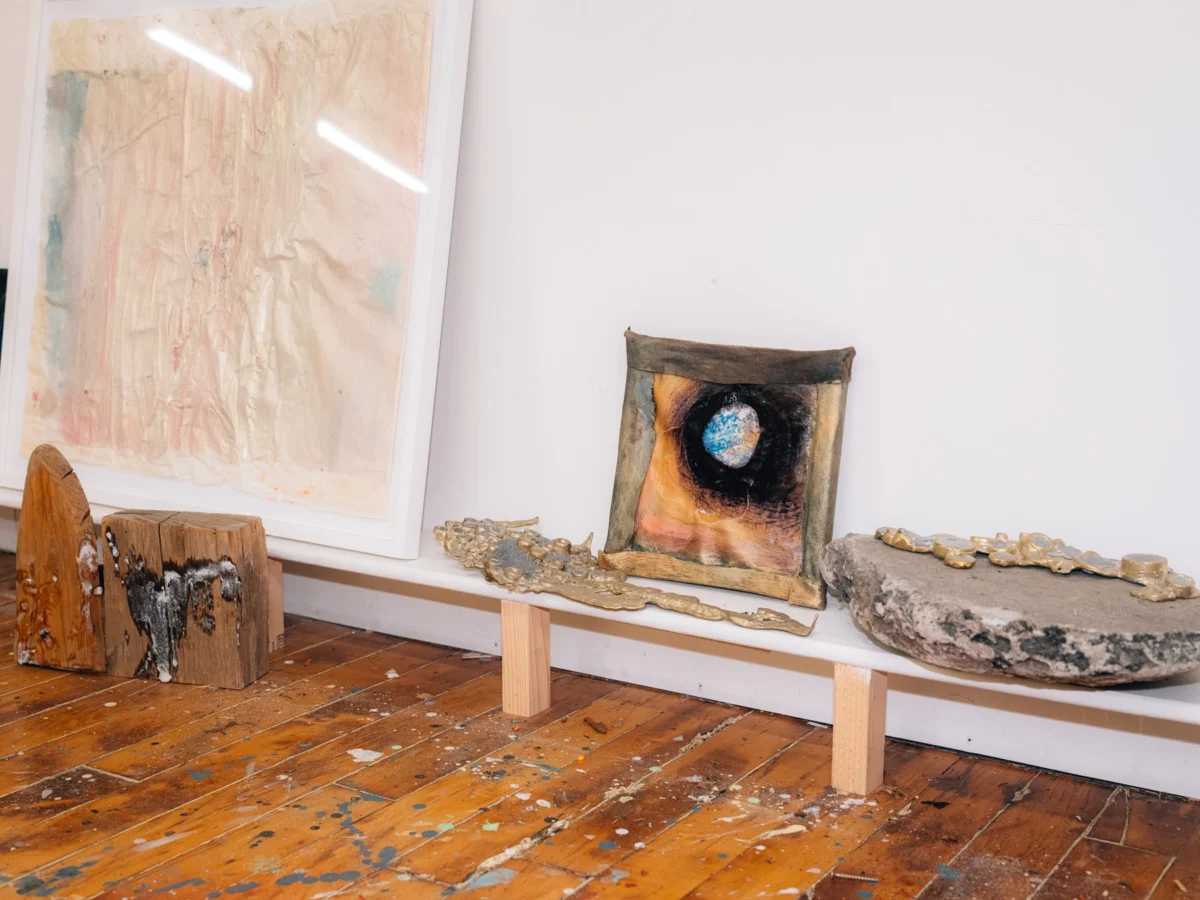
Welcome to the 356th installment of A View From the Easel, an ongoing series offering an intimate look into the physical and mental sanctuaries where artists bring their visions to life. In this feature, we journey to Brooklyn, New York, to explore the expansive, multi-faceted workspace of multidisciplinary artist Lara Saget—a haven complete with heavy machinery, towering piles of stones, a dedicated "rock room," and, quite fittingly, a mini trampoline to keep the creative spirit buoyant.
Main Facts
Lara Saget is a Brooklyn-based multidisciplinary artist whose ambitious practice spans glass, stone, metal, painting, and large-scale installation. Working out of a dynamic, communal industrial space in the borough, Saget has spent nearly a decade cultivating a studio environment capable of handling immense physical demands. Her workspace is a study in contrasts: it houses heavy-duty industrial equipment—such as a freight elevator capable of bearing thousands of pounds of stone—alongside serene, meditative zones dedicated to painting and spiritual reflection.
Saget earned her MFA from New York University in 2018, immediately establishing the shared Brooklyn studio space alongside five graduate school peers. Over the last eight years, as those original collaborators transitioned out, Saget gradually expanded her footprint to claim roughly two-thirds of the expansive workshop. Today, her studio serves as a microcosm of New York’s resilient artistic community, functioning simultaneously as a laboratory for material experimentation, a sculpture warehouse, and a personal sanctuary.
Chronology: From Bedroom Resin to Industrial Sanctuaries
Understanding Saget’s current practice requires looking back at the evolution of her working life over the past two decades.
- The Early Explorations (Mid-2000s): Reflecting on her early twenties, Saget is candid about the hazards of her initial artistic endeavors. Working without the benefit of a professional studio space, she once mixed parts A and B of industrial resin inside her residential bedroom—a practice she now recalls with a mixture of embarrassment and profound relief that safety standards were miraculously navigated.
- Entering the Formal Workspace (2013): Saget began renting her first professional studio spaces in 2013, marking a crucial turning point in her relationship with material safety, scale, and dedicated creative routine.
- Graduation and Collective Buildup (2018): Fresh out of NYU’s MFA program in 2018, Saget and five classmates secured a raw industrial space in Brooklyn. Together, they physically constructed the infrastructure of their environment from scratch—building interior walls, storage units, a makeshift gallery space, and a kitchen.
- Expansion and Consolidation (2018–Present): Over the ensuing eight years, as original studio-mates moved on to other ventures, Saget assumed control of larger portions of the floor plan. She eventually claimed approximately two-thirds of the total square footage, allowing her to curate distinct functional zones, including her prized "rock room." Parallel to her studio expansion, Saget has pursued a Master of Divinity at the Center For Religion and Advanced Spiritual Studies, seamlessly blending her rigorous physical sculpting practice with deep spiritual inquiry.
Supporting Data & Studio Infrastructure
Saget’s workspace is optimized for heavy, collaborative, and cross-disciplinary art-making. Key elements of her studio ecosystem include:
- Zoned Layout: The studio is divided into distinct, purpose-built stations. These include a dedicated painting section, a glasswork staging area, the specialized "rock room," and a miscellaneous wildcard zone capable of housing oversized props like large inflatable trees.
- Weight Capacities: Because Saget frequently incorporates heavy stone, raw minerals, and large glass components into her pieces, industrial infrastructure is non-negotiable. The building’s robust freight elevator—rated to carry thousands of pounds—is vital for transporting heavy materials safely to and from her floor.
- Collaborative Networks: Working heavily in glass inherently demands a team-based approach. Glass requires multiple artisans to coordinate simultaneously under high-heat, high-stakes conditions. Saget’s large-scale output relies on a tight-knit network of specialized craftspeople, many of whom have transitioned into lifelong friends.
- Daily Routine: A typical workday begins well before she crosses the threshold of the studio. Saget prioritizes mental and physical preparation through morning meditation and exercise, arriving at her Brooklyn workspace by the late morning.
Official Reflections and Studio Philosophy
In interviews detailing her creative ecosystem, Saget places immense emphasis on gratitude, safety, and the psychological dimensions of space.

"I can’t put in words how grateful I am to be a working artist in New York with a studio and proper PPE," Saget notes, reflecting on the stark contrast between her current professional setup and her early days mixing toxic resins at home.
Her relationship with materials—particularly glass—serves as a metaphor for her artistic philosophy. "My favorite art material is glass," she explains. "It is an amorphous solid or liquid depending how you think about it. I love that state change is inherent in its composition. It’s alive in a sense."
The studio also serves as a reflection of her inner life. While executing physically demanding labor, such as hauling rocks or operating heavy machinery, Saget favors high-energy "pump-up" music. However, during the more contemplative acts of painting, her auditory landscape shifts to satsangs—spiritual instruction audio tracks delivered by her spiritual teacher as part of her theological studies.
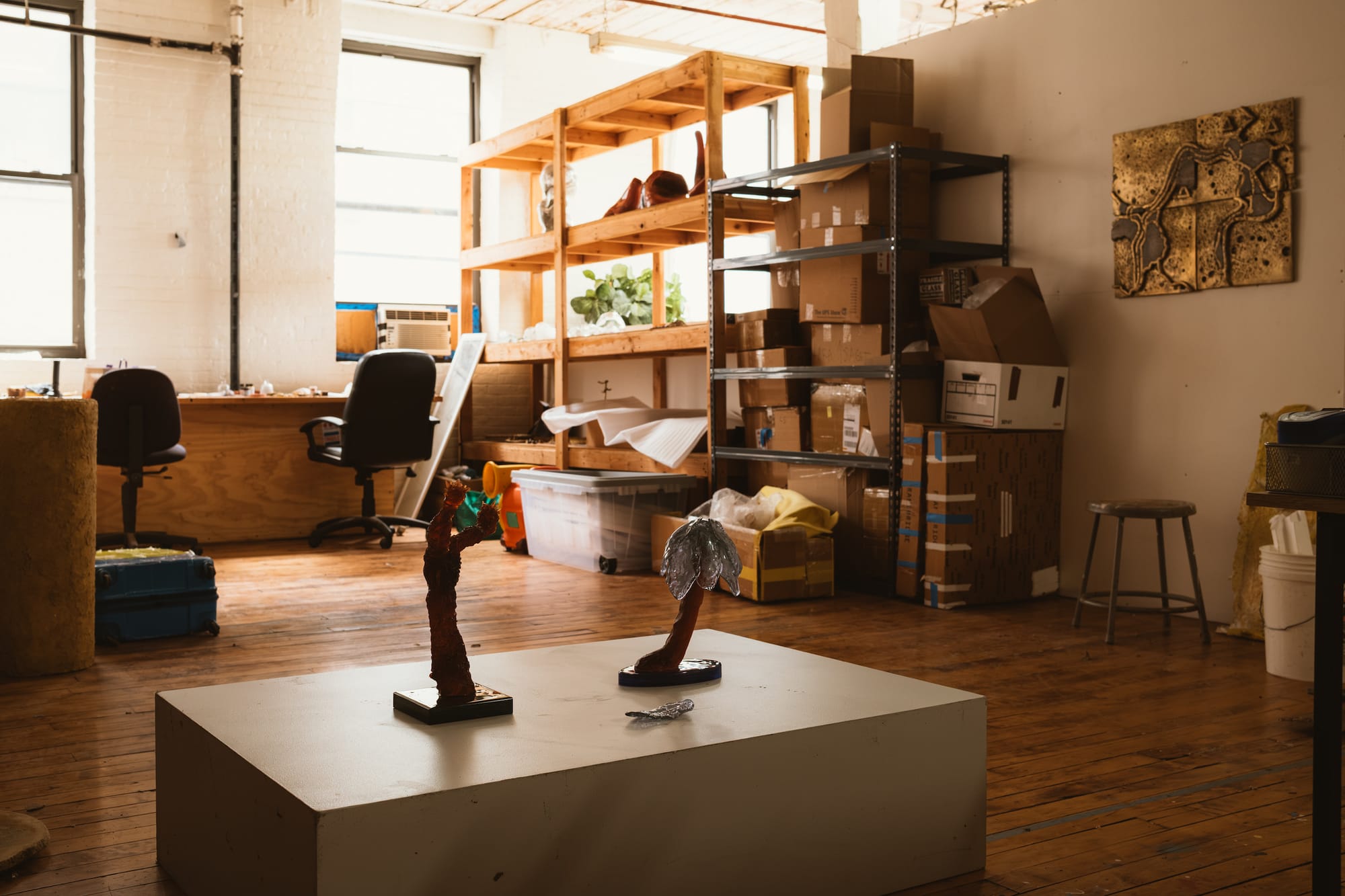
Yet, amid the heavy machinery and rigorous academic pursuits, levity remains a core pillar. Tucked away among the rocks and industrial tools is a mini trampoline. "It’s a reminder to stay playful," Saget says.
Implications for the Contemporary Art Community
Lara Saget’s studio practice highlights several broader themes within the contemporary New York art scene:
The Survival of Collective Spaces
In a city where real estate pressures continuously squeeze out affordable working spaces for creatives, Saget’s trajectory illustrates the resilience of artist-built communities. By pooling resources and sweat equity right out of grad school, Saget and her peers carved out a sustainable ecosystem that has endured for nearly a decade. The organic expansion of her footprint underscores the necessity of flexible, long-term studio tenures for artists aiming to scale up their sculptural practices.
The Intersecion of Materiality and Mindfulness
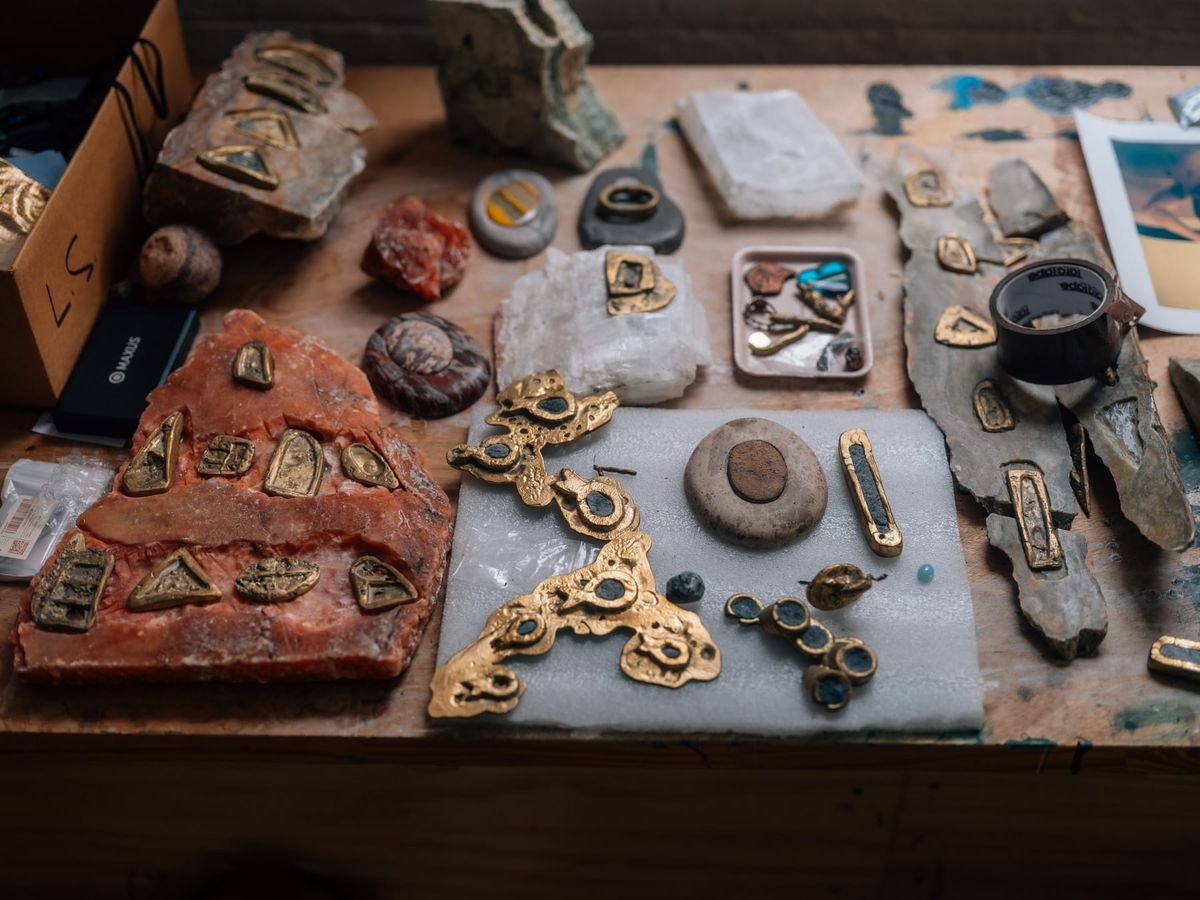
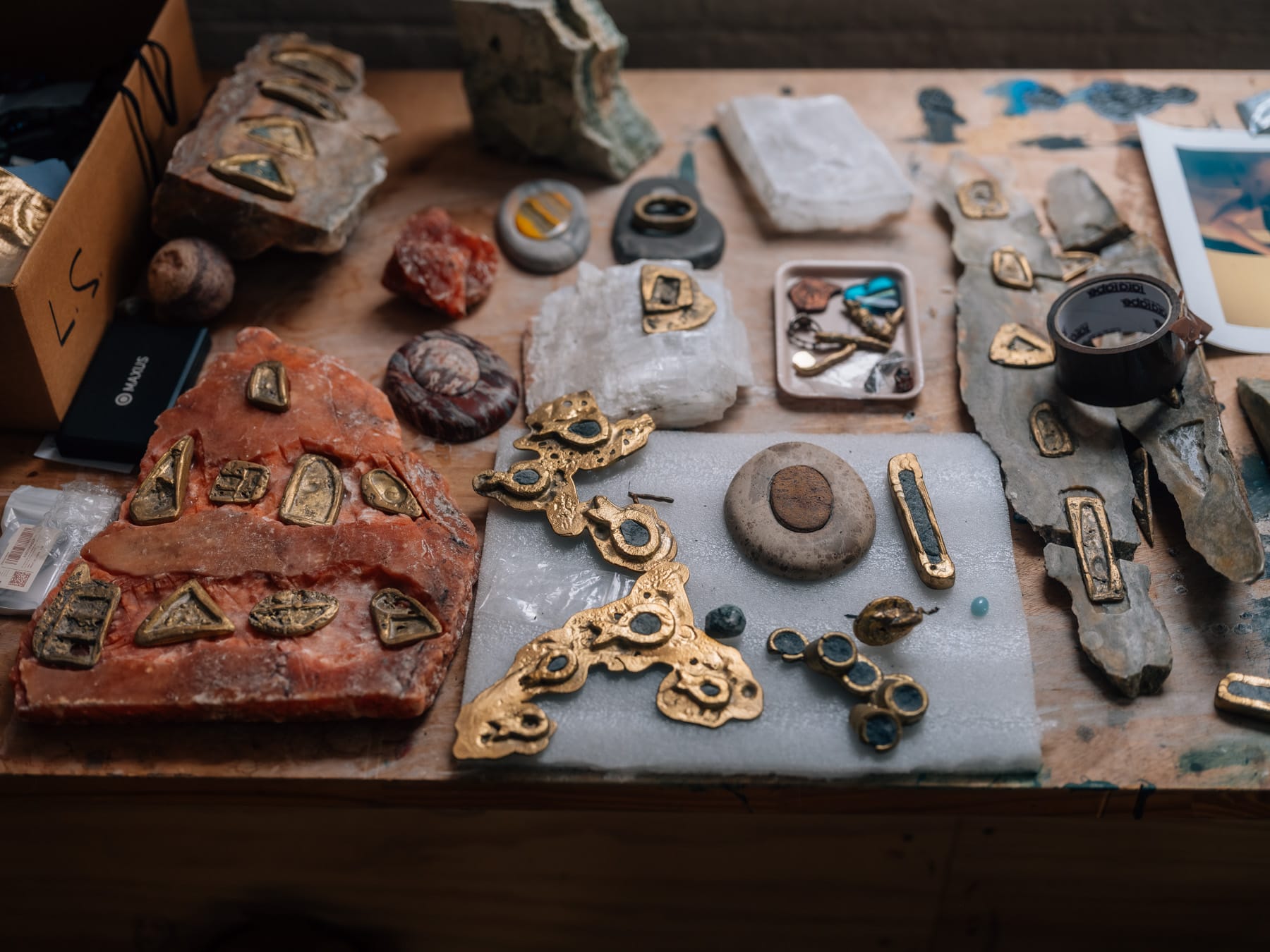
Saget’s simultaneous pursuit of sculptural mastery and a Master of Divinity points to a growing movement among contemporary artists who view material practice as an extension of spiritual and philosophical inquiry. The alchemy of glass—shifting between liquid and solid—mirrors the internal transformations sought through meditation and theological study. By housing ancient geological relics alongside modern industrial equipment, her studio becomes a bridge between deep time and present-day creation.
As Saget continues to haul stone, collaborate with master glassblowers, and bounce on her studio trampoline, her workspace stands as a testament to what is possible when artistic rigor meets unyielding curiosity and community solidarity.
 Basiran
 Muslim
 Evan Lee Salim
