

By Stephanie Wambugu
Art Review
Main Facts
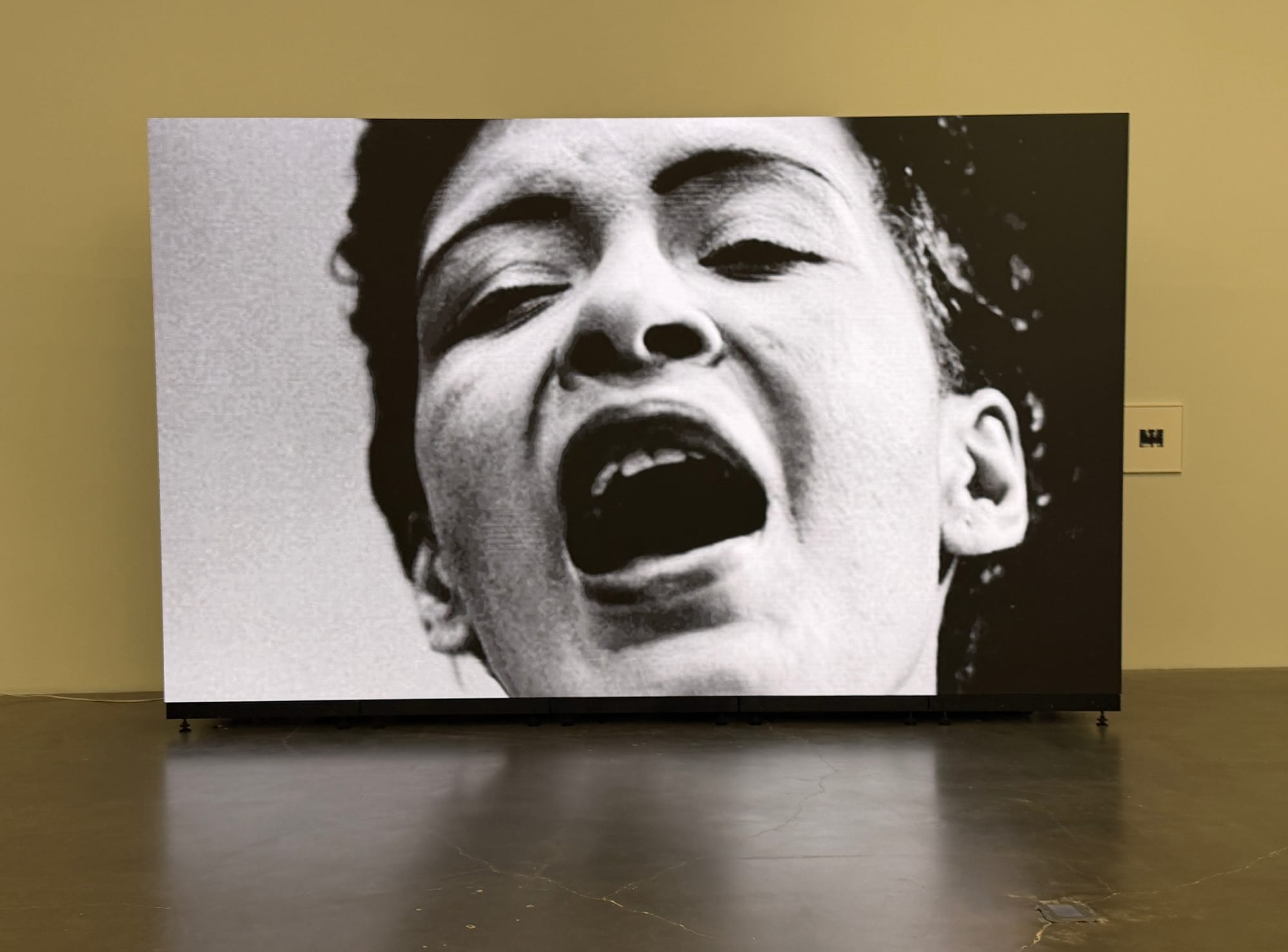
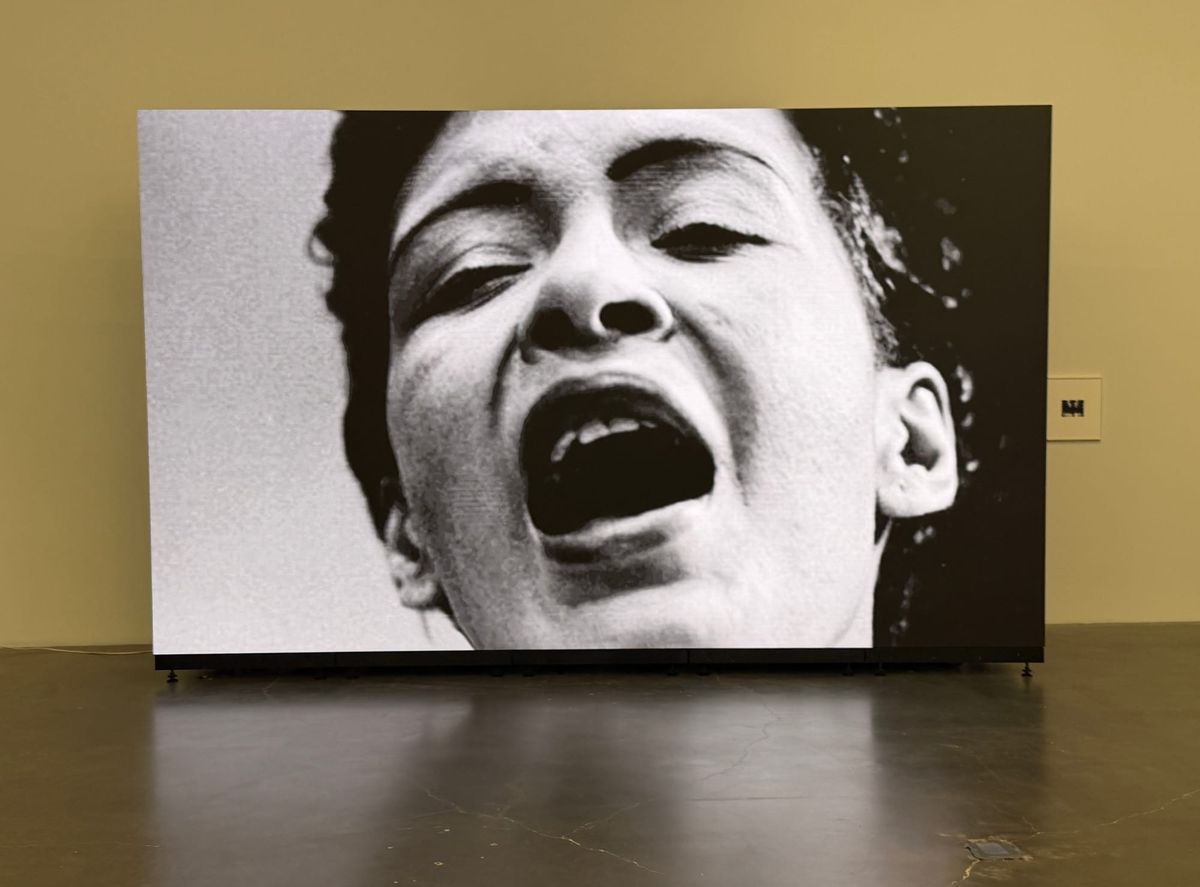
Arthur Jafa, one of the most vital and influential contemporary artists and filmmakers working today, has returned with his largest museum survey to date. Titled I Am Tony and currently occupying two sprawling levels of the New Museum in Lower Manhattan, the exhibition pushes Jafa’s boundary-breaking practice into increasingly brash, idiosyncratic territory.
While Jafa initially cemented his global reputation through groundbreaking video works that seamlessly splice together historical footage, cinematic masterpieces, and viral digital detritus, I Am Tony ventures far beyond traditional video art. The densely packed survey showcases an eclectic array of mediums—including massive wall-to-wall photographic installations, archival appropriations, and sculptural gestures—that interrogate the fault lines of collective memory.
Marked by his characteristic gallows humor, the exhibition ironizes morbid imagery while elevating the raw solemnity of low culture. Jafa’s recurring thematic preoccupations are present in full force: the foundational and complex history of Black music, the duality of religion and secularism, the visual mythos of American cinema, systemic political violence, vernacular popular culture, and the accelerative velocity of the internet. Through these lenses, Jafa proves himself to be an artist uniquely gifted at pushing collage and assemblage to dizzying new heights.
Chronology
To understand the trajectory of I Am Tony, one must trace the evolution of Arthur Jafa’s career, which has consistently bridged the gap between avant-garde cinema, mainstream music video production, and fine art institutions.
- Early Career and Cinematography (Late 20th Century): Jafa first gained widespread acclaim as a visionary cinematographer, notably working on Julie Dash’s cinematic masterpiece Daughters of the Dust (1991). His distinct visual grammar established early on a fascination with the fragmented, polyrhythmic nature of Black visual culture.
- The Breakthrough of Video Collages (2010s): Jafa transitioned deeply into contemporary art spaces, culminating in his seminal seven-minute video work Love Is the Message, the Death Is the Message (2016). Set to Kanye West’s "Ultralight Beam," the work synthesized decades of African American triumph and tragedy into a viral masterpiece, catapulting Jafa to international prominence.
- Historical Grounding and Archival Digging (Late 2010s–2020s): Over the past decade, Jafa’s practice expanded into immersive spatial installations, incorporating historical wallpaper prints, found objects, and vernacular photography. Works like his 1899-dated, 2017-printed wallpaper Allegiance signaled a deeper dive into historical archives.
- Present Day (Fall 2026): The opening of I Am Tony at the New Museum marks a culmination of these decades-long investigations, presenting Jafa’s largest institutional survey to date and expanding his vocabulary to engage directly with contemporary geopolitical horrors and internet-era virality.
Supporting Data & Exhibition Breakdown
The exhibition space at the New Museum is utilized to its absolute limits, enveloping the viewer in a sensory and psychological landscape where historical trauma meets popular meme culture.
"Allegiance" (1899/2017)
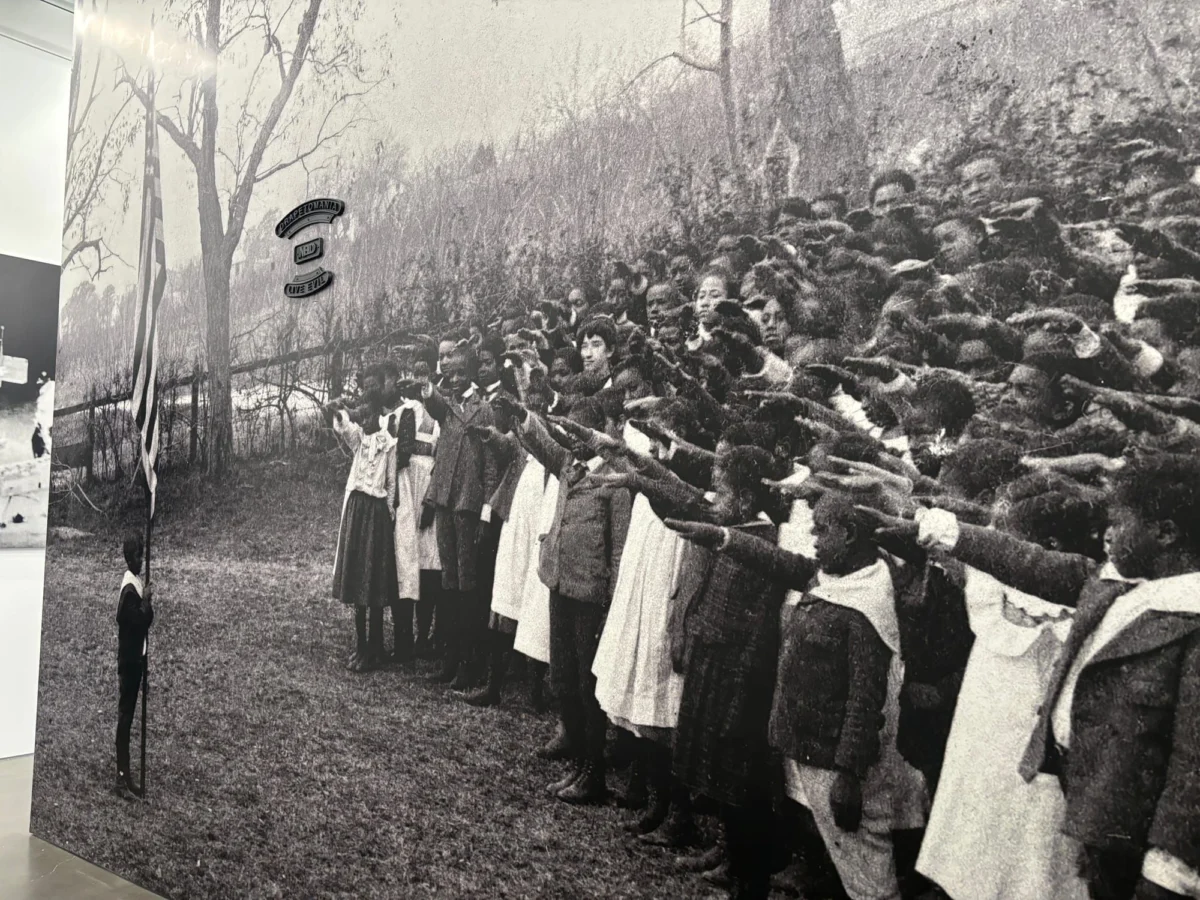
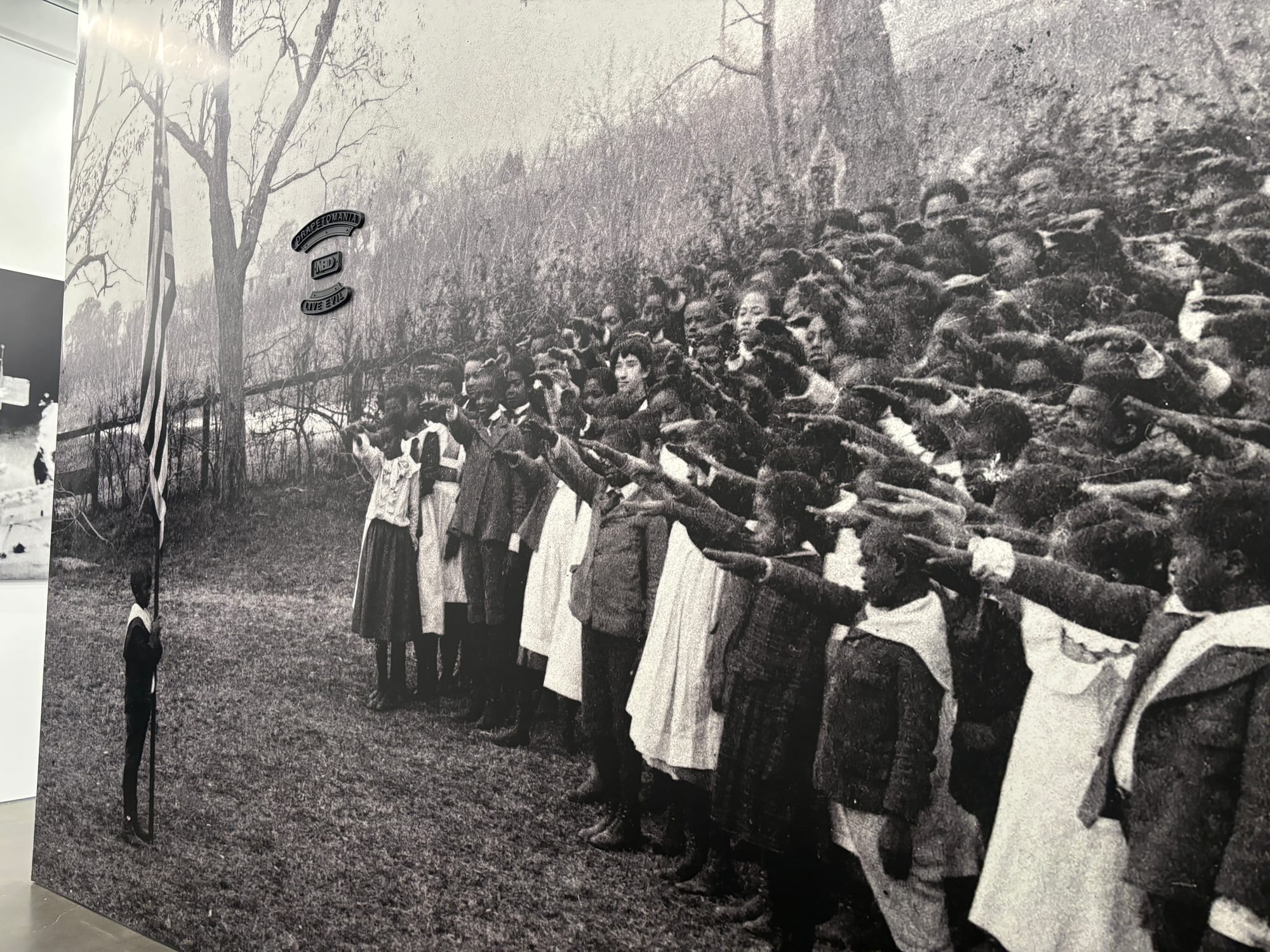
Upon entering one of the primary exhibition levels, visitors are immediately confronted by Allegiance. Spanning the wall from edge to edge, the monumental black-and-white print depicts a crowd of 19th-century Black schoolchildren. The children are captured performing what appears, at first glance, to be a "Sieg Heil" salute, complete with a young boyish flag-bearer positioned in the left quadrant.
The presence of the American stars and stripes clarifies the image’s vernacular origins: it is a blown-up, archival photograph of a patriotic ritual that predated the ideological weaponization of the gesture by 20th-century European fascism. The image possesses a spectral, grainy texture. The somber expressions of the children create a profound melancholia. As explanatory wall texts note, the gesture was once a customary way of honoring the American flag. Yet, the work derives its devastating power precisely from our retrospective knowledge of what that exact physical posture came to signify decades later in Nazi Germany. It is a masterclass in how context alters meaning, utilizing shock and historical juxtaposition to disorient the viewer.

"Rwanda, 1999" (2026)
Another arresting wallpaper installation, Rwanda, 1999, anchors a separate gallery wall. The piece features a photograph taken by Jafa himself at the Murambi Genocide Memorial in Rwanda, capturing the site five years after the horrific 1994 genocide. Scattered across the museum wall are the blood-stained, dirt-caked garments of the victims, preserved in situ as testaments to human cruelty.
While the wall text focuses strictly on the historical context of the Rwandan genocide, the visual resonance extends far beyond 1999. In the current socio-political climate, it is impossible to stand before the wall without thinking of contemporary atrocities, most notably the ongoing destruction and mass casualties in Gaza. Though unspoken in the official curatorial text, this poignant cross-historical parallel feels deliberate, underscoring Jafa’s uncanny ability to make history feel urgently, uncomfortably present.
Virality, Memes, and the Low-Culture Sublime
What sets Jafa apart from his contemporaries is his intuitive grasp of digital vernaculars. Long before "meme literacy" became a critical buzzword in the art world, Jafa understood how digital culture circulates affect. His eclectic references draw equally from high-art film theory, Black church traditions, YouTube rabbit holes, and viral TikTok trends. By treating a TikTok dance with the same analytical seriousness as a Renaissance painting—and conversely, treating a genocidal archive with the dizzying speed of a social media scroll—Jafa collapses the traditional hierarchies of culture.
Official Responses and Curatorial Perspectives
The New Museum’s mounting of I Am Tony has generated significant discourse within the New York art scene. Curators and critics have lauded the institution for granting one of America’s most daring living artists the space to realize his most ambitious project to date.
In statements surrounding the exhibition’s opening, museum representatives highlighted Jafa’s capacity to challenge passive viewing. "Arthur Jafa does not allow his audiences to remain comfortable," notes one curatorial overview. "He forces an active confrontation with the materials that construct our collective imagination—both celebratory and catastrophic."
Critics, however, have noted the overwhelming, almost suffocating nature of the survey. The density of the installation—spanning two floors of aggressive historical imagery, high-decibel soundscapes, and sprawling visual references—creates an environment that can feel intentionally exhausting. Reviewers have pointed out that while the exhibition achieves its lofty ambitions with "mixed results" in terms of pacing, these very friction points are central to Jafa’s artistic ethos. He does not offer neat narrative resolutions; instead, he leaves viewers to grapple with the debris of the archives themselves.
Implications
The implications of I Am Tony extend far beyond the white cube of the New Museum, offering a vital commentary on the state of contemporary culture and image-making in the 2020s.
1. The Weaponization of the Archive
Jafa’s use of historical artifacts—such as the patriotic salute in Allegiance or the genocide memorial in Rwanda, 1999—demonstrates that archives are never neutral. By pulling these images into the present day, Jafa reminds us that historical artifacts are living entities capable of mutating in meaning as political landscapes shift. In an era plagued by historical revisionism and culture wars, Jafa’s work insists on a rigorous, clear-eyed confrontation with the past.
2. The Evolution of Black Aesthetic Avant-Gardism
By continuously pushing assemblage and collage to new heights, Jafa redefines what Black visual art can encompass. He rejects respectability politics, opting instead for a jagged, unvarnished truth that incorporates the sublime, the ridiculous, the sacred, and the profane. I Am Tony cements his status not merely as a master of video art, but as a premier archivist of the contemporary human condition.
3. Navigating Hyper-Visuality
In a world saturated by digital media, where tragedies and trivialities stream endlessly across our screens with equal weight, Jafa’s work serves as both a mirror and a critique. His intuitive grasp of virality and memes allows him to decode how digital spaces warp our relationship to suffering and history. I Am Tony challenges us to look closer, think harder, and reckon with the heavy cultural baggage we carry into the digital age.
 Muslim
 Evan Lee Salim
 Jia Lissa
