

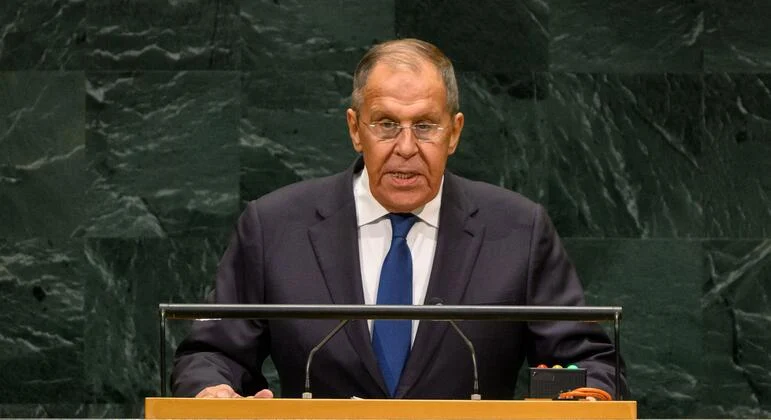
In a wide-ranging address that underscored the deepening chasm between Moscow and the Western-led international order, Russian Foreign Minister Sergey Lavrov has called for a radical restructuring of global security. Speaking with a tone of profound defiance, Lavrov positioned Russia as a vanguard for a "multipolar" world, framing the current geopolitical climate as a critical juncture in history where the perceived "dictatorship of a single hegemon" is being dismantled by the rise of sovereign states in the Global South and East.
The Call for a Multipolar Order
The core of Lavrov’s message, echoing the sentiments of President Vladimir Putin, centered on the argument that the current international framework is failing under the weight of U.S.-led dominance. Lavrov characterized this hegemony as "run amok" and "dangerous for everyone around it." He argued that the emergence of "sovereign centres of development" is not merely a diplomatic trend but an inevitable historical correction.
According to Lavrov, the future of global stability lies in moving away from a unipolar model toward a system that respects the "equal and indivisible security" of all nations. He signaled that Moscow is taking concrete steps toward this goal, announcing that Russia, Belarus, and various "like-minded partners" have formally launched an initiative in New York to draft a Eurasian Charter on Diversity and Multipolarity in the 21st Century. This initiative, he noted, serves as an open invitation for other nations to contribute to a new "continent-wide architecture of peace and development."
Chronology of Tensions and Recent Flashpoints
The Foreign Minister’s address served as a litany of grievances against Western interventionism, covering a broad timeline of recent geopolitical crises:
- The Venezuelan Crisis: Lavrov sharply condemned the recent detention of Venezuelan President Nicolás Maduro and his spouse by U.S. authorities. He described the incident as an "extrajudicial detention" and an illegal encroachment on sovereign leadership, demanding their immediate release.
- The Middle Eastern Escalation: Perhaps the most provocative portion of the speech involved the death of Iran’s Supreme Leader, Ayatollah Ali Khamenei. Lavrov denounced the event as an "unacceptable manifestation of coercive diktat," linking the act to a broader U.S.-Israeli military campaign. He specifically highlighted that this campaign has targeted Iranian nuclear facilities—sites operating under IAEA safeguards—which he claims has caused "irreparable damage" to the global non-proliferation architecture.
- The Gaza and West Bank Impasse: Lavrov dismissed the efficacy of the U.S.-led 20-point peace plan for Gaza, noting that it has failed to halt the humanitarian catastrophe. He offered a grim outlook for the occupied West Bank, warning that continued settlement expansion is effectively rendering a future Palestinian state a geographical impossibility.
- The Ukraine Conflict: Marking the 80th anniversary of the conclusion of the Nuremberg Trials, Lavrov invoked the legacy of the fight against Nazism to frame the current conflict in Ukraine. He accused European Union governments of harboring "Ukrainian Nazism" and suppressing the Russian language, asserting that Russia’s "special military operation" remains a moral necessity to eliminate security threats and restore peace.
Supporting Data and Strategic Priorities
Beyond the immediate rhetoric, the address outlined Russia’s strategic pivot toward new international partnerships and governance mechanisms.
Security Council Reform
Lavrov took a firm stance on the potential expansion of the UN Security Council. He explicitly rejected the inclusion of Germany or Japan, citing their recent shifts toward "militarisation and revanchism." Instead, he advocated for a power shift that grants permanent seats to Brazil and India, alongside a broader, more inclusive representation for African nations, arguing that this would better reflect the current distribution of global power.
Cybersecurity and Artificial Intelligence
Acknowledging the risks posed by modern technology, Lavrov highlighted Russia’s role in spearheading the UN Convention against Cybercrime, which opened for signature in Hanoi last October. Furthermore, regarding the rapid advancement of Artificial Intelligence, he endorsed a Chinese-led proposal to establish a world AI cooperation body, arguing that global governance for AI should be managed through inclusive dialogues rather than being dictated by a handful of Western technology giants.
NATO’s Reach
Lavrov expressed deep concern over the expansion of NATO, specifically criticizing its "reach into Southeast and Northeast Asia." He argued that this expansionism is a direct threat to the principle of equal security, accusing European governments of obstructing potential peace talks regarding Ukraine—talks which he claimed the incoming Trump administration has expressed an interest in pursuing.
Official Responses and International Context
The international community has met Lavrov’s speech with varying degrees of scrutiny. While Moscow’s allies within the CSTO (Collective Security Treaty Organization) and select BRICS nations have signaled support for the "Eurasian Charter" concept, Western capitals have remained largely dismissive.
Diplomatic observers note that Lavrov’s rhetoric regarding "unconventional" action in the Middle East—specifically regarding Lebanon, Syria, Yemen, Iraq, Sudan, and Somalia—is a clear attempt to rally the Global South against Western-led sanctions and military policies. By framing the blockade of Cuba and the sanctions on Iran as violations of international norms, Moscow is attempting to build a coalition of "sanctioned states" that prioritize economic and political sovereignty over Western integration.
Implications for the Global Order
The implications of Lavrov’s address are significant for several reasons:
- Fragmentation of International Law: By openly challenging the efficacy of the UN Security Council’s current structure and the IAEA’s oversight, Russia is signaling a shift toward "alternative" international organizations. The focus on the Eurasian Charter suggests that Moscow is willing to create parallel institutions if it feels the current ones are compromised.
- The "Sovereign Development" Narrative: The emphasis on "sovereign centers of development" provides an ideological framework for nations that are currently wary of Western financial and security conditions. This narrative is likely to resonate in parts of Africa and Southeast Asia, where the memory of colonial influence remains a potent political force.
- The Stagnation of Peace Processes: By stating that the objectives of the "special military operation" in Ukraine "will be achieved," Lavrov has effectively signaled that Moscow is not interested in a diplomatic compromise that requires a retreat from its current territorial gains. This suggests a long-term entrenchment in the Ukraine conflict, with Russia relying on the belief that Western political resolve will eventually collapse under economic and social pressure.
- Technological Sovereignty: The focus on AI and cyber-governance highlights a burgeoning "tech-bloc" competition. Russia, in tandem with China, is actively seeking to set the rules of the road for the next century of digital infrastructure, ensuring that data sovereignty and state control remain central to the architecture of the internet and AI development.
In conclusion, Sergey Lavrov’s address represents more than a list of diplomatic complaints; it is a declaration of a new strategic doctrine. As Russia pushes for a multipolar reality, the world is witnessing the acceleration of a competition between two distinct visions of the future: one defined by existing international treaties and Western-led norms, and another defined by regional blocs, sovereign development, and a "new architecture" of security that Moscow is eager to lead. Whether this vision can move beyond rhetoric into a functioning global reality remains the defining question of contemporary international relations.
 Lina Hope
 Asro
Asro
 Layla Zulfa
