

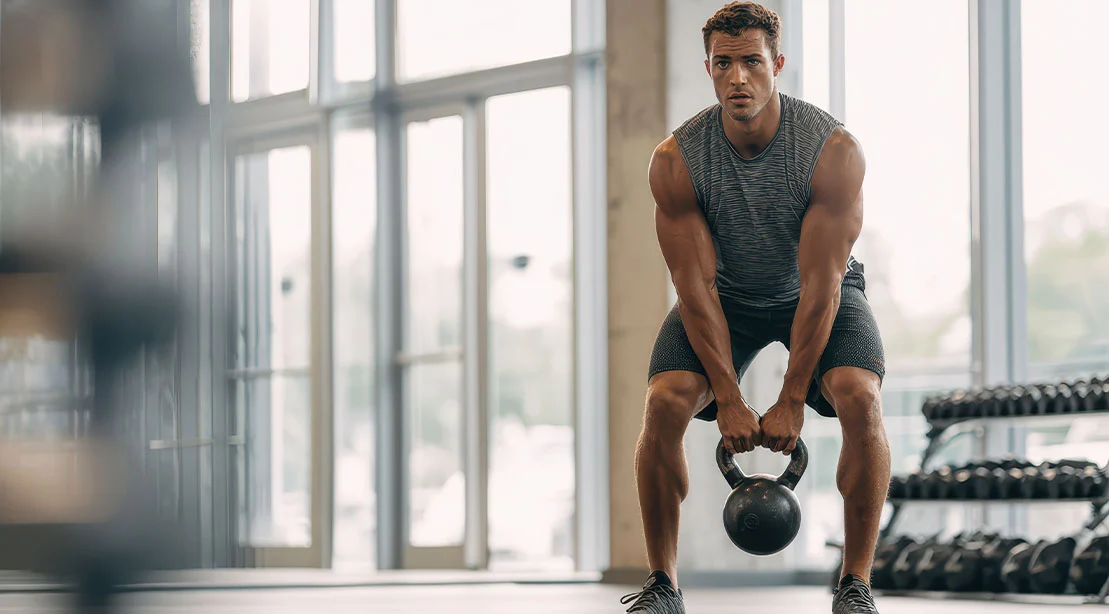
Most fitness enthusiasts believe they have mastered the art of the hip hinge until the moment their lower back begins to scream. Attempting a heavy Sumo deadlift with a rounded spine isn’t just a technical error; it is a fast track to injury. If you have ever felt a sharp twinge while picking up a stray dumbbell or unloading groceries, you likely know the difference between a clean hinge and a dangerous bend.
The hip hinge is the fundamental movement pattern for everything from kettlebell swings and cleans to explosive broad jumps. More importantly, it is the primary mechanism for daily life—lifting children, moving furniture, and managing household chores. When the distinction between "bending" at the waist and "hinging" at the hips is lost, the glutes and hamstrings are bypassed, and the lumbar spine is forced to take the load.
To help demystify this essential movement, we consulted with Gareth Sapstead, a renowned UK-based strength and physique coach, author, and founder of Team EPT Coaching and EPT Lab. Together, we break down why your hinge might be failing and how to rebuild it using five precision-engineered drills.
Main Facts: The Anatomy of the Hinge
The hip hinge is defined by the ability to push the hips backward while maintaining a neutral, rigid spine. It is not a squat, and it is not a forward fold. It is a posterior chain exercise that relies on the harmonious interaction of the glutes, hamstrings, and lats.
The Mechanism of Failure
The primary culprit in a poor hinge is "compensation." When an individual lacks the necessary mobility in the hamstrings or the stability in the core, the body seeks the path of least resistance. Instead of hinging, the person rounds their lower back (flexion) and shifts the stress from the powerful muscles of the posterior chain to the fragile vertebrae of the lumbar spine.
What a Proper Hinge Requires
A high-performance hinge is not just about flexibility; it is about mechanical coordination. A powerful, safe hinge requires:
- Sufficient Hip Flexion: The ability to move the femur within the hip socket without causing pelvic tilt or lumbar rounding.
- Hamstring Length and Tension Tolerance: The capacity for the hamstrings to lengthen under load without signaling the body to round the back.
- Adductor Stability: The inner thigh muscles must stabilize the pelvis to prevent erratic shifting.
- Lat and Upper Back Engagement: The lats are essential for keeping the spine in a neutral position, creating the "stiffness" required to transfer force from the lower body to the upper body.
Chronology: The Evolution of the Movement Pattern
For many, the breakdown of the hip hinge begins in the modern sedentary environment. Prolonged periods of sitting result in "tight" (shortened) hip flexors and "inhibited" (weakened) glutes. Over time, the brain "forgets" how to recruit the posterior chain, defaulting instead to spinal flexion during movement.
When this individual enters the gym, the pattern is already broken. Adding weight—such as a barbell or a heavy kettlebell—only exacerbates the issue. Without the requisite foundation, the body attempts to lift with the lower back, leading to the "rounding" effect often seen in novice lifters. By systematically addressing these mobility gaps through the drills provided by Coach Sapstead, one can essentially "re-learn" the hinge, moving from a position of compensation to one of strength.
Supporting Data: Testing Your Mechanics
Before attempting heavy deadlifts, you must determine if your body is ready. A simple wall test is the gold standard for diagnosing a hinge deficiency.
The Wall Hip Hinge Test
- Setup: Stand about six inches away from a wall, facing away from it.
- Execution: Keep your feet shoulder-width apart. Maintain a soft bend in your knees and a neutral spine.
- Movement: Push your hips back until your glutes touch the wall.
- Assessment: If you touch the wall before your shins feel vertical, or if you feel your back arching/rounding to reach the wall, your mobility or motor control is compromised.
Signs Your Mechanics Need Improvement
If you struggle with any of the following, your hinge is likely compromised:
- Knee-Dominance: If your knees travel significantly forward, you are performing a squat, not a hinge.
- Lumbar Rounding: If your lower back curves as you reach toward the floor, you have exceeded your current hamstring mobility.
- Lack of Tension: If you feel "loose" or unstable at the bottom of the movement, you are failing to engage your lats and core.
The 5 Best Hip Hinge Drills for Strength and Mobility
Coach Sapstead emphasizes that these drills serve two purposes: they act as corrective exercises to rebuild the pattern, and they function as high-value warm-ups to prime the nervous system before heavy lifting.
1. Band Sweeping RDL Hip Hinge Drill
"Ask someone to push their hips backward, and they’ll often do a reasonable job," Sapstead notes. "Hand them a barbell, however, and things change. The bar drifts away, the upper back softens, and the lats switch off." The Band Sweeping RDL uses a resistance band anchored in front to force lat engagement.
- How to do it: Anchor a band in front of you. Hold the band with arms extended. As you hinge, pull the band toward your hips, keeping it tight against your legs.
- Why it works: It teaches the body to maintain constant tension, ensuring the lats help keep the spine rigid throughout the movement.
2. Hamstring Rock-Back
Many athletes complain of "tight hamstrings" when the real issue is a lack of neuromuscular control.
- How to do it: Start in a quadruped (all-fours) position. Extend one leg straight out to the side or back. Rock your hips toward your heels while maintaining a perfectly flat back.
- Why it works: It forces the hamstrings to accept a stretch while the core is locked in a neutral, non-compensated position.
3. Adductor Quadruped Rock-Back
The adductors are often the "forgotten" stabilizers of the hip. If they are tight, the pelvis cannot track correctly.
- How to do it: From a quadruped position, extend one leg directly out to the side. Keeping the foot flat, rock your hips backward.
- Why it works: This improves inner hip mobility and teaches the adductors to stabilize the pelvis, preventing the lower back from taking the brunt of the movement.
4. Single-Leg Wall-Supported RDL
This is the ultimate tool for identifying side-to-side imbalances.
- How to do it: Stand with one heel against a wall. Hinge forward on the opposite leg, allowing the wall-supported foot to provide balance.
- Why it works: By removing the instability of a standard deadlift, you can focus entirely on the hip-hinge mechanics. It reveals if one side of your posterior chain is significantly weaker than the other.
5. Wall Hip Hinge with Dowel
This is the gold standard for proprioceptive feedback.
- How to do it: Hold a dowel (or broomstick) along your spine, ensuring contact with the back of your head, your upper back, and your tailbone. Hinge forward while keeping the dowel in contact with those three points.
- Why it works: If you round your back, the dowel loses contact with your spine. It provides instant, binary feedback: if you’re losing contact, you’re doing it wrong.
Official Responses and Implications
In the professional strength community, the consensus is clear: the hip hinge is not merely a gym exercise; it is a skill of injury prevention.
According to Sapstead, the implications of mastering this move are profound. "The lats don’t just move the shoulder," he says. "They contribute significantly to trunk stiffness. When they are working properly, the hinge feels stronger, more stable, and far more connected."
Enhancing Athletic Performance
Improving your hip hinge goes beyond preventing back pain—it is the key to explosive power. A refined hinge improves the rate of force development in sports like sprinting, jumping, and lifting. When the posterior chain works as a single, integrated unit, the athlete can move heavier loads with less effort and lower risk.
By incorporating these five drills into your training routine, you aren’t just stretching your hamstrings; you are training your nervous system to move with the efficiency and power of an elite athlete. Whether you are a professional lifter or someone looking to unload the car without back pain, the hinge is your most valuable asset. Master the pattern, maintain the tension, and let your glutes do the heavy lifting.
 Lina Hope
 rifanmuazin
