

New York — Stepping into Luhring Augustine’s Chelsea gallery feels less like entering a traditional white-cube space and more like crossing the threshold into a carefully curated theater of the subconscious. Visitors are greeted immediately by a provocative curatorial manifesto painted directly on the wall: "Abandon the search for Truth; settle for a good fantasy."
Drawn from the sharp wit of essayist and cultural critic Fran Lebowitz, this quotation serves as the intellectual cornerstone for the gallery’s latest photography exhibition. Rather than treating the camera as an instrument of objective record-keeping or documentary truth, the exhibition posits that the medium’s true power lies in its capacity for fiction, staging, and seduction.
It is an undeniably juicy premise—so much so that the gallery underscores the thematic conceit with a literal touch of indulgence. Hung immediately adjacent to the Lebowitz quote is Shaun Pierson’s Untitled (Strawberry on Lace) (2026), an archival pigment print featuring a strawberry so impossibly voluptuous, robust, and ripe that it evokes comparisons to the ancient, fertility-obsessed Venus of Willendorf. In this playful pairing, the exhibition establishes its thesis: photography is not, and has never been, about capturing reality. It is an endless, seductive chase after fantasy.
Main Facts: The Anatomy of an Exhibition
At its core, the group exhibition at Luhring Augustine brings together a diverse roster of photographic works that interrogate the boundaries between what is seen and what is concealed. The primary gallery space leans heavily into portraiture, fragmented anatomy, and the erotic undertones of the photographic gaze.
The exhibition features standout contributions from contemporary and historical practitioners, including Shaun Pierson, David Seider, and Janice Guy. Their works collectively reject the whole, coherent portrait in favor of the detail, the fragment, and the elusive glance.
- The Curatorial Premise: A direct challenge to the notion of documentary objectivity, framing photography as an inherently fictional, imaginative medium.
- Key Artists Featured: Janice Guy (notably her 1970s self-portrait grids), Shaun Pierson, and David Seider.
- Aesthetic Language: Fragmentary, deeply intimate, shifting between acute vulnerability and absolute unknowability, akin to a fractured peep show.
- Setting: Luhring Augustine Gallery, Chelsea, New York.
The works on display do not offer panoramic views of human subjects. Instead, they present curved, freckled backs pressed against one another, disembodied hands, and fractured shards of faces seemingly dragged out of the velvety darkness of the darkroom.
Chronology: From 1970s Self-Examines to 2026 Visions
While the exhibition incorporates contemporary pieces minted for the current year, its emotional and visual anchor relies on historical depth, creating a dialogue across decades of photographic practice.
1977: The Genesis of Fragmentation
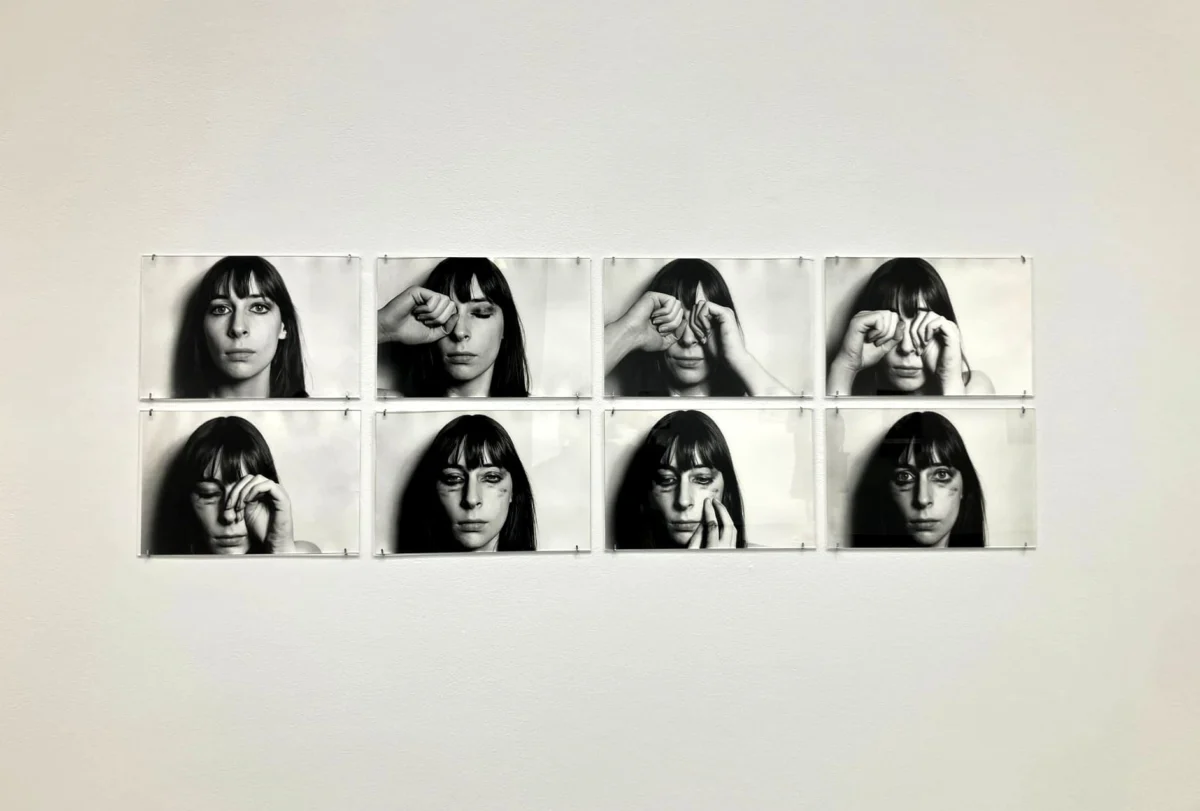
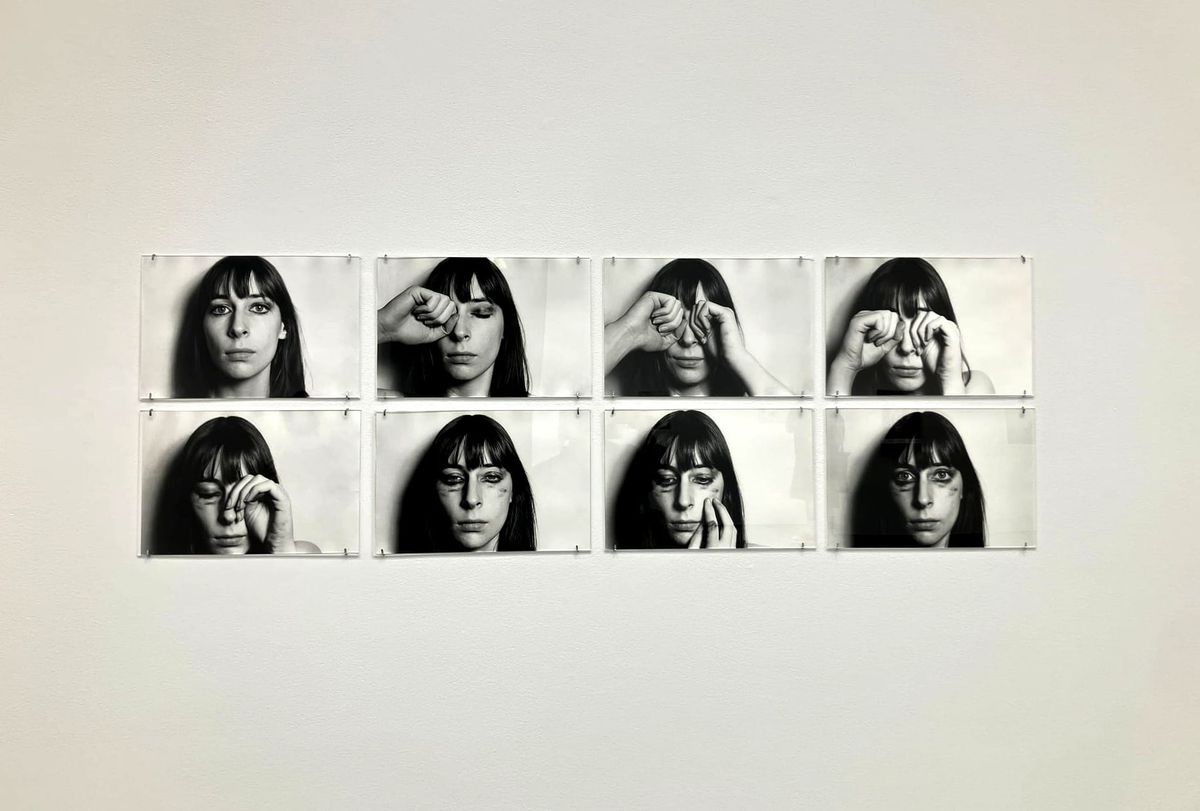
The historical anchor of the exhibition’s primary room belongs to Janice Guy. Working in the late 1970s, Guy produced a series of arresting self-portrait grids that prefigure contemporary conversations about identity, performance, and the gaze. In these gelatin silver prints—patiently printed or reprinted decades later in 2026—Guy slices her own image into grids of multiple frames. These early works establish a framework where the self is never presented as a monolith. Instead, identity is scattered across a matrix of micro-expressions, shadows, and angles.
The Interim Decades: The Evolution of the Pinned Gaze
Throughout the 1980s and 1990s, the art world grappled heavily with the "constructed image," moving away from street photography toward heavily staged, conceptual studio work. The ethos of Luhring Augustine’s current grouping borrows heavily from this lineage. The camera is treated not as a passive window, but as an active screen onto which desires and fantasies are projected.
2026: The Contemporary Echo
Fast forward to the present day, where artists like Shaun Pierson and David Seider continue this lineage using modern archival pigment printing techniques alongside traditional silver gelatin processes. Pierson’s work—ranging from the aforementioned architectural study of a strawberry to intimate portraiture—brings a tactile immediacy to the exhibition. The juxtaposition of Guy’s 1970s analog investigations with 2026 production dates highlights a continuous thread in photography: the desire to capture fleeting intimacy while simultaneously keeping the subject perpetually out of reach.
Supporting Data and Visual Analysis: The Peep Show Aesthetic
To truly understand the exhibition, one must analyze how the physical layout and the framing of the works construct an atmosphere of voyeurism. The gallery space mimics the cadence of a fractured peep show—a series of visual encounters that offer the promise of intimacy while strictly withholding total revelation.
Janice Guy’s Multi-Panel Grids
Guy’s untitled 1977 series (printed in 2026 across eight gelatin silver prints) commands attention through its rhythmic repetition. By breaking a single moment or series of movements into a grid, Guy forces the viewer’s eye to jump from frame to frame. We see a sliver of an eye, the turn of a shoulder, a shadow across the collarbone. None of these frames offer a definitive portrait of the artist. Instead, they construct a choreography of fragments. The viewer becomes a voyeur piecing together a puzzle that refuses to be solved.
Shaun Pierson’s Tactile Realism
Pierson balances the conceptual weight of the exhibition with objects of intense physical presence. Aside from the monumental, Venus-like strawberry resting delicately on vintage lace, Pierson’s portraits share a preoccupation with texture and touch. Skin is rendered not as a smooth, idealized surface, but as a landscape of freckles, creases, and pores. The closeness of the camera implies a profound intimacy—an artist standing inches away from his subject—yet the framing often crops out identifying facial features, preserving an essential layer of anonymity and unknowability.
David Seider’s Psychological Interiors
Complementing the bodily studies, Seider’s contributions introduce a psychological interiority to the space. The figures captured in these works exist in a state of suspended animation, caught between public presentation and private daydream. The lighting is frequently dramatic, calling to mind the chiaroscuro of Baroque painting adapted for the silver gelatin process.
Official Responses and Curatorial Intent
While commercial contemporary art galleries rarely issue traditional "press releases" that double as critical theory essays, the framing of Luhring Augustine’s Chelsea exhibition speaks volumes about current institutional shifts in how photography is consumed.
Curators and critics have increasingly noted a fatigue with slick, digitally over-processed perfection. By anchoring the exhibition in Fran Lebowitz’s dry cynicism—urging viewers to abandon truth for a good fantasy—the gallery directly addresses the anxieties of the digital age. In an era where smartphones generate billions of hyper-realistic, supposedly "true" images every single day, the art world is turning its attention back to the deliberate, constructed fiction of the darkroom and the staged studio print.

"Photography has always been a lie told with remarkable conviction," noted one Chelsea-based independent critic reviewing the vernissage. "By putting Lebowitz’s words on the wall, Luhring Augustine isn’t apologizing for the medium’s artifice; they are celebrating it as the primary site of artistic truth."
Implications: What This Means for Contemporary Photography
The implications of an exhibition like Settle for a Good Fantasy extend far beyond the white walls of Luhring Augustine. It signals a broader recalibration in how collectors, institutions, and artists value the photographic medium in a post-truth, AI-saturated visual landscape.
1. The Revival of Analog Process and Historical Printing
The fact that works like Janice Guy’s 1977 self-portraits were freshly printed in 2026 speaks to a growing market and critical appetite for historical retrospection coupled with contemporary material output. The physical print—whether gelatin silver or archival pigment—reasserts its status as a precious, handcrafted object rather than a disposable digital file.
2. Redefining Intimacy in Portraiture
For decades, portrait photography was judged by its ability to reveal the "inner soul" or psychological truth of the sitter. Exhibitions that champion the "peep show" aesthetic—where subjects are fragmented, shadowed, and partially concealed—suggest a cultural pivot. In an era of radical over-sharing and constant digital surveillance, privacy has become the ultimate luxury. The fragmented portrait respects the autonomy of the subject by refusing to lay them entirely bare before the viewer’s gaze.
3. Embracing Artifice Over Document
As generative artificial intelligence blurs the line between captured reality and synthesized fiction, traditional photography finds itself experiencing an existential identity crisis. Shows that lean into the inherent artifice of the medium offer a viable path forward. If photography is acknowledged from the outset as a vehicle for fantasy rather than a document of fact, it liberates artists to explore deeper emotional and psychological terrains without the burdensome anchor of photojournalistic accountability.
Conclusion
Luhring Augustine’s current exhibition proves that a little fantasy indeed goes a long way. By weaving together the historical rigor of Janice Guy’s 1970s grid prints, the tactile indulgence of Shaun Pierson’s strawberry and portraiture, and a cheeky nod to Fran Lebowitz, the gallery has constructed an immersive space of desire and doubt.
For visitors willing to abandon the exhausting search for absolute truth, the rewards are rich: a fractured, mesmerizing glimpse into the hidden corners of human intimacy, captured through a lens that proudly acknowledges its own wonderful, seductive lies.
 Layla Zulfa
 Sagoh
Sagoh
 Evan Lee Salim
