

In a move that signals a transformative shift for one of the most prestigious names in independent cinema, Neon has officially closed a major transaction with the upstart production company Department M. The deal, announced on Friday, sees Department M acquiring a significant equity stake in the distributor, providing Neon with the capital and creative infrastructure necessary to evolve from a boutique film distributor into a multi-platform media powerhouse.
The cornerstone of this partnership is the immediate launch of Neon TV, a dedicated television division designed to bring the brand’s curated, "prestige-indie" aesthetic to the small screen. This strategic expansion marks a pivotal moment in Neon’s history, positioning the company to compete more aggressively with rivals like A24 and Searchlight Pictures, both of which have successfully leveraged television production to stabilize revenue and expand their cultural footprint.
Main Facts: A New Leadership Structure and the Birth of Neon TV
The transaction brings a sea change to Neon’s executive suite. While Tom Quinn, the visionary founder who led Neon to four consecutive Palme d’Or wins and a historic Best Picture Oscar for Parasite, will remain as Chief Executive Officer, he will now be joined by a team of industry heavyweights from the production side.
Michael Schaefer, a partner at Department M and a veteran producer, has been named Neon’s Chief Content Officer (CCO). In this new role, Schaefer will oversee the creative direction across both film and television, bridging the gap between Neon’s distribution expertise and Department M’s production capabilities. Meanwhile, Mike Larocca, also a partner at Department M, will join Neon’s board of directors while maintaining his leadership role within Department M.
The internal hierarchy has been further bolstered to accommodate the new TV division:
- Carina Sposato joins Neon as Executive Vice President of Television. An Emmy-winning producer formerly of Department M, Sposato will report directly to Schaefer.
- Jeff Deutchman continues his tenure as President of Acquisition, Production, and Development for Film, also reporting to Schaefer.
Beyond the exchange of equity and leadership roles, Department M is folding its existing development assets and "production-ready" projects into the Neon banner. This immediate infusion of intellectual property (IP) ensures that Neon TV and the expanded film arm will hit the ground running with a robust slate of high-profile content.
Chronology: From Rumors to Reality
The seeds of this deal were planted earlier this year. In February 2024, reports first surfaced via IndieWire that Department M—a production banner founded only months earlier—was in exclusive talks to take a stake in Neon. At the time, the industry was curious about how a fledgling company could acquire a stake in a titan like Neon. However, the pedigree of Department M’s founders quickly clarified the logic: Schaefer and Larocca are not newcomers, but seasoned architects of modern blockbusters and prestige hits.
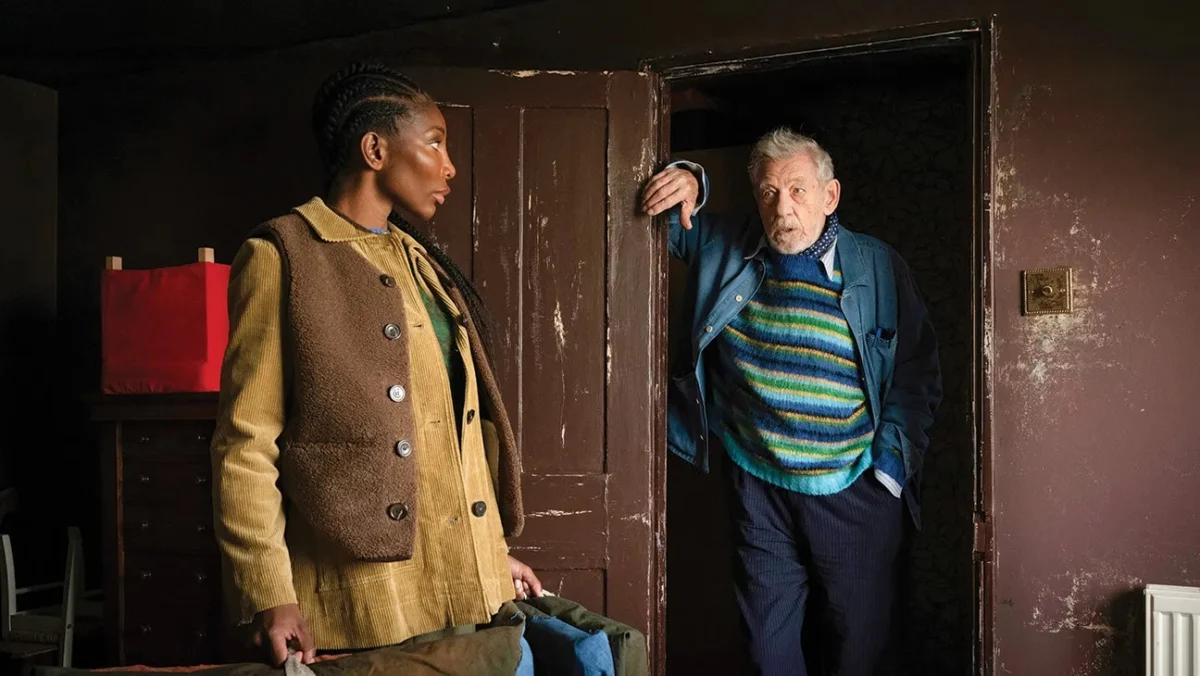
The relationship between the two entities was stress-tested through the release of The Christophers, a Steven Soderbergh-directed film that Department M produced and Neon distributed earlier this year. The film’s respectable $4.8 million box office performance and critical reception served as a proof-of-concept for the synergy between Department M’s production muscle and Neon’s marketing savvy.

Throughout the spring and summer of 2024, negotiations focused on how to integrate Department M’s high-octane production slate with Neon’s brand identity. The deal was finalized in July, culminating in the Friday announcement that officially links the two companies and secures Neon’s financial runway for the foreseeable future.
Supporting Data: The Pedigree of the New Guard
To understand the scale of this deal, one must look at the track records of the individuals now steering the Neon ship alongside Tom Quinn.
Michael Schaefer (Chief Content Officer)
Schaefer’s appointment as CCO is a significant "get" for Neon. As the former President of New Regency, Schaefer was instrumental in producing a string of commercial and critical successes. His filmography includes the global phenomenon Bohemian Rhapsody, Robert Eggers’ Viking epic The Northman, and the cult horror hit Barbarian. His experience managing large-scale budgets and navigating the "prestige-plus-commercial" space is exactly what Neon requires as it moves toward larger productions.
Mike Larocca (Board Member)
Larocca comes from a background of massive scale. As the former President of the Russo Brothers’ AGBO, he was a key figure behind Netflix’s Extraction and The Gray Man, as well as the ambitious Amazon series Citadel. His expertise in building franchises and managing high-value streaming deals provides Neon with a strategic advantage in a market increasingly dominated by platform-original content.
Carina Sposato (EVP of Television)
Sposato is the engine behind the new TV division. Her recent Emmy win for producing Netflix’s Adolescence underscores her ability to deliver award-worthy episodic content. Her resume includes a diverse array of high-concept television, such as the Tegan and Sara adaptation High School, the sci-fi thriller Paper Girls, the biographical drama The Hot Zone, and the Ridley Scott-produced Raised By Wolves.
The Department M Slate: A Glimpse into Neon’s Future
The transaction is not merely a financial one; it is a massive transfer of creative assets. Department M’s current development slate, now under the Neon umbrella, includes several of the most anticipated projects in the independent space:
- Blood on Snow: An adaptation of the Jo Nesbø novel, directed by Cary Joji Fukunaga (No Time to Die). The film features an A-list cast including Benedict Cumberbatch and Aaron Taylor-Johnson, signaling Neon’s intent to play in the "prestige thriller" arena.
- The Count of Monte Cristo: A modern reimagining of the classic tale starring Regé-Jean Page.
- The Labubu Movie: A venture into IP-driven content based on the popular designer toy characters, showing a willingness to diversify into more commercial, family-oriented fare.
- Untitled Matt Johnson Project: Following the success of BlackBerry, director Matt Johnson is working on a new film starring Finn Wolfhard, which Neon preemptively picked up in May.
This slate represents a departure from Neon’s traditional model of acquiring finished films at festivals like Cannes or Sundance. By bringing these projects in-house via Department M, Neon is now a vertically integrated studio capable of developing, producing, and distributing its own content.
Official Responses and Corporate Stability
While the principals of Neon and Department M expressed enthusiasm for the "shared vision" of the new entity, they have remained tight-lipped regarding the specific financial terms of the deal. However, the corporate structure remains anchored by long-term stability.

The Friedkin Group, led by Dan Friedkin, remains a significant shareholder and will continue to hold seats on the board of directors. The Friedkin Group’s continued involvement is a crucial vote of confidence; their deep pockets (they also own the AS Roma football club and various luxury hospitality brands) provide the financial bedrock that allows Neon to take creative risks in an often-volatile theatrical market.
Tom Quinn emphasized that while the company is growing, the core mission remains the same: "Neon has always been about the filmmaker and the theatrical experience. This partnership with Michael, Mike, and the Department M team allows us to protect that mission while expanding our storytelling into new dimensions."
Implications: Why This Matters for the Industry
The Neon-Department M deal is a microcosm of the current state of Hollywood. In an era where mid-budget films struggle to find a theatrical foothold and streaming services are tightening their belts, "diversify or die" has become the mantra for independent distributors.
1. The A24 Blueprint
Neon is clearly following the roadmap laid out by A24. By moving into television (Euphoria, The Sympathizer) and producing its own films (Civil War), A24 increased its valuation to over $2.5 billion. Neon, which has long been seen as A24’s closest rival in terms of "cool factor" and critical success, is now making its play for that same level of institutional scale.
2. The Theatrical-Streaming Balance
The launch of Neon TV allows the company to build a more stable revenue stream. While box office returns are unpredictable, television licensing and production fees provide a "cost-plus" model that can fund the riskier theatrical acquisitions for which Neon is famous.
3. Talent Retention
By having a TV division and a production arm, Neon can now offer "all-in" deals to filmmakers. A director like Cary Joji Fukunaga or Steven Soderbergh can now bring a film and a limited series to the same home, fostering long-term creative partnerships that were previously impossible when Neon was strictly a film distributor.
4. A Shift in the "Indie" Identity
With projects like the Labubu movie and high-budget adaptations like The Count of Monte Cristo, Neon is signaling that it is no longer content with being a niche player. The influx of Department M’s commercial sensibilities suggests that the "Neon" brand will soon be synonymous not just with Palme d’Or winners, but with high-end, broadly appealing entertainment.
Conclusion
The closing of the Department M transaction marks the end of Neon’s "start-up" phase and the beginning of its era as a diversified media studio. With Michael Schaefer’s production experience, Carina Sposato’s television expertise, and Tom Quinn’s unmatched eye for cinematic excellence, the new-look Neon is uniquely positioned to navigate the fragmented landscape of modern entertainment. For cinephiles and industry insiders alike, the message is clear: Neon is no longer just lighting up the arthouse—it’s aiming for the entire marquee.
 Jia Lissa
 Lina Irawan
 Iffa Jayyana
