

The atmospheric tension of a Southern Gothic thriller is often contingent upon its sense of place—the heavy, humid air, the skeletal reach of Spanish moss, and the architectural contrast between decaying history and modern privilege. In Apple TV+’s high-stakes reimagining of Cape Fear, these elements are not merely background noise; they are the primary engines of a feverish, psychological nightmare.
While the series serves as a contemporary expansion of the 1962 J. Lee Thompson classic and Martin Scorsese’s 1991 visceral masterpiece, it carves out its own identity through a meticulous, almost obsessive commitment to environmental storytelling. However, the show’s most impressive feat of "movie magic" isn’t found in its digital effects or its star-studded performances by Javier Bardem and Patrick Wilson. Instead, it lies in a logistical triumph: the seamless transformation of metropolitan Atlanta into the "Hostess City of the South," Savannah, Georgia.
Main Facts: A Modern Descent into the ‘Cape’
The new Cape Fear series, helmed by showrunner Nick Antosca, represents the third major iteration of John D. MacDonald’s 1957 novel The Executioners. Starring Javier Bardem as the vengeful Max Cady and Patrick Wilson as the embattled attorney Sam Bowden, the series moves the action to the lush, treacherous landscapes of coastal Georgia.
The production’s primary objective was to evoke a "sweaty, hottest piece of filmmaking" aesthetic, drawing comparisons to the oppressive heat of 1980s classics like Body Heat and Do the Right Thing. Achieving this required a collaboration between cinematographers Eben Bolter and Celiana Cárdenas and production designer Jamie Walker McCall. Together, they constructed a visual language defined by "Southern heat" and "feverish nightmares."
The central challenge, however, was geographic. Despite the story being inextricably linked to the textures of Savannah, the production was filmed almost entirely in Atlanta. With only a single day of actual location shooting in Savannah, the burden of authenticity fell upon the shoulders of the design and greenery teams, who had to replicate the unique topography and flora of the coast within the sprawling, hilly urbanity of Georgia’s capital.
Chronology: From 1962 to the Streaming Era
The lineage of Cape Fear is one of Hollywood’s most prestigious. The 1962 original featured Gregory Peck and Robert Mitchum in a black-and-white noir that defined the "home invasion" thriller for a generation. Three decades later, Martin Scorsese reinterpreted the material with Robert De Niro and Nick Nolte, infusing it with Catholic guilt, distorted camera angles, and a lurid, technicolor dread.

In the early 2020s, Apple TV+ and Amblin Television sought to bring the story into the prestige TV era. Showrunner Nick Antosca, known for his work on The Act and Channel Zero, was tasked with expanding the 120-minute film structure into a multi-episode arc. This expansion allowed for a deeper exploration of the Bowden family’s internal rot and Max Cady’s psychological warfare.
Production began with a deep dive into the "vibe" of Savannah. Jamie Walker McCall and the cinematographers spent months analyzing the city’s "Italian Renaissance" influences and its specific brand of decay. When the production moved to Atlanta for the bulk of its schedule, the team had to systematically "Savannah-ize" their locations, a process that involved trucking in tons of organic material and selecting neighborhoods that could pass for the historic squares of the coast.
Supporting Data: The Logistics of "Sweat" and Spanish Moss
The transformation of Atlanta into Savannah was a masterclass in production design logistics. The physical differences between the two cities are stark: Savannah is famously flat and coastal, defined by its historic grid and "Live Oaks," while Atlanta is a hilly, forested metropolis.
The Botanical Blueprint
To bridge this gap, McCall’s first priority was the "greens" department. "Savannah is very lush and has a lot of live oaks with Spanish moss," McCall noted. Because Spanish moss does not grow naturally in the Atlanta climate, the production had to truck in massive quantities of the air plant from South Carolina.
This wasn’t a one-time decoration. The moss had to be maintained and strategically placed to ensure continuity. In the neighborhood used for the Bowden family home, the production secured permission to keep the Spanish moss and Southern decor up permanently throughout the shoot, avoiding the labor-intensive process of taking it down and putting it back up between filming days.
Architectural Psychology
The Bowden house itself was designed to reflect the family’s social standing and their eventual vulnerability. The exterior was a found location in Atlanta that matched the "Italian Renaissance Revival" style common in Savannah’s wealthier districts.

The interiors, however, were built on a soundstage to allow for the specific "haunted" atmosphere Antosca’s script demanded. The design team focused on a "remodeled for years" look, suggesting a house with a history that predated the current residents. By making the rooms grand but slightly cold, the production aimed to make the family feel "small" and isolated even within their own sanctuary.
Contrasting Worlds
To emphasize the class divide between the Bowdens and Max Cady, McCall created a sharp contrast in the North Carolina locations where Cady’s family resides. While the Bowden home is curated and controlled, the Cady locations are defined by "uncontrollable insanity."
- The Bowden Home: Clean lines, Italianate influence, expensive marathons medals, manicured (but moss-draped) lawns.
- The Cady Father’s Home: Overgrown textures, dog kennels, weathered porches, and a sense of "lush decay" that suggests nature is reclaiming the structure.
Official Responses: Designing Through the Actor’s Lens
A key element of the show’s success is the collaborative relationship between the design team and the cast. Jamie Walker McCall emphasized that her philosophy involves creating environments that act as extensions of the characters’ psyches.
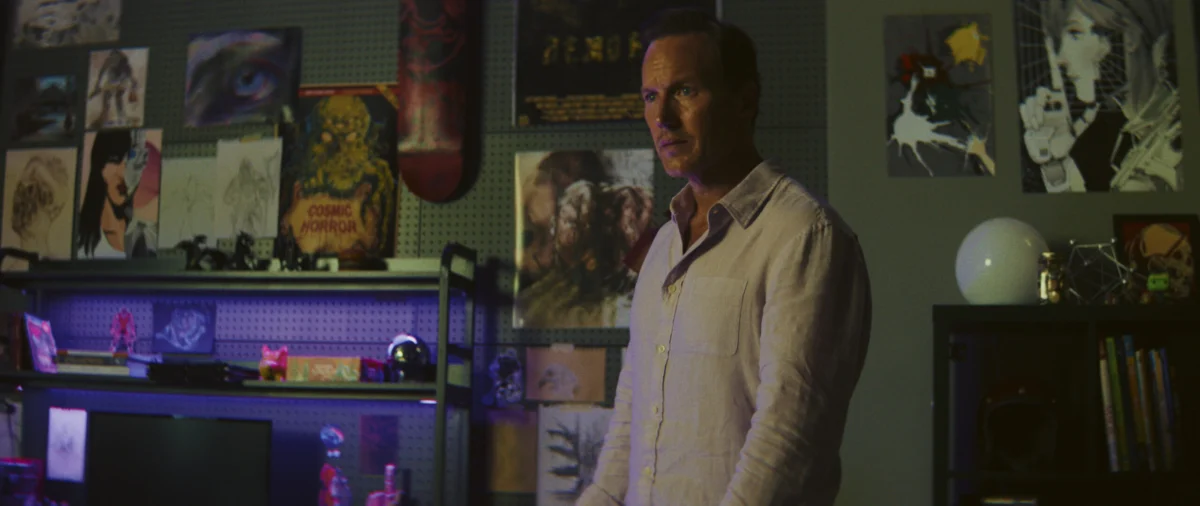
"We create backstories that open up a door into who these people are," McCall explained. This included incorporating personal artifacts from the actors themselves. In Sam Bowden’s (Patrick Wilson) home office and the children’s rooms, the medals seen on the walls are actually Wilson’s real-life marathon medals. When Wilson’s character is seen exercising, the weights and equipment were chosen in consultation with him to ensure the routine felt authentic to his physical preparation for the role.
McCall also acknowledged the weight of the Scorsese legacy. In a specific scene involving Natalie Bowden (Lily Collias) in her bedroom at her birth father’s house, McCall chose to pay a direct homage to the 1991 film. "That bedroom is practically a replica of the teenage bedroom Juliette Lewis has in the original movie," McCall revealed. "We just needed a quick shot… I decided to pay homage in that way."
Despite these nods to the past, the production team maintains that the primary inspiration was Nick Antosca’s writing. McCall praised the scripts for being "beautifully written," noting that the vivid descriptions of the "sweaty" and "nightmarish" atmosphere made the transition from page to set design intuitive.

Implications: The "Tax Credit" Aesthetic and the Future of the Southern Gothic
The production of Cape Fear highlights a growing trend in the modern television industry: the "Atlanta Double." Due to Georgia’s aggressive film tax credits, Atlanta has become the primary production hub for stories set anywhere from New York City to the rural South.
However, Cape Fear suggests that the "tax credit aesthetic"—which can sometimes feel generic—can be overcome through high-level production design. The success of the show’s "Savannah illusion" proves that specificity of detail (the right moss, the right light, the right architectural history) is more important than actual geographic location in creating a "convincing sense of place."
Furthermore, the series signals a shift in the Southern Gothic genre. While previous iterations of Cape Fear focused on the visceral threat of a singular "monster" (Cady), the Apple TV+ version uses its environment to suggest a broader, more systemic rot. The heat isn’t just a weather condition; it’s a metaphor for the simmering tensions of class, race, and legal corruption in the modern South.
As Cape Fear continues its run on Apple TV+, it stands as a testament to the power of atmosphere. By "tapping into the darker side" of production design, Jamie Walker McCall and her team have created a world that feels both lived-in and dangerously unstable—a Savannah of the mind that is every bit as terrifying as the one on the map.
“Cape Fear” is currently available for streaming on Apple TV+, with new episodes delving further into the humid, haunted corridors of the Bowden family’s crumbling security.
 Jia Lissa
 Lina Irawan
 Iffa Jayyana
