

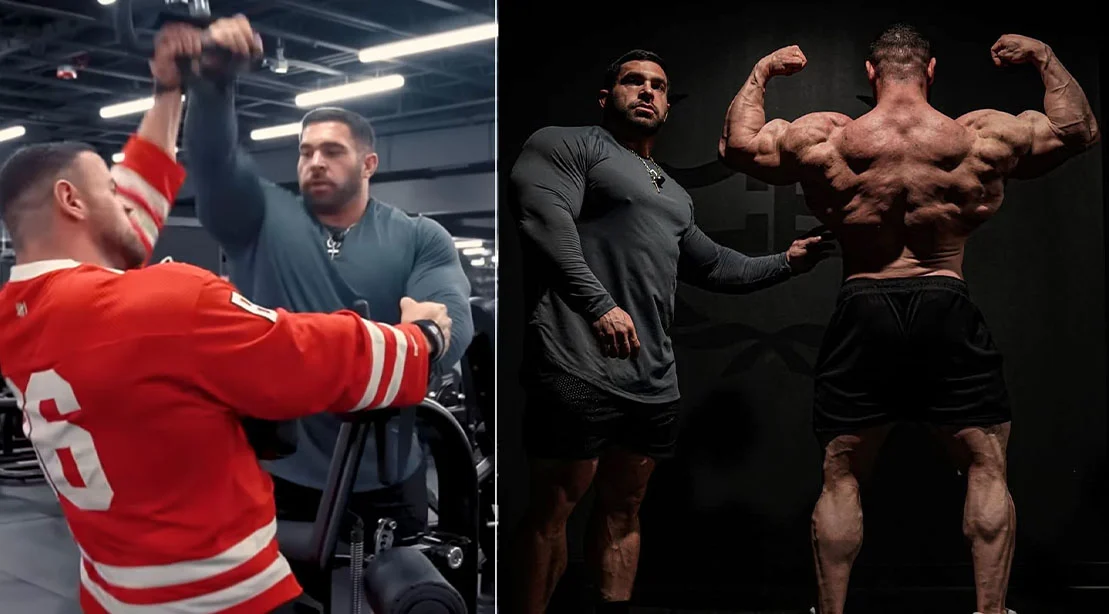
In the high-stakes world of professional bodybuilding, the distance between a promising contender and a reigning monarch is often measured not just in muscle mass, but in the wisdom passed down through the iron. Recently, that gap was bridged at Champs Elysium Gym in St. Petersburg, Florida, where 2025 Mr. Olympia Derek Lunsford played mentor to one of the sport’s most explosive rising stars: Josema “Beast” Munoz.
For Lunsford, who has cemented his status as the industry’s torchbearer, the training session was more than a display of raw power. It was a masterclass in the psychological fortitude required to sustain excellence at the sport’s highest echelon. For Munoz, a Spanish Classic Physique standout who has rapidly ascended the ranks from a sixth-place finish in 2024 to a formidable fourth-place showing in 2025, the encounter served as a pivotal waypoint in his professional evolution.
The Intersection of Mentorship and Ambition: Main Facts
The meeting between Lunsford and Munoz highlights the changing guard of the IFBB Pro League. Lunsford, having conquered the pinnacle of the sport, now finds himself in a position to shape the next generation of competitors. The training session focused on a comprehensive back-building protocol designed to thicken the posterior chain and enhance V-taper aesthetics.
However, the core narrative of their collaboration extends beyond the weights. It touches upon the internal struggle of the modern bodybuilder: balancing the relentless pursuit of perfection with the anxiety that comes with occupying the spotlight. By documenting this session, both athletes provided a rare, unvarnished look at the mental labor that underpins the physical art of bodybuilding.
Chronology of a Championship Session
The training session began with a foundational dialogue. Lunsford, ever the pragmatist, emphasized the autonomy of the athlete. “For almost a decade of your life, you’ve been training,” Lunsford remarked to Munoz. “You know how to train. You know how to come in here and how to workout. If your body feels good, go for it. If something is not feeling good, switch it up.”
The Warm-up and Volume Strategy
Lunsford’s approach to volume is methodical. He prefers a tapering volume structure: starting with higher set counts (roughly five sets) in the early stages of the workout to drive blood flow and prime the central nervous system, then reducing to two or three sets as metabolic fatigue sets in. This ensures that the quality of contraction remains high even as the muscles reach failure.
The Movement Protocol
- Cable Lat Pulldown: The session opened with this staple movement. Lunsford’s focus here was total recruitment—targeting the rhomboids, traps, deltoids, and teres major, while ensuring the latissimus dorsi bore the brunt of the load.
- Plate-Loaded High Row: Transitioning to this unilateral machine, Lunsford provided technical cues regarding elbow pathing. He stressed the importance of driving the elbows down toward the thighs, ensuring the lat insertion is fully stretched at the top of the movement and fully shortened at the peak contraction.
- Standing Row Machine: This movement served as the session’s centerpiece for stabilization. Lunsford’s mantra—"chin up, chest up"—was a reminder that maintaining proper posture is the prerequisite for isolating the back musculature and preventing the biceps from taking over the pull.
- Mid-Cable Row: The session concluded with a focus on the squeeze. By emphasizing the stretch and the subsequent contraction, Lunsford demonstrated the final pump-inducing phase that defines the "pro look."
Supporting Data: The Evolution of Josema Munoz
Josema Munoz’s trajectory is one of the most compelling stories in the current circuit. His rapid improvement from 2024 to 2025—a jump from sixth to fourth in the world—signals a level of consistency that few newcomers achieve.
| Metric | 2024 Olympia | 2025 Olympia |
|---|---|---|
| Placement | 6th | 4th |
| Division | Classic Physique | Classic Physique |
| Trajectory | Breakthrough | Contender |
This data suggests that Munoz is not merely a "flash in the pan" athlete. His willingness to seek guidance from a champion like Lunsford demonstrates a humility often missing in young, high-performing athletes. His training philosophy, which mirrors Lunsford’s focus on the mind-muscle connection, has clearly translated into the tangible progress seen on stage.
Official Responses: The Human Element of the Sport
The most striking aspect of the collaboration was the dialogue regarding the psychological cost of success. Lunsford, often perceived as a stoic champion, spoke candidly about his own battles with anxiety.
“You’re in the best position,” Lunsford advised Munoz. “So, just enjoy it and ride it till the wheels fall off, man.”
This admission humanizes the Olympia champion. It frames the title not just as a trophy, but as a burden that requires constant management. For Munoz, the session provided a reality check on the sacrifices required to reach the next level. During the workout, Munoz shared personal news that will dictate his immediate future: he is stepping back from the 2026 Olympia stage to focus on the birth of his child.
However, this hiatus is far from a retirement. Munoz expressed a clear ambition to potentially transition to the Open division in 2027. If this transition occurs, the gym camaraderie shared in St. Petersburg will be replaced by the competitive intensity of the Olympia stage.
Implications for the Future of Bodybuilding
The mentorship between Lunsford and Munoz serves as a microcosm for the current state of professional bodybuilding. Several key implications arise from this encounter:
The Rise of the "Athlete-Scholar"
Bodybuilders are increasingly moving away from the "more is better" philosophy toward a more nuanced, recovery-oriented approach. Lunsford’s emphasis on "switching it up" if the body isn’t feeling right highlights a move toward longevity. Athletes are no longer just pushing weight; they are managing their nervous systems and internal health.
The Shifting Boundaries of Divisions
Munoz’s potential move to the Open division underscores the fluidity of modern physique competition. As athletes optimize their training and nutrition, the barriers between "Classic" aesthetics and "Open" mass are becoming increasingly blurred. The training techniques shared by Lunsford—unilateral work, strict form, and high-volume tapering—are universal tools that transcend specific class requirements.
The Necessity of Psychological Support
By openly discussing anxiety, Lunsford and Munoz are contributing to a growing movement within the sport to destigmatize mental health challenges. The pressure of maintaining a championship-level physique is immense, and the transparency displayed by these two athletes suggests that the future of bodybuilding will be as much about mental resilience as it is about physical hypertrophy.
Conclusion
The partnership between Derek Lunsford and Josema Munoz is a testament to the community-driven nature of bodybuilding. While the stage is an arena of individual competition, the gym floor remains a sanctuary of shared knowledge. Lunsford, by opening his doors to the "Beast," has reaffirmed his role not just as a champion, but as a steward of the sport.
As Munoz prepares for his hiatus and eventual return, he does so with the blueprint of a champion in his pocket. Whether or not they eventually stand side-by-side as rivals in the Open division, the session at Champs Elysium stands as a reminder of what bodybuilding is truly about: the relentless, shared pursuit of becoming the best version of oneself.
For those looking to replicate the results of this session, the focus should remain on Lunsford’s primary tenets: controlled volume, precise anatomical positioning, and an unwavering commitment to the mind-muscle connection. The wheels of the industry continue to turn, and if this workout is any indication, the future of the sport is in very capable hands.
 Lina Hope
 rifanmuazin
 Laily UPN
