

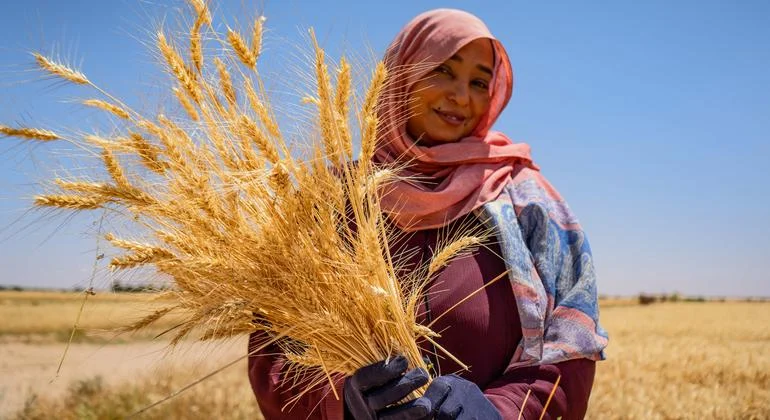
Main Facts: A New Roadmap for Sudan’s Agricultural Engine
In a significant shift toward long-term stabilization, Sudan’s agricultural sector—the traditional backbone of the nation’s economy—is being positioned as the primary engine for post-conflict recovery. A three-day high-level dialogue in Khartoum, co-organized by the United Nations Development Programme (UNDP) and the Sudanese Ministry of Finance, has culminated in a landmark roadmap designed to unlock private sector investment.
The event, which drew over 300 delegates from 20 countries, marks a pivotal attempt to move beyond humanitarian aid dependence. Among the most tangible outcomes of the summit is the mobilization of approximately $155 million in potential external investment from partners including India, Pakistan, Türkiye, Egypt, and Syria. This capital injection is intended to revitalize domestic food production, bridge the financing gap for local farmers, and restore the supply chains that were shattered by the brutal civil war that began in April 2023.
Chronology of Crisis and Resilience
To understand the urgency of this initiative, one must look at the trajectory of the conflict and its economic toll:
- Pre-April 2023: Sudan functioned as a vital regional agricultural exporter, commanding a 12 to 13 percent share of the global sesame market while exporting significant quantities of gum arabic, cotton, hibiscus, sorghum, and livestock.
- April 2023: The eruption of hostilities between the Sudanese Armed Forces (SAF) and the Rapid Support Forces (RSF) paralyzed urban centers and fractured critical infrastructure.
- Late 2023–Early 2024: The conflict led to the destruction of physical assets for thousands of businesses. Agricultural yields plummeted by 40 to 70 percent in several regions, exacerbated by global supply chain disruptions and surging costs for essential inputs like fertilizer and fuel.
- Current Phase: The UNDP and the Ministry of Finance have pivoted toward a "recovery and resilience" model. By shifting focus from pure humanitarian aid—which provides immediate relief but lacks long-term sustainability—the current strategy aims to re-integrate the private sector into the economic landscape.
Supporting Data: The Scale of the Challenge
The data underpinning the UNDP’s intervention paints a sobering picture of a nation at a crossroads. The human cost of the conflict is staggering: nearly 35 million people are currently in need of humanitarian assistance, with 19 million facing acute hunger. Furthermore, the displacement of 13 million individuals has gutted the labor force in rural agricultural zones.
Economic indicators show a similar decline. While Sudan’s economy has not been fully paralyzed—markets continue to operate in pockets and crops are still being harvested—the efficiency of the agricultural sector has been decimated. UNDP analysis reveals that 90 percent of Sudanese farmers currently lack access to formal financing. Without this capital, they cannot purchase seeds, maintain irrigation systems, or transport goods to international markets.
Furthermore, the global market share for Sudan’s primary agricultural export, sesame, has halved, falling to just 6 percent. This decline is not due to a lack of farmer effort, but rather a lack of "financial oxygen" to keep businesses afloat in a high-risk environment.
Official Responses and Strategic Visions
Arvind Kumar, Team Leader for Recovery and Resilience at the UNDP Country Office in Sudan, serves as a central voice in this recovery narrative. Speaking from Khartoum, Kumar emphasized that while the conflict has been catastrophic, the private sector remains the only viable vehicle for national restoration.
"This dialogue is a stepping stone towards moving forward in bringing more private sector engagement, which ultimately socioeconomic recovery depends on," Kumar noted in an interview with UN News. He stressed that in a healthy economy, the private sector provides roughly 98 percent of jobs. By empowering this sector, the government and international partners hope to create a "multiplier effect" that stabilizes the currency, lowers food prices, and reduces the need for emergency aid.
The dialogue also addressed the bureaucratic hurdles facing investors. Sudanese business owners expressed frustration with archaic regulatory barriers and a lack of mechanisms to link domestic producers with international capital. In response, the UNDP is advocating for:
- Credit Guarantees: Using international funds to back local bank loans, thereby lowering the risk for commercial banks to lend to farmers.
- Warehouse Receipt Systems: A mechanism allowing farmers to store their harvest in approved, secure facilities. These receipts can then be used as collateral to secure bank loans, providing farmers with liquidity before they sell their crops at market.
- Trade Facilitation: Working alongside UNCTAD to reform customs and port operations, ensuring that export goods can move out of the country efficiently despite the volatile security environment.
Implications: A Dual-Track Approach to Peace
The strategy proposed in Khartoum has profound implications for the future of the Horn of Africa. The UNDP is explicitly arguing that development must begin alongside life-saving humanitarian assistance, rather than waiting for a definitive end to the fighting.
The Human Capital Aspect
Economic recovery is not merely about exports; it is about restoring the basic infrastructure of daily life. The roadmap highlights that for farmers to return to their fields, they require reliable access to education, healthcare, and electricity. By injecting $155 million into the agricultural supply chain, the initiative aims to create jobs in processing, logistics, and retail, which in turn provides the tax base necessary for the state to provide these essential services.
Geopolitical Realignments
The interest from countries like Türkiye, India, and Egypt signals a strategic shift in how foreign nations view Sudan. Rather than focusing solely on geopolitical maneuvering, these nations are identifying Sudan as a long-term partner in food security. For Egypt and the Gulf states, a stable, productive Sudanese agricultural sector is a critical component of regional food supply chains.
The Risks Ahead
Despite the optimism of the Khartoum dialogue, significant risks remain. The lack of a comprehensive ceasefire remains the greatest obstacle to large-scale investment. Furthermore, the volatility of the Sudanese pound and the destruction of the banking sector’s physical infrastructure mean that financial reforms will take years to fully mature.
However, the consensus among the 300 participants—ranging from farmers’ unions to multinational financiers—is that the status quo is unsustainable. The "willingness to return" expressed by the private sector suggests that even in a landscape defined by conflict, there is an inherent demand for normalcy.
Conclusion: Bridging the Gap to Stability
The initiative led by the UNDP and the Ministry of Finance represents more than just a financial proposal; it is a psychological shift. It acknowledges that humanitarian aid alone cannot feed a nation of 45 million people indefinitely. By focusing on the "nuts and bolts" of the economy—seeds, fertilizer, warehouse receipts, and trade facilitation—the roadmap offers a practical, if difficult, path forward.
As the international community watches, the success of this $155 million investment will serve as a bellwether for whether post-conflict nations can use private enterprise to bypass the limitations of traditional aid. For the farmers of Sudan, the message is clear: they are ready to return to the land, and for the first time in two years, the capital required to make that return a reality is beginning to materialize. The road to recovery will be arduous, but as Mr. Kumar noted, "there is an opportunity and a space to bring development back on track."
 Lina Hope
 Asro
Asro
 Layla Zulfa
