

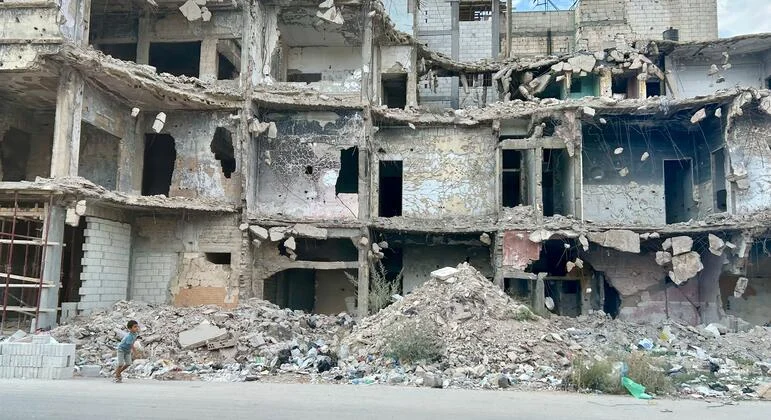
UNITED NATIONS — The United Nations Security Council held an emergency session on July 21, 2026, as the international community faces a convergence of high-stakes geopolitical conflicts. At the center of the deliberation is the deteriorating situation in Syria, compounded by reports of a recent Israeli military strike in occupied territories and the activation of a multinational oil pipeline infrastructure designed to bypass the volatile Strait of Hormuz.
As the Security Council debated the path toward de-escalation, UN Secretary-General António Guterres departed for Damascus, marking his first official visit to the Syrian capital. The mission underscores the urgency of the moment, as the UN seeks to prevent the regional spillover of the ongoing U.S.-Iran conflict from permanently destabilizing the Levant.
I. Main Facts: A Convergence of Crises
The current security landscape is defined by a "triple-threat" dynamic. First, independent UN investigators have reported that security conditions in southern Syria remain precarious, with fragile ceasefires routinely breached by local militias and state-aligned actors. Second, the regional security architecture has been upended by an alleged Israeli strike in occupied territory, an incident that has triggered renewed calls for restraint from global powers.
Third, and perhaps most economically consequential, is the activation of a multinational oil pipeline. This infrastructure is a direct response to the blockade and kinetic skirmishes within the Strait of Hormuz, the world’s most critical maritime chokepoint. The ongoing naval confrontation between the United States and Iran has rendered the strait effectively unusable for commercial oil tankers, forcing a global scramble to secure energy transit routes through the Middle East.
II. Chronology of Recent Escalations
The current geopolitical volatility is the culmination of months of deteriorating relations and military friction.
- Mid-May 2026: Tensions in the Persian Gulf reached a breaking point as naval skirmishes between U.S. and Iranian forces led to the total closure of the Strait of Hormuz.
- Early June 2026: Global oil markets suffered historic volatility, prompting regional powers to expedite the construction and activation of alternative land-based pipelines.
- July 15, 2026: Independent UN investigators released a preliminary report highlighting the collapse of administrative order in southern Syria, noting that non-state actors were filling the security vacuum.
- July 20, 2026: Reports surfaced of a precision strike by Israeli forces within occupied Syrian territory, allegedly targeting logistical hubs utilized by foreign-backed militias.
- July 21, 2026: The UN Security Council convened an emergency session to address the intersection of these crises. Secretary-General Guterres formally announced his travel plans to Damascus to mediate between stakeholders.
III. Supporting Data: The Cost of Instability
The economic and humanitarian fallout of the 2026 crisis is profound.
Global Energy Security
The closure of the Strait of Hormuz has halted approximately 21 million barrels of oil per day—roughly 21% of global petroleum consumption. The new multinational pipeline, while intended to alleviate the supply shock, has become a secondary flashpoint. Nations participating in the project have effectively militarized the transit routes, creating new zones of friction where territorial sovereignty is frequently contested.
Humanitarian Indicators in Syria
According to UN monitoring groups, the internal Syrian situation has worsened:
- Displacement: An additional 150,000 civilians have been displaced in the southern governorates over the past 30 days.
- Infrastructure: Key civilian infrastructure, already weakened by years of conflict, has sustained further damage from localized artillery exchanges.
- Food Security: The disruption of regional logistics has spiked the cost of basic commodities by 45% in urban centers like Homs and Aleppo, pushing millions into acute food insecurity.
IV. Official Responses: The Diplomatic Standoff
During the Security Council session, representatives exchanged stark warnings regarding the path forward.
The United Nations Perspective
Secretary-General Guterres, in his pre-departure briefing, emphasized that "there is no military solution to the current regional entanglement." He urged all parties to prioritize the protection of civilians and the restoration of international maritime law. "The world cannot afford a total breakdown of order in the Levant, nor can it sustain a permanent disruption of the global energy supply," he stated.
The Regional Standoff
- United States: The U.S. delegation reiterated its commitment to "freedom of navigation" and defended its naval presence in the Persian Gulf as a necessary deterrent against Iranian aggression.
- Iran: Tehran has consistently characterized the U.S. naval presence as an act of "economic terrorism," asserting that the pipeline projects are merely a tool for western hegemony.
- Syria: The Syrian government has condemned the Israeli strikes as a "blatant violation of national sovereignty," calling on the international community to enforce stricter accountability for unauthorized military incursions.
V. Implications for the Future
The visit of Secretary-General Guterres to Damascus represents a "make-or-break" moment for Middle Eastern diplomacy. His ability to secure a commitment from the Syrian leadership to curb militia activity in the south may determine whether the country remains a theater for regional proxy wars or finds a narrow path to stabilization.
Strategic Risks
- The "Pipeline War": The shift from maritime to land-based oil transit creates new, fixed targets for sabotage. If these pipelines become focal points for militant attacks, the energy crisis could escalate into a long-term global recession.
- Escalation Thresholds: The Israeli strikes in Syria, if intensified, risk drawing regional powers into a direct, rather than proxy, conflict. The "rules of engagement" are currently unwritten, leaving little room for miscalculation.
- Humanitarian Collapse: As the UN’s attention is divided between the naval war in the Gulf and the political crisis in Syria, the risk of a "forgotten" humanitarian catastrophe grows. Aid agencies warn that without a secure corridor, famine conditions could emerge in Syria by the winter of 2026.
The Path to De-escalation
The consensus among policy analysts is that a multi-track diplomatic approach is required. This involves:
- Backchannel Mediation: Utilizing regional intermediaries to facilitate a ceasefire in the Strait of Hormuz.
- Security Guarantees: Implementing a UN-monitored buffer zone in southern Syria to prevent skirmishes between local actors and foreign military forces.
- Energy Diplomacy: Creating an international framework for the management of the new oil pipelines, ensuring they remain neutral infrastructure rather than geopolitical weapons.
As the Secretary-General’s aircraft nears Damascus, the eyes of the international community remain fixed on the Security Council chamber and the dusty streets of Syria. The events of this week have demonstrated that in an interconnected global economy, the stability of the Strait of Hormuz and the sovereignty of Syria are inextricably linked. Whether this visit marks the beginning of a cooling-off period or a precursor to further escalation remains the defining question of the year.
The UN continues to call for immediate restraint, reminding all member states that the Charter of the United Nations was drafted precisely to prevent the kind of chaotic, multi-front conflict currently unfolding. The success of the upcoming negotiations in Damascus will likely dictate the tone of international relations for the remainder of 2026.
 Lina Hope
 Asro
Asro
 Layla Zulfa
