

By Nathalie Minard, Geneva
21 July 2026
Main Facts: A Crisis in Motion
The Democratic Republic of the Congo (DRC) is currently facing a public health emergency of unprecedented velocity. Since the declaration of the outbreak on 15 May 2026, the country has become the epicenter of the fastest-growing Ebola crisis ever documented. As of 19 July, official government data reports 2,423 confirmed cases, a staggering toll that includes 967 deaths and 469 recoveries.
At the heart of this crisis is the Bundibugyo virus, a particularly elusive and dangerous variant of the Ebola family. Unlike more common strains, this variant lacks widely available, approved vaccines or standardized treatments, leaving health workers to rely on intensive clinical management and community-led containment strategies. The virus has demonstrated a high degree of mobility, exploiting the region’s chronic insecurity and the constant movement of displaced populations to infiltrate five distinct provinces: Ituri, North Kivu, South Kivu, Haut-Uele, and Tshopo.
Chronology: From Detection to Widespread Transmission
The emergence of this outbreak has been characterized by its rapid geographic spread. While the initial cases were detected in the mining town of Mongbwalu, the virus quickly vaulted across provincial borders, fueled by the porous nature of the region’s transit hubs.
- 15 May 2026: The DRC Ministry of Health officially declares an Ebola outbreak following confirmed cases of the Bundibugyo strain.
- Late May – June 2026: The virus gains a foothold in the eastern provinces, with Ituri emerging as the primary epicenter.
- Early July 2026: The outbreak expands its reach into Tshopo and the Kivu provinces. Rapid response teams are deployed to Kisangani to intercept potential chains of transmission.
- 19 July 2026: Cumulative case counts reach 2,423, with the WHO reporting that while the virus is still expanding, specific "pockets of stabilization" are beginning to emerge in previously high-risk areas.
Supporting Data and Epidemiological Trends
The scale of the crisis is best understood through the stark provincial breakdown provided by the World Health Organization (WHO). Ituri remains the primary theater of the disease, accounting for more than 90 percent of all confirmed cases and 80 percent of total fatalities.
The Bundibugyo virus presents unique challenges. Historically, this variant has been responsible for outbreaks in Uganda (2007) and the DRC (2012), with fatality rates hovering between 30 and 40 percent. The current outbreak’s mortality rate sits at approximately 40 percent, confirming the severity of the strain.
However, data also offers glimmers of hope. In Kisangani, a city that serves as a critical junction, rapid response teams have successfully contained the virus, with no secondary cases reported to date. All cases identified in the city were traced back to imports from Ituri, suggesting that if surveillance systems are robust enough, the spread can be checked. Similarly, Mongbwalu and Goma have begun showing signs of stabilization, indicating that intensive public health interventions—when allowed to function—can break the transmission chain.
The Challenge of Insecurity
The operational environment in eastern DRC is arguably the most complex in the world for humanitarian workers. Dr. Thierno Baldé, the WHO Incident Manager, speaking from the front lines in Bunia, emphasized that the outbreak is currently "ahead of us."
"We are still in the phase of catching up," Dr. Baldé told journalists in Geneva. The environment is defined by rampant militia violence and widespread community fear. For the WHO and its partners, the struggle is twofold: they must fight a biological pathogen while navigating an active conflict zone.
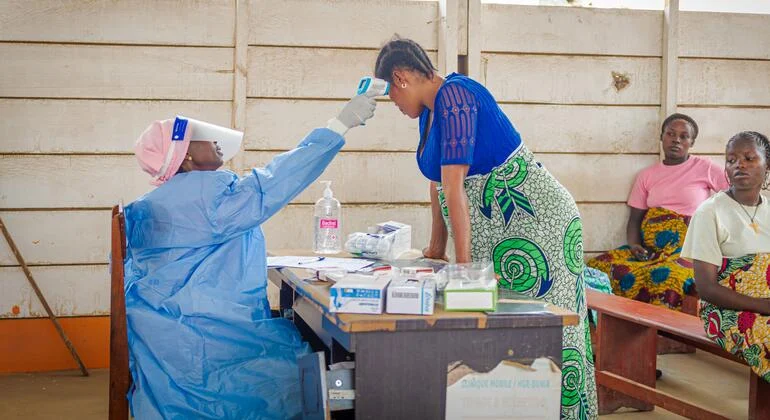
The mobility of the population, often driven by the need to flee from rebel groups, acts as a primary vector for the virus. When civilians are forced to relocate, they carry the virus into new, unexposed communities, effectively outrunning the contact-tracing efforts of health authorities. To combat this, the WHO has prioritized the expansion of safe and dignified burial protocols, strengthened referral systems, and bolstered the clinical case management capacity in the most active transmission zones.
Strategic Innovations: The Congo River Project
Recognizing that conventional land-based containment is insufficient, the WHO is launching an ambitious "Congo River Strategy." The river serves as a major artery for trade and transit in the region, acting as a potential superhighway for the virus to move between provinces.
By reinforcing control measures along the river, the WHO intends to create a series of "health checkpoints" designed to monitor travelers and identify symptomatic individuals before they can introduce the virus into new, unaffected districts. This strategy represents a pivot toward geographical containment, focusing on infrastructure rather than just individual patient care.
Official Responses and Future Outlook
The WHO’s strategy remains centered on three pillars: identification, investigation, and contact follow-up. Dr. Baldé emphasized that the agency is tailoring its approach to the specific cultural and security dynamics of each province.
"Our goal is to implement a very strong, very effective and very timely response," he stated. "We are identifying, performing in-depth investigations of cases, and rigorously listing and following all contacts."
The deployment of rapid response teams—modeled after the successful intervention in Kisangani—is now being fast-tracked for Katwa, Butembo, and other emerging hotspots. This modular approach allows the WHO to move resources quickly to areas where the epidemiological curve is spiking, preventing local clusters from becoming regional epidemics.
Implications: A Fragile Balance
The implications of the current crisis extend far beyond the immediate health impact. The combination of the Bundibugyo virus and political instability threatens the long-term socioeconomic fabric of eastern DRC. If the outbreak remains unchecked, the resulting loss of life and the collapse of local healthcare infrastructure could trigger a secondary humanitarian crisis, marked by even larger waves of displacement.
However, the stabilization observed in Goma and Mongbwalu provides a roadmap for success. It proves that the virus is not invincible and that the scientific and humanitarian interventions currently in place are effective when they reach the patient in time.
The international community remains on high alert. With the WHO shifting its focus toward proactive surveillance—particularly on the Congo River—the coming weeks will be decisive. The narrative of this outbreak is shifting from one of total uncertainty to a calculated, albeit high-stakes, race to outmaneuver a virus that thrives on chaos. As the WHO and the DRC government intensify their efforts, the world watches to see if these containment strategies can hold against the dual pressures of a highly contagious pathogen and an volatile landscape.
For ongoing updates regarding the health crisis in the DRC, readers are encouraged to subscribe to the official UN News updates or download the UN News application for iOS and Android, which provides real-time alerts on humanitarian emergencies.
 Lina Hope
 Asro
Asro
 Layla Zulfa
