

The landscape of the 2026 Emmy Awards is shaping up to be, in the parlance of its most controversial nominee, "yuuuge." As the television industry pivots toward a new era of streaming dominance and high-stakes political satire, the race for Best Animated Program has emerged as one of the most compelling narratives of the season. At the center of this storm is South Park, the long-running satirical juggernaut from creators Trey Parker and Matt Stone, which is currently positioning itself for a historic return to the Emmy spotlight.
After a five-year hiatus from the Television Academy’s good graces—its last nomination came in 2021 for The Pandemic Special—South Park is poised to secure its 19th career nomination in the category. Having already claimed the trophy five times in its storied history, the show’s potential comeback is fueled by an episode that has become the definitive lightning rod of the 2026 television cycle.

The Catalyst: "Sermon on the ‘Mount" and the Political Firestorm
Paramount+ has officially submitted the premiere episode of South Park’s 27th season, "Sermon on the ‘Mount," for Emmy consideration. The episode, which drew massive viewership and instantaneous social media discourse, centers on a plotline in which President Donald Trump—newly infatuated with Satan—coerces the residents of the titular Colorado town to integrate aggressive Christian indoctrination into their public school curriculum.
The episode culminated in a visual sequence that pushed the boundaries of network standards, depicting a fully nude, unpixelated version of the President. The artistic choice was, according to industry insiders, a deliberate attempt by Parker and Stone to force a conversation regarding the intersection of political power, corporate censorship, and the "protection" of the public gaze. The audacity of the imagery, combined with the biting script, has made the episode an inescapable topic of conversation, effectively putting the Academy in a position where they can no longer ignore the series.

A Chronology of Accolades and Hiatus
To understand the weight of a potential 2026 nomination, one must look back at the trajectory of South Park within the awards circuit. Since its debut in 1997, the show has functioned as a cultural thermometer, often capturing the anxieties of the American public with a speed that traditional live-action sitcoms cannot match.
- 1997–2000: The Ascent. The show quickly established itself as a critical darling, garnering its first nomination in 1998.
- 2005–2009: The Golden Era. During this period, the show secured back-to-back wins, establishing a dominance that many thought would never end.
- 2010–2020: The Consistency Years. South Park became a perennial nominee, rarely missing a year in the Best Animated Program category, even as the show evolved from crude cutout animation to more sophisticated, high-speed production.
- 2021: The Last Hurrah. The Pandemic Special proved that the show’s relevance was undiminished by time, securing the series its 18th nomination.
- 2022–2025: The Silent Years. A five-year drought left fans and critics questioning whether the Academy had begun to sour on the show’s increasingly nihilistic brand of humor.
The 2026 season represents a "make or break" moment for the show’s relationship with the Television Academy. With Parker and Stone recently announced as inductees into the TV Hall of Fame, the industry seems to be signaling a renewed appreciation for their decades of influence, suggesting that a nomination this year is not just likely, but probable.

Industry Response: A Divided House
The reaction to "Sermon on the ‘Mount" has been as polarizing as the subject matter itself. The Trump administration did not remain silent, issuing a scathing rebuke of the show. A spokesperson for the White House described South Park as a "fourth-rate production" that relies on "uninspired, base-level ideas in a desperate, failing attempt to remain relevant in a modern media landscape."
Conversely, the critical reception has been largely celebratory. Many television critics have praised the episode for its "fearless" commitment to its roots, noting that while other animated series have moved toward softer, more character-driven storytelling, South Park has doubled down on its role as the nation’s court jester.

Perhaps most interestingly, the episode took aim at Paramount, the show’s own corporate parent. The satirical skewering of Paramount’s recent, highly publicized merger with Skydance Media—a move that was reportedly facilitated by Trump-aligned corporate interests—was viewed by many as a masterclass in biting the hand that feeds. The fact that the network allowed the episode to air in its entirety has only added to the show’s Emmy narrative: that it is a rare, truly autonomous voice in an increasingly homogenized corporate environment.
The Competition: A Crowded Field of Contenders
While South Park is a strong contender, it faces stiff competition in the Best Animated Program category. According to Gold Derby’s aggregated data, the race is currently dominated by five major players, each bringing a different legacy to the table.

1. The Simpsons (98% Likelihood)
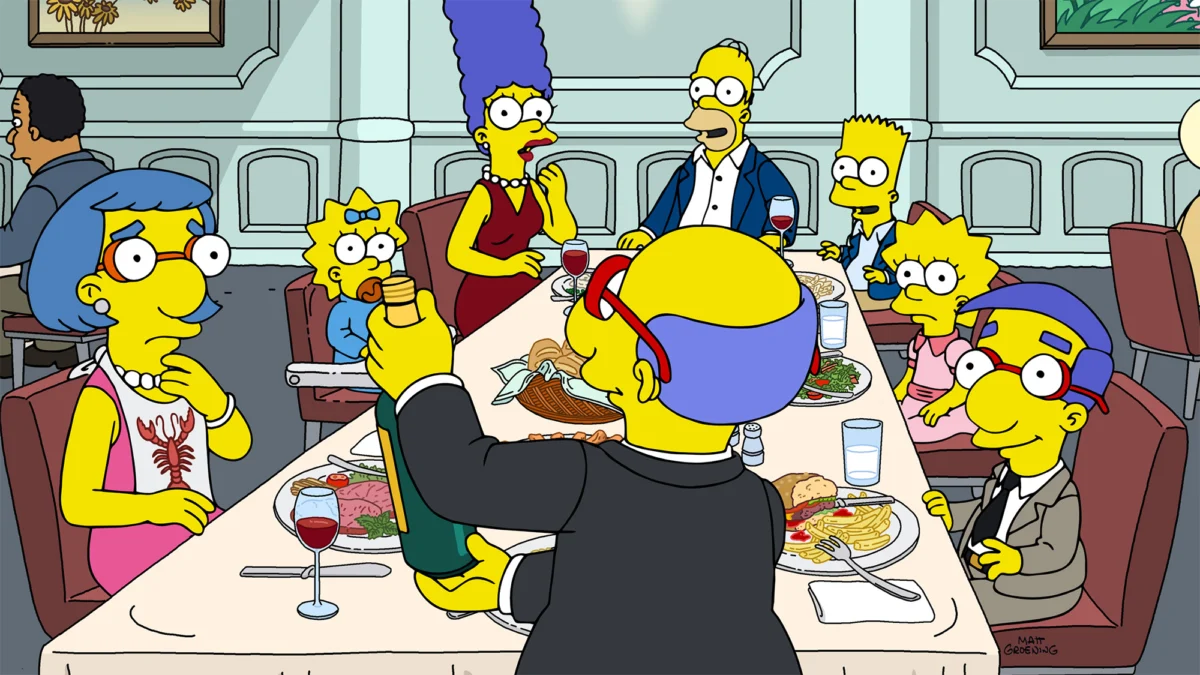
As the undisputed titan of the category, The Simpsons holds the records for the most Emmy wins (12) and the most nominations (34). Their submission, "Homer? A Cracker Bro?" (Season 37, Episode 15), follows a classic, character-driven arc that appeals to the traditionalists within the Academy.
2. Bob’s Burgers (95% Likelihood)
With two wins and 14 nominations, Bob’s Burgers remains the most consistent "critics’ choice" in the field. Their submission, "Grand Pre-Pre-Pre-Opening," taps into the nostalgic, emotional storytelling that has helped the Belcher family maintain their place in the hearts of voters for over a decade.

3. King of the Hill (75% Likelihood)
The return of King of the Hill last year was one of the most successful reboots in television history. Having won only once in 1999, the show is looking to reclaim its glory with the episode "Kahn-scious Uncoupling," which showcases the nuanced, suburban satire that made the original run so successful.
4. Star Wars: Maul — Shadow Lord (56% Likelihood)
This freshman series is the dark horse of the race. Following in the footsteps of the acclaimed Star Wars: Clone Wars, which won twice in the mid-2000s, Maul represents the high-budget, cinematic side of animation that often performs well in the technical and creative arts categories.

5. Other Notable Mentions
The long list of hopefuls includes Rick and Morty, which continues to push the boundaries of science-fiction animation, the gritty and visually stunning Genndy Tartakovsky’s Primal, and the breakout hits Invincible and Stranger Things: Tales from ’85.
Implications for the Future of Animation
The outcome of the 2026 Emmys will have significant implications for the future of adult animation. A win or even a strong showing for South Park would serve as a mandate for more politically charged, "unfiltered" storytelling. It would prove that, even in a streaming era defined by algorithms and corporate synergy, the "provocateur" model of television remains a viable and necessary component of the cultural conversation.

Conversely, should South Park be snubbed once again, it may signal that the Television Academy is pivoting toward a more "prestige" model of animation—one that prioritizes high-concept world-building and emotional depth over the satirical, topical punchlines that defined the early 2000s.
Conclusion: The Final Verdict
As we approach the nomination announcement on July 8, the industry remains on high alert. Whether or not you agree with the political stances taken by Trey Parker and Matt Stone, it is impossible to ignore the impact of their work. South Park has not only survived the shifting tides of television history but has managed to remain the most provocative voice in the room.

The 2026 Emmys are not just about who takes home the trophy; they are a referendum on what kind of television we value in a polarized age. Will the Academy reward the bold, often uncomfortable satire of a show that refuses to play by the rules? Or will they favor the comfort of legacy brands and safer, more traditional storytelling? For now, the only certainty is that South Park has once again made itself the center of the universe—and for its creators, that is the only win that truly matters.
Make your own predictions and join the conversation in our official TV forums as we count down to the big reveal.
 Ammar Sabilarrohman
 Siti Muinah
 Iffa Jayyana
