

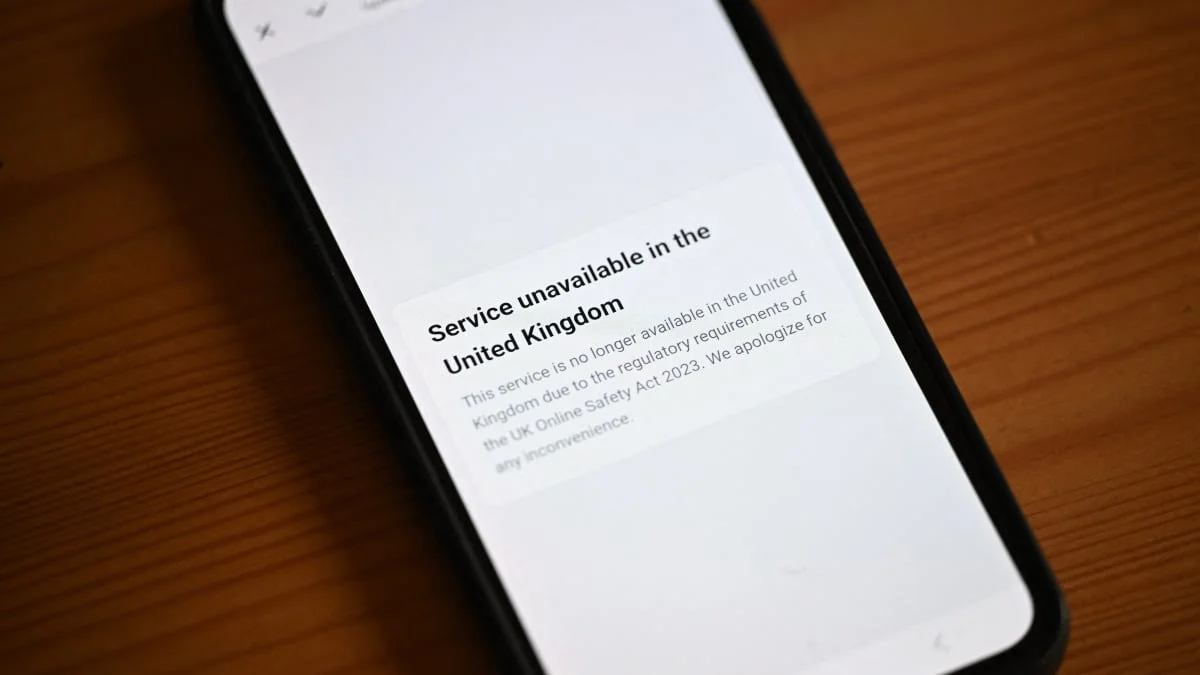
Nearly a year after the United Kingdom implemented the landmark Online Safety Act, the digital landscape for British citizens has undergone a seismic shift. Designed to shield minors from harmful content, the legislation mandates robust age assurance measures across a wide spectrum of digital platforms. As the UK’s communications regulator, Ofcom, releases its latest progress report, the findings paint a complex picture of a digital environment in transition—marked by unprecedented technical compliance, persistent loopholes, and a brewing debate over the efficacy of privacy-invasive technologies.
The Mandate: A New Digital Border
The Online Safety Act represents one of the most aggressive regulatory attempts globally to govern the internet. Unlike previous iterations of online safety regulation, which often focused on content moderation after the fact, the Act places the burden of proof on the service provider. Platforms categorized as hosting "restricted" content—a definition that spans from high-risk adult material to non-explicit forums like the r/stopsmoking subreddit—must now implement verifiable age checks.
The objective is clear: to ensure that children cannot easily access content deemed inappropriate for their developmental stage. However, the breadth of this mandate has drawn criticism from privacy advocates, who argue that the "age-gating" of the internet threatens the anonymity that was once the bedrock of the digital experience.
Chronology: From Enactment to Enforcement
The timeline of the Act’s implementation has been rapid, reflecting the UK government’s urgency to address online harm.
- July 2025: The Online Safety Act officially takes effect, triggering a mandatory compliance period for platforms to integrate age verification systems.
- July 2025 – December 2025: A period of massive scale-up. According to Ofcom, 69 million age checks were processed across a representative sample of 32 services. This figure represents a staggering 23-fold increase in verification activity compared to the preceding six months.
- January 2026: Ofcom releases its progress report, highlighting that while the "scale" of implementation is unprecedented, the "efficacy" of those systems remains highly inconsistent.
- Late 2026/Early 2027: Future milestones include a pending assessment of age-verification standards for the under-16 social media ban, alongside a formal report on app-store-level verification expected in January 2027.
Supporting Data: The Statistics of Compliance
Ofcom’s data reveals a striking disparity between the volume of checks performed and the actual reduction in exposure to harmful content.
Between July 2025 and January 2026, the proportion of minors who encountered "highly effective" age checks when prompted to prove their age rose from 25 percent to 43 percent. While this is a significant improvement, it suggests that more than half of the attempts to verify age still rely on methods that Ofcom deems less than robust.
The data concerning pornography consumption is particularly illuminating. Ofcom’s "Children’s Passive Online Monitoring" study found that 8 percent of children aged 8 to 14 had visited adult websites. Of those, only half encountered a functioning age check. Perhaps most tellingly, the nature of these visits was fleeting; 87 percent of these encounters lasted less than 30 seconds, with 65 percent concluding in under 10 seconds. This suggests that even when checks are present, they are often bypassed or abandoned by users who are not actively seeking long-term engagement with the content.
The Search Engine Conundrum
One of the most significant challenges identified in the report is the role of search giants. While the Online Safety Act mandates that pornographic sites implement checks, it does not explicitly require search providers like Google or Bing to implement age verification for the search results themselves.
The result is a discoverability crisis. Ofcom found that 33 percent of first-page results on Google and a staggering 54 percent on Bing for certain queries led to pornographic sites that lacked any age-gating or geo-blocking. This disconnect essentially allows minors to "bypass" the spirit of the law simply by using a search engine, rendering site-level compliance moot if the pathway to the content remains unblocked. Ofcom has signaled it is currently working with these search providers to address the issue, but the regulatory gap remains a point of contention.
Official Responses and Regulatory Pressure
Ofcom’s stance, as articulated in its recent press release, is one of "cautious enforcement." The regulator has already opened 23 formal investigations into providers governing 88 adult services, signaling that the grace period for compliance is effectively over.
A major point of friction is the use of "age inference"—a method where platforms use behavioral data (such as browsing history, interaction patterns, or AI analysis) to estimate a user’s age rather than asking for identification. Ofcom has publicly criticized this approach. "Our message to social media companies is clear," the regulator stated. "Those which use age inference models to comply with their child protection duties should switch to other methods listed in our guidance as highly effective without delay."
This directive places immense pressure on social media giants, many of whom have favored inference models because they are less intrusive than asking for government-issued ID. By demanding a shift toward more "highly effective" (read: more verifiable) methods, Ofcom is effectively pushing the industry toward a future where the internet is no longer anonymous by default.
The Road Ahead: Bans and Curfews
The current report serves as a precursor to even more restrictive measures. The UK government is moving toward a total ban on social media access for children under 16, a policy that will rely heavily on the same age-assurance infrastructure currently being refined.
However, the efficacy of such bans is subject to intense global debate. A recent study of a similar social media ban in Australia suggested that such policies are often ineffective because they do not account for the ease with which tech-savvy minors can circumvent verification. Furthermore, the UK has announced a "social media curfew" for teens aged 16 and 17, adding another layer of complexity to how platforms must track and manage user activity.
Implications for the Future of the Web
The implications of the Online Safety Act are profound. For the average user, the internet is becoming a more gated environment. While the protection of minors is a universally recognized public interest, the cost is the fragmentation of the web.
- The End of Anonymity: As platforms adopt high-assurance age verification, the ability to access content without providing personal data is rapidly disappearing.
- Increased Data Collection: To prove age, platforms must collect more data, creating massive honeypots of information that could become targets for cybercriminals.
- Regulatory Burden on Small Sites: While the tech giants have the resources to implement sophisticated verification, smaller, independent websites are finding it increasingly difficult to remain compliant, potentially leading to a market consolidation where only large, well-funded companies can afford to host restricted content.
As Ofcom prepares its assessment for Parliament by the end of October 2026, the central question remains: can the UK successfully build a digital wall that keeps children safe without simultaneously destroying the open, anonymous, and accessible nature of the internet? The evidence from the first year suggests that while the "walls" are going up, the gaps are still far too large to ignore, and the technology required to fill them remains fraught with privacy and ethical concerns.
The next year will be a critical test for the regulator and the industry alike. As the UK pushes for a total under-16 social media ban, the eyes of the world are watching to see if this ambitious, highly interventionist approach can actually deliver on its promise of a safer digital future.
 Nana Wu
 Neng Nana
 Reynand Wu
