

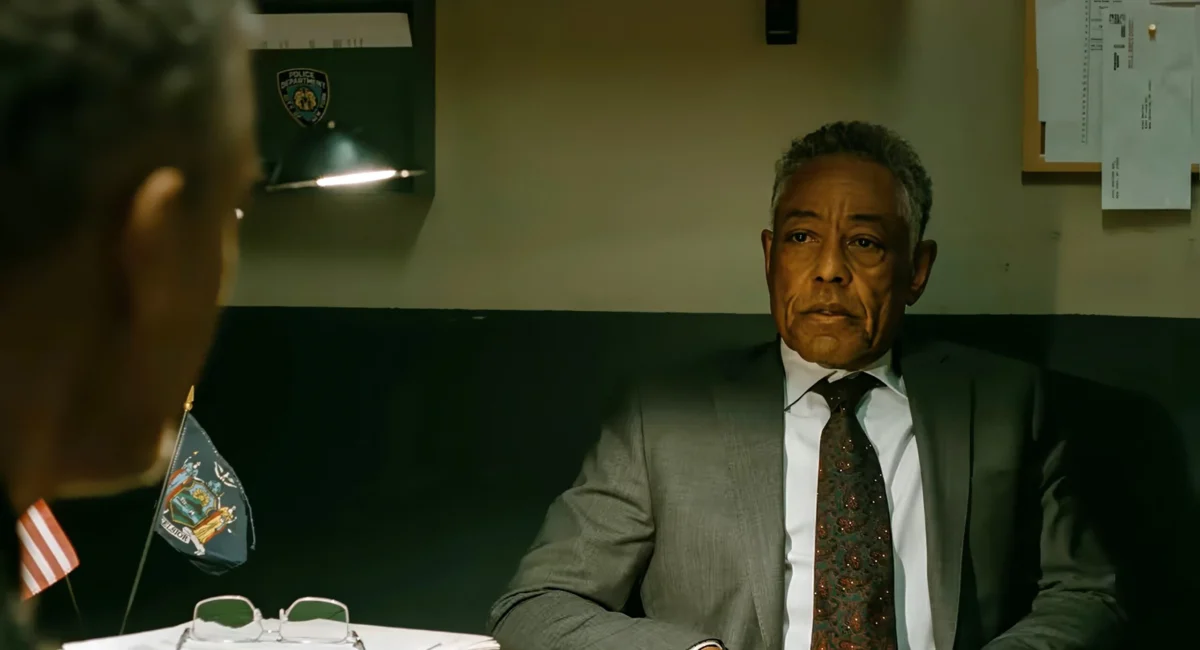
In the rapidly evolving landscape of modern cinema, where sleek digital precision often threatens to sanitize the grit and texture of the silver screen, director Noah Segan’s latest crime thriller, The Only Living Pickpocket in New York, arrives as a defiant, atmospheric love letter to a disappearing era. Starring John Turturro as Harry—a seasoned street thief navigating the perilous, rapidly gentrifying landscape of contemporary New York—the film is more than just a character study; it is a visual meditation on the tension between the analog past and the sterile, high-definition present.
At the heart of this aesthetic achievement is the collaboration between director Segan and cinematographer Sam Levy. While the two had never worked together before this project, they found an immediate, profound synergy rooted in a shared reverence for the late, legendary cinematographer Harris Savides.
A Shared Language: The Ghost of Harris Savides
To understand the visual soul of The Only Living Pickpocket in New York, one must look back to the legacy of Harris Savides, the visionary DP behind Zodiac and Margot at the Wedding. Both Levy and Turturro share a deep, formative history with Savides. Levy, in particular, rose through the ranks as a camera assistant under the master, absorbing not just technical skill, but a philosophy of observation.
"I learned from Harris that you have to sit with a space before you capture it," Levy told IndieWire. "He would tell me, ‘Just look. Take a look at what you’re doing. Don’t frame it up yet. Just sit there and look.’ That advice became the cornerstone of our approach to this film."

This shared history provided a shorthand for the production. When Turturro—who had been lensed by Savides on Margot at the Wedding—stepped in front of the camera, he and Levy were already speaking the same language. It was a connection that transcended the script, allowing for a collaborative spontaneity that is increasingly rare in modern studio productions.
The Lens as a Time Machine
The most tangible connection to the past, however, was not just the philosophy, but the hardware. The production utilized a set of Bausch & Lomb Super Baltar lenses—the same legendary glass used by Gordon Willis to craft the haunting, amber-hued visual language of The Godfather.
Yet, Levy brought an even more personal artifact to the set: a set of original, older Baltar lenses once owned by Savides himself. Integrating these lenses into the production was, for the crew, a way to "bless" the set.
"I carried Harris’ lenses with us," Levy explained. "They are incredibly similar to the Super Baltars, but they possess a different flavor, different focal lengths, and a unique, lived-in character. It felt like a piece of Harris was watching over the production."

These lenses are notoriously difficult to master. They suffer from optical aberrations, vignettes, and a tendency to flare in ways that defy modern digital control. When shot wide open, the image "falls apart," losing sharpness in a way that modern filmmakers usually strive to avoid. However, for a film about a man struggling to survive in a city that no longer recognizes him, this "imperfection" was precisely the point.
Chronology of a Production: Building the Bronx Apartment
The film’s central conflict—a desperate, high-stakes game of cat-and-mouse between Harry and a menacing vape-mogul goon played by Will Price—is anchored in the intimate, claustrophobic geography of Harry’s Bronx apartment.
The production team, led by production designer Rocío Giménez and art director Rosa Callejas, approached the apartment not as a mere set, but as a narrative character. The design phase was meticulous, focusing on the layers of history embedded in the architecture.
"We wanted it to feel textured," Giménez said. "We focused on the layers of paint, the chipped walls, the feeling of a place that has never been professionally remodeled. We reworked the kitchen and added wallpaper, all with the goal of making the space feel smaller, more intimate, and eventually, more invasive."

The shooting process involved a grueling, "painstaking" effort to capture the apartment’s shifting moods. Levy spent hours in the space, observing how the light interacted with the prewar structure. He purposely avoided modern lighting fixes, choosing instead to lean into the darkness and the "wrongness" of the space. One particularly complex shot—involving a reflection of the antagonists seen in a picture frame while the camera pans across Turturro—required days of coordination between the art department and the camera crew to ensure the lighting and staging aligned perfectly.
Supporting Data: The Tension of the 2020s
The film’s thematic weight rests on the "analog vs. digital" dichotomy. New York City, in the 2020s, is a city of rapid displacement. The film posits that Harry, a pickpocket whose skill set is rooted in physical dexterity and human psychology, is being pushed out by a world dominated by digital surveillance, vape-culture indifference, and the cold, unfeeling architecture of modern real estate.
The cinematography reflects this by rejecting the clinical "crispness" of modern digital cinema. By using the old Baltar lenses, Levy ensured that the image remained "weathered and alluring." The goal was a visual clarity that felt organic rather than soulless.
"It’s an urgent necessity to take risks," Levy noted. "To try things that are on the edge of being too dark or underexposed. We played a lot with silhouette, with shadow, and with the idea that the city itself is swallowing Harry whole."

Official Responses and Creative Vision
Director Noah Segan has remained vocal about the importance of this visual texture. For Segan, the film serves as an homage to the "gritty" New York crime thrillers of the 70s, updated for a modern context where the villains are no longer just gangsters, but the encroaching forces of an unrecognizable future.
Giménez added that the collaboration was a "team effort" that relied on letting the location speak for itself. "When you’re working in an actual New York location, you have to be patient. You have to let the building tell you where the light goes, where the shadows live, and how the character moves within it. We didn’t want to conquer the space; we wanted to inhabit it."
Implications: The Return of "Imperfect" Cinema
The critical and audience reception of The Only Living Pickpocket in New York suggests a burgeoning appetite for "imperfect" cinema. By embracing the aberrations of the past—both in terms of the equipment used and the aesthetic choices made—Levy and Segan have created a film that feels tactile and tactilely dangerous.
The implication for the industry is clear: there is a growing resistance to the hyper-polished aesthetic of streaming-era content. Filmmakers are increasingly looking for ways to inject "soul" back into the frame, whether through vintage glass, experimental lighting, or a return to practical, site-specific production design.

By honoring the late Harris Savides, the production has done more than just pay tribute to a great artist; they have effectively demonstrated that the "flaws" of yesterday are the "virtues" of today. In a world where everything can be corrected in post-production, The Only Living Pickpocket in New York stands out as a film that refuses to be fixed, choosing instead to remain as raw, beautiful, and broken as the streets it depicts.
The Only Living Pickpocket in New York is currently playing in theaters nationwide.
 Azzam Bilal Chamdy
 Nana
 Nana Wu
