

In the landscape of modern documentary filmmaking, few stories possess the visceral, immediate impact of the 2021 Kenmure Street protests in Glasgow. Felipe Bustos Sierra’s Everybody to Kenmure Street is not merely a record of a single day’s confrontation; it is a profound sociological portrait of a community refusing to abandon its own. By documenting the extraordinary eight-hour standoff that prevented the detention of two men on immigration grounds, Sierra has crafted a testament to the latent power of collective action and the enduring legacy of neighborhood solidarity.
The Catalyst: A Day That Changed Everything
On a seemingly unremarkable morning in May 2021, the residents of Pollokshields—a vibrant, multicultural enclave in the heart of Glasgow—witnessed an extraordinary scene. A UK Home Office enforcement van arrived to detain two men, citing alleged immigration violations. What followed was a masterclass in grassroots mobilization.
Within minutes, word of the detention spread through the neighborhood. Neighbors, strangers, and local activists converged on Kenmure Street, physically surrounding the vehicle. The protest, which began with a handful of people, swelled into a crowd of hundreds, effectively pinning the Home Office van in place. For eight grueling hours, the community held the line, chanting, negotiating, and refusing to disperse.
By the time the sun began to set, the authorities were forced to capitulate. The two men were released, not through a bureaucratic change of heart, but because a neighborhood had decided that, in their streets, no one would be taken away without a fight.
A Legacy of Resistance: Contextualizing the Protest
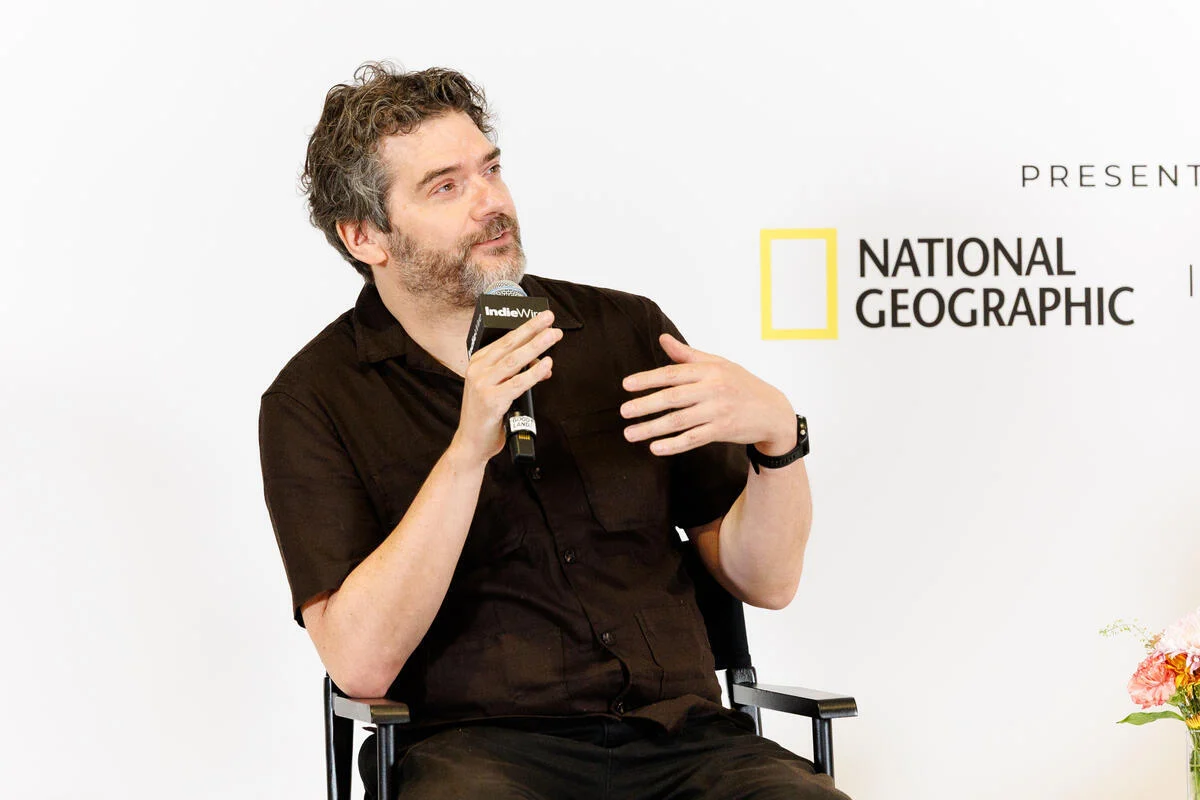
While the event at Kenmure Street felt like a spontaneous explosion of defiance, filmmaker Felipe Bustos Sierra argues that the protest was centuries in the making. During a recent appearance at IndieWire’s Art of the Doc event in Los Angeles, Sierra emphasized that the film’s narrative arc could not be contained within the eight-hour window of the protest itself.
"The Kenmure Street protests might have seemed spur-of-the-moment, but in many ways, they were a product of people’s connection to their city’s history," Sierra told IndieWire’s Chris O’Falt.
Pollokshields stands as the most diverse neighborhood in Scotland, a melting pot where over 86 languages are spoken daily. For generations, it has functioned as a de facto safe haven for those fleeing persecution, poverty, and conflict. The residents of Pollokshields are intimately acquainted with the struggle for rights, and that history informs their present-day behavior.
Sierra’s filmmaking process involved peeling back the layers of these residents’ lives to understand the "transmission of knowledge" that led them to the street. "It was always variations of fighting for women’s rights, civil rights, queer rights, housing conditions, working conditions," Sierra explained. "This shared humanity, we had to find a way to put it in the film."

The Anatomy of Solidarity: Why They Stood
One of the most poignant aspects of Everybody to Kenmure Street is the exploration of personal motivation. When interviewing the participants, Sierra often encountered a shared sense of hopelessness regarding the state of immigration policy and civil rights. Yet, it was precisely that shared feeling of vulnerability that transformed into action.
"When I was asking people, ‘What brought you to the street?’… they often talked about having no hope either," Sierra noted. "But they had that specific connection to Glasgow’s history."
This historical consciousness—a collective memory of past social movements—provided a blueprint for the protest. For many who stood on Kenmure Street, it was their first time participating in a direct action. However, the culture of care inherent in the neighborhood acted as a catalyst, bridging the gap between passive concern and active resistance. The film captures this transition beautifully, illustrating that even in moments of profound despair, the act of standing together with one’s neighbor can rekindle a sense of agency.
The Sociological Implications: Pollokshields as a Model
The implications of the Kenmure Street protest extend far beyond the borders of Glasgow. In an era of global political polarization and increasingly restrictive immigration policies, the incident serves as a blueprint for community-based civil disobedience.
1. The Decentralized Protest
Unlike traditional protests organized by formal NGOs or political parties, the Kenmure Street event was almost entirely organic. It demonstrated the power of digital communication combined with local physical proximity. When the "bat signal" went out via social media and word-of-mouth, the community responded with a level of urgency that surprised both the police and the Home Office.
2. The Limits of State Authority
The successful release of the two men highlighted the limitations of enforcement when it is met with overwhelming, non-violent public resistance. When the citizenry makes the cost of enforcement—socially, logistically, and optics-wise—too high, the state is often forced to yield. This raises significant questions about the nature of policing in diverse urban centers.
3. The Definition of "Neighbor"
Perhaps the most significant takeaway from Sierra’s film is the redefinition of who constitutes a "neighbor." In a neighborhood where 86 languages are spoken, the bond between residents is not based on shared ethnicity or national origin, but on the shared experience of living in a community that values human dignity over bureaucratic process.
The Role of Documentary in Social Change
Felipe Bustos Sierra’s work aligns with a long tradition of documentary filmmakers who view the camera as a tool for social justice. By capturing the intimate moments of the protest—the exhaustion, the adrenaline, the shared meals passed through the crowd, and the final moments of victory—he transforms an abstract political event into a deeply human story.

National Geographic Documentary Films, which has been at the forefront of supporting such narratives, recognizes the importance of these stories. As part of a mission to bring "timely, provocative and globally relevant stories" to a massive international audience, the inclusion of Everybody to Kenmure Street in their catalog highlights a commitment to stories that challenge the status quo.
From Oscar-nominated works like The Territory and Bobi Wine: The People’s President, to the Peabody-winning Sugarcane, the current wave of documentary filmmaking is increasingly focused on the intersection of individual agency and systemic oppression. Sierra’s film fits firmly within this lineage, reminding audiences that the most significant changes often begin on our own doorsteps.
Looking Ahead: The Aftermath and the Lessons
As Everybody to Kenmure Street reaches wider audiences through global platforms like Disney+ and Hulu, the conversation surrounding the events of 2021 continues to evolve. The protest did not "solve" the issue of immigration enforcement, nor did it end the anxieties of those living in precarious legal situations. However, it did something arguably more important: it created a tangible, documented precedent for resistance.
The film serves as an archive of a moment when the status quo was interrupted. It challenges the viewer to consider their own relationship to their community. Would you stand on the street for a neighbor? Do you know the history of the ground you walk on?
In his conversation with IndieWire, Sierra reflected on the necessity of this work: "It was a very spontaneous protest. It was the very first protest for many people who turned up. But there had been this transmission of knowledge of history, of care, and that clearly came out."
Conclusion: A Portrait of Resilience
Everybody to Kenmure Street is more than just a documentary; it is a mirror held up to society. It asks us to confront the reality of our immigration systems while offering a glimmer of hope through the lens of local solidarity. Felipe Bustos Sierra has not only documented a protest; he has documented the survival of the human spirit in the face of institutional pressure.
By focusing on the "why" rather than just the "what," Sierra has ensured that the events on Kenmure Street will not be forgotten. As we look at the state of the world today, the story of this small neighborhood in Glasgow stands as a powerful reminder: when we act as a community, we are capable of bending the arc of history, even if only for a few hours, even if only on one street.
The film stands as a testament to the fact that when people choose to care for one another—when they choose to be "everybody"—the impossible becomes, for a brief and shining moment, entirely possible.
 Nana
 Azzam Bilal Chamdy
 Lina Hope
