

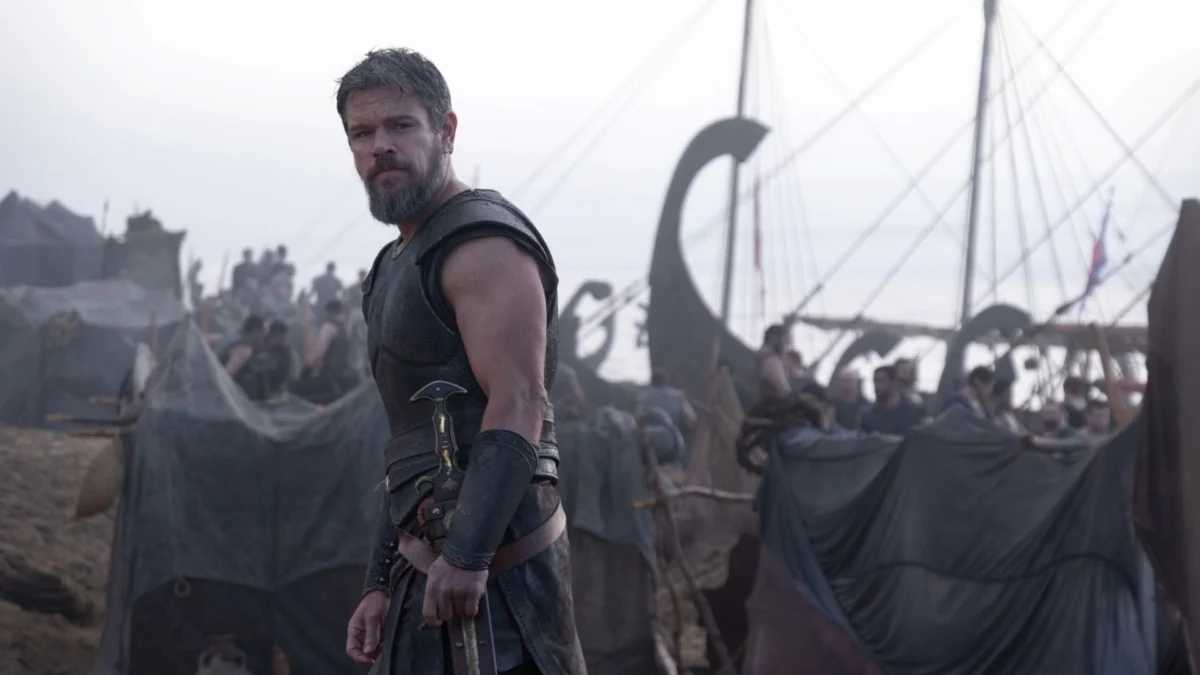
In the landscape of modern cinema, few images are as enduring or as loaded with subtext as the Trojan Horse. It is a vessel of paradox: a gift that is a weapon, a peace offering that brings total destruction, and a masterstroke of strategy that ultimately condemns its architect to a life of wandering. While the story of the fall of Troy has been retold countless times, director Christopher Nolan’s latest epic, The Odyssey, approaches the myth not as a historical footnote, but as the foundational trauma of Western civilization.
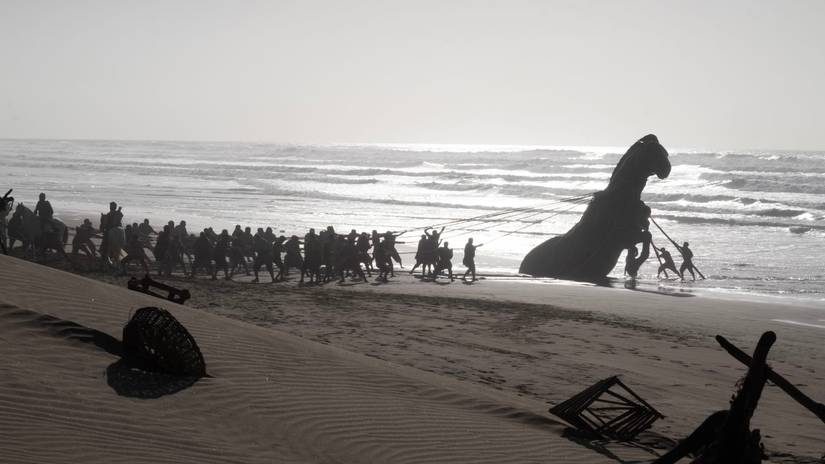
At the heart of the film’s haunting visual language is a singular, staggering shot: the massive, hollow effigy of a horse, abandoned on a desolate beach, slowly being reclaimed by the relentless tide. This is not merely a production design triumph; it is a manifestation of an idea that has occupied Christopher Nolan’s creative consciousness for over two decades.
The Genesis of an Image: A Two-Decade Evolution
Christopher Nolan’s relationship with Homer’s epic began long before the cameras rolled on his current production. In 2004, the British filmmaker was heavily linked to a high-budget adaptation of The Iliad, titled Troy. While that project eventually migrated to director Wolfgang Petersen—shifting the landscape of the Hollywood blockbuster at the time—the period of development left an indelible mark on Nolan’s imagination.
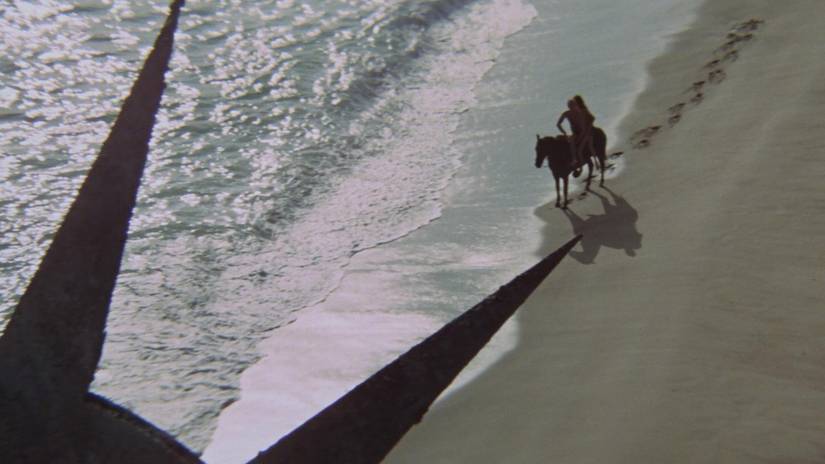
"As part of that process, I had to work out how I wanted to treat the Trojan Horse," Nolan noted in a recent interview with the film analysis outlet Stepping Through Film. "I was very influenced by seeing The Planet of the Apes when I was a kid. We had the Statue of Liberty half-destroyed. That idea of a fallen monument—something that represents the pinnacle of a culture being discarded, eroded, and rendered impotent—that stuck with me."

The comparison is profound. Franklin J. Schaffner’s 1968 science fiction masterpiece utilized the sight of the submerged Statue of Liberty to recontextualize the entire narrative, transforming a story about an alien world into a cautionary tale about human hubris. Nolan, it seems, has attempted a similar feat with the wooden horse in The Odyssey. By placing the structure on the beach, looming and decaying, he forces the audience to view the Trojan War not through the lens of ancient glory, but through the lens of the environmental and moral wreckage left in its wake.
Chronology of a Masterpiece
To understand the weight of this imagery, one must look at the timeline of Nolan’s career:
- 2004: Nolan begins initial research and conceptual sketches for an adaptation of the Trojan War. He first conceives of the horse as a "sunken relic" rather than a towering instrument of war.
- 2005–2023: While Nolan pivots to the Dark Knight trilogy, Inception, and Oppenheimer, the concept of "civilizational collapse" remains a thematic North Star. The "abandoned horse" concept is kept in his notebook, evolving from a simple background prop to a central narrative device.
- 2024: Pre-production for The Odyssey begins. Nolan insists that the horse be built as a practical, massive structure rather than a digital creation, mirroring his commitment to tactile filmmaking.
- 2025: Principal photography commences. The beach sequences are filmed on location, utilizing natural light and the unpredictable tides to mirror the erosion of the horse.
- July 2026: The Odyssey is released to critical acclaim, with the horse sequence cited as the film’s visual centerpiece.
Deconstructing the Myth: A Shift in Perspective
In traditional retellings, the Trojan Horse is a symbol of Odysseus’s tactical brilliance. It is the clever "trick" that ends a ten-year stalemate. However, The Odyssey—starring Matt Damon as the eponymous hero—subverts this by framing the event through the subjective, traumatized memory of the protagonist.
The film introduces the horse through multiple perspectives. The bard Phemius (played with haunting charisma by A$AP Rocky) recounts the story as a tale of triumph, painting Odysseus as a god-like strategist. Later, Menelaus (Jon Bernthal) offers a more grounded, brutal recollection. But it is in the final act, during a quiet, intimate conversation between Odysseus and his wife, Penelope (Anne Hathaway), that the truth is unveiled.

In this version, the horse is not a trophy. It is a tomb. Through Nolan’s lens, we see the psychological toll of the sacking of the city. The "victory" is revealed to be a slaughter, an act of such profound moral betrayal that it fundamentally alters the cosmic order.
The Violation of Xenia
A central pillar of the film’s narrative is the concept of Xenia—the ancient Greek code of hospitality. In the film’s universe, the Trojan Horse is not just a military ruse; it is the ultimate desecration of the sacred bond between host and guest.
By using the mask of a religious offering to gain entry into the city and then butchering the inhabitants, Odysseus violates Zeus’s Law. This transgression provides the philosophical stakes for the rest of the film. The collapse of the Greek world, the emergence of the mysterious "Sea People," and the infestation of Odysseus’s home in Ithaca by greedy suitors are presented as the direct, karmic consequences of this singular act of deception.
The horse on the beach serves as a tombstone for Xenia. It is a visual representation of a world that has lost its moral compass. As the tides wash over the wood, the viewer is reminded that when you destroy the laws of humanity, you are eventually destroyed by the chaos that follows.
Official Responses and Creative Implications
Critics have noted that the film’s somber tone is a stark departure from the action-heavy adaptations of the early 2000s. Universal Pictures, the studio behind the project, has leaned into this "prestige epic" marketing, emphasizing the psychological depth over the spectacle.
In a recent press junket, Matt Damon reflected on the experience of acting alongside the practical set piece: "It’s not just a prop. When you walk inside that structure, it feels suffocating. It feels like the weight of every life you’ve taken is pressing down on the wood. Chris [Nolan] wanted us to feel the claustrophobia of the war we’d just finished, not the triumph of winning it."
The implications of this creative choice are significant. Nolan is effectively moving the "sword and sandal" genre into the realm of the existential thriller. By turning the Trojan Horse into a symbol of guilt, he transforms the audience’s expectation. We are no longer rooting for the soldiers to crawl out of the horse; we are dreading it.
Conclusion: The Legacy of the Fallen Monument
The image of the sunken horse at the end of The Odyssey is perhaps the most resonant shot in Christopher Nolan’s entire filmography. It echoes the ending of Planet of the Apes—a moment of profound realization where the protagonist realizes that the "home" they are trying to return to has been fundamentally poisoned by their own actions.
As the credits roll, the audience is left with the haunting image of the wooden structure—a monument to human ingenuity and, ultimately, human cruelty. Christopher Nolan has successfully taken a 3,000-year-old myth and stripped away the armor, leaving only the man, the memory, and the tide. It is a masterclass in visual storytelling, proving that even the most well-known stories can be made new again if one is willing to look at them through the eyes of the person who paid the highest price for the victory.
The Odyssey is currently in theaters, and for those who have spent decades pondering the weight of the Trojan Horse, it is an essential, if harrowing, cinematic experience.
 Basiran
 Suro Senen
