

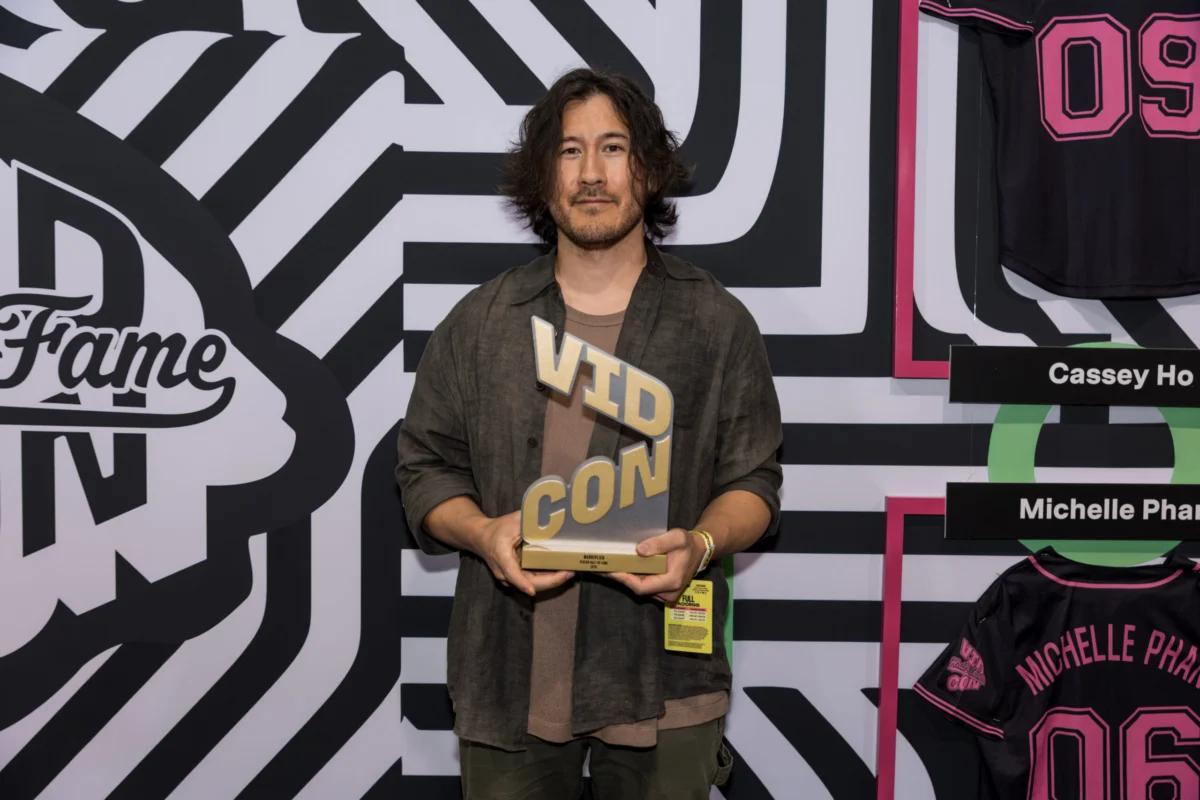
In the volatile landscape of modern entertainment, where legacy studios grapple with shrinking theatrical windows and the fragmentation of traditional media, a new power structure is emerging from the digital ether. At the forefront of this revolution is Mark Fischbach, known to his 36 million subscribers as Markiplier. What began as a career defined by gaming "Let’s Plays" has evolved into a seismic disruption of the independent film industry.
Six months ago, Fischbach sent shockwaves through the industry with Iron Lung, a self-distributed feature film that grossed a staggering $50 million worldwide. Today, he is no longer viewed merely as a "YouTube phenomenon" but as a foundational pillar of what industry insiders are calling the "holy triumvirate" of digital-to-cinema crossovers, alongside Kane Parsons (The Backrooms) and Curry Barker (Obsession).
Fischbach’s journey represents more than a personal success story; it is a case study in the maturation of the creator economy. Having recently been inducted into the VidCon Hall of Fame, Fischbach is leveraging his massive influence to act as a "matchmaker" between the raw, community-driven energy of YouTube and the sophisticated, albeit often rigid, machinery of Hollywood.
Main Facts: The $50 Million Proof of Concept
The financial and cultural footprint of Iron Lung cannot be overstated. By bypassing traditional distributors and leveraging a direct-to-audience marketing strategy, Fischbach proved that a creator with a sufficiently loyal following could effectively ignore the traditional gatekeepers of cinema.
The film, based on the indie horror game by David Szymanski, benefited from a pre-built audience that was not only aware of the IP but emotionally invested in Fischbach’s creative journey. The $50 million gross was achieved through a strategic release across 2,500 screens—a feat usually reserved for mid-budget studio ventures.
However, the "Markiplier Model" is not just about the numbers. It is about the transition from content creation to world-building. Alongside Kane Parsons, who secured a deal with A24 to direct a feature version of his viral Backrooms series, and Curry Barker, whose film Obsession found a development home within YouTube’s internal ecosystem, Fischbach is proving that the internet is no longer a "minor league" for talent. It is the new R&D department for the entire film industry.

Chronology: From Digital Native to Cinematic Disruptor
The path to Fischbach’s current status as a Hollywood power player has been a decade in the making, marked by several key evolutionary phases:
- The Foundation (2012–2018): Fischbach built one of the most engaged communities on the internet. Unlike traditional celebrities, his relationship with his audience was forged through daily, long-form interaction, creating a "currency of loyalty" that would later become his most valuable asset.
- The Narrative Pivot (2019–2022): With projects like A Heist with Markiplier and In Space with Markiplier, Fischbach experimented with high-production-value, interactive storytelling. These projects served as a training ground for directing, editing, and managing large-scale productions.
- The Iron Lung Breakthrough (2023–2024): Fischbach moved into feature-length horror. By handling the distribution and marketing himself, he maintained total creative and financial control, leading to the massive box office returns that caught Hollywood’s attention.
- The Matchmaker Era (Present): Following his success, Fischbach has entered a phase of institutional building. He is currently navigating conversations with major studios not as a job seeker, but as a peer looking to reshape how creators enter the industry.
Supporting Data: The Value of the Creator Economy
The rise of Markiplier coincides with a broader economic shift. The creator economy is currently estimated to be worth over $250 billion, with projections suggesting it could double in the next five years.
Legacy media is taking notice because the traditional model of "making people fall in love with a thing they’ve never heard of" is becoming prohibitively expensive. In contrast, creators like Fischbach bring a "hot" audience to the table. According to industry data, films with a pre-existing digital fandom see a 40% higher engagement rate in opening weekend social media mentions compared to original studio IPs with similar marketing budgets.
Fischbach’s 36 million subscribers represent a demographic that traditional television and print media struggle to reach. By bringing this audience to the cinema, he is essentially providing a lifeline to the theatrical experience, which has struggled to attract Gen Z and Alpha viewers in consistent numbers.
Official Responses: Insights from the VidCon Hall of Fame
In a recent interview following his induction into the VidCon Hall of Fame, Fischbach provided a rare look into his interactions with the "Hollywood engine." His perspective is one of cautious optimism, characterized by a refusal to become a "creature" of the system.
On the "Matchmaker" Role
Fischbach is increasingly focused on infrastructure rather than just his own filmography. "I want to help other creators to make their projects," he stated. "I’m able to kind of play matchmaker—like, I’ve talked to these studios, I think this might be a good fit for you to try to direct your first thing. It feels great to be in a position where I can affect change."

On the Hollywood Disconnect
When asked about Hollywood’s understanding of the creator space, Fischbach noted a divide. "The larger the company, usually the harder it is for them to get it," he explained. However, he was quick to defend the individuals within those systems. "Even in some of the big, seemingly soulless companies, there’s a lot of really passionate people who want to make art… they’ve found their niche somewhere on the business side, but all of them love making movies."
On Technical Sovereignty
Fischbach is not looking to outsource his creative process entirely. He revealed plans to build his own post-production house to leverage new technologies and maintain the "hand-crafted" feel of his work. "I did too much myself [on Iron Lung], but I like editing anyway and I want to shape it in a way that I can leverage technology."
On the "Currency of Loyalty"
The most profound takeaway from Fischbach’s recent commentary is his philosophy on audience engagement. He views the relationship with his fans as a sacred trust. "It’s this currency of loyalty that is so hard to quantify," he said. "You have to pay it back… You can’t just be so greedy and want money that you need to claw everything out of it. You have to understand that it’s all feeding itself."
Implications: A New Era of Independent Film
The success of Markiplier and his contemporaries signals a permanent shift in the power dynamics of filmmaking. There are three primary implications for the future of the industry:
1. The Death of the Traditional Gatekeeper
For decades, the path to a $50 million film required the blessing of a handful of studio executives. Fischbach has proven that with a digital platform, a creator can act as their own studio, distributor, and marketing agency. This democratizes the industry but also places a higher premium on "community building" over traditional networking.
2. Horror as the Gateway Genre
It is no coincidence that the most successful creator-led films—Iron Lung, The Backrooms, and Obsession—fall within the horror genre. Horror allows for high-concept, low-budget execution where the atmosphere and "virality" of the scares are more important than A-list stars. This genre will likely remain the primary entry point for digital creators transitioning to film.

3. The Hybrid Distribution Model
Fischbach’s satisfaction with his YouTube distribution deal, paired with his theatrical success, suggests a future where "theaters vs. streaming" is no longer a binary choice. Instead, creators will use a hybrid model: theatrical releases for "event" status and community milestones, followed by long-term hosting on platforms like YouTube where they maintain a direct link to their subscribers.
Conclusion: The Sustainable Creative Loop
As Mark Fischbach looks toward his next project, his focus remains surprisingly grounded. Between navigating studio deals and planning his post-production house, he remains dedicated to his personal life—recently spending time helping his rescue dog recover from hip surgery.
This balance of high-level industry disruption and personal authenticity is perhaps the secret to his longevity. By refusing to be absorbed by Hollywood, he has forced Hollywood to come to him. His goal is no longer just to make movies, but to ensure that the "window" he opened remains wide enough for the next generation of digital artists to walk through.
The "Markiplier Phenomenon" is not a fluke; it is the blueprint. As creators continue to support other creators, the loop of inspiration and production will only grow, potentially creating a parallel film industry that is more responsive, more loyal, and more profitable than the one that preceded it.
 Jia Lissa
 Iffa Jayyana
