

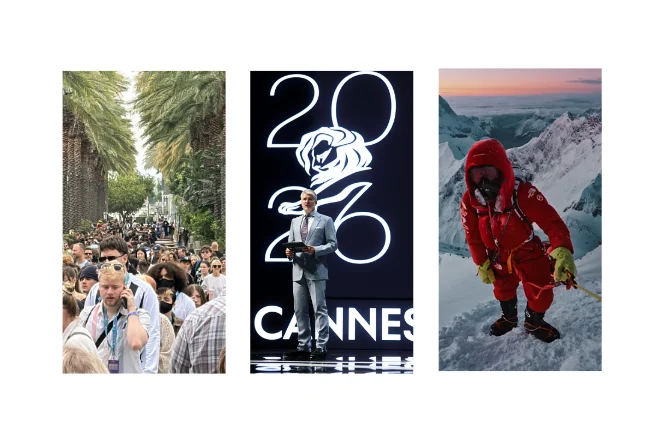
The global entertainment landscape is currently undergoing a tectonic shift, one where the traditional barriers between "amateur" content and "prestige" cinema are not just blurring—they are being obliterated. This summer, two events occurring 6,000 miles apart served as the dual epicenters of this transformation: VidCon in Anaheim, California, and the Cannes Lions International Festival of Creativity in France. While one event is a sweltering celebration of fandom and the other a glitzy corporate summit, they both told the same story from different ends of the telescope: the creator economy is no longer a peripheral industry; it is the new Hollywood.
Main Facts: The Collision of Two Worlds
The contrast between the two events could not have been more striking. In Anaheim, the scene was one of controlled chaos. On June 25, 2026, registration for VidCon was delayed by more than an hour due to fire marshal concerns, leaving a massive, diverse crowd snaking around the Anaheim Convention Center. This assembly—a kaleidoscope of pink-sneakered tweens, gothy teenagers, costumed cosplayers, and "towheaded kids" flanked by their parents—represented the raw power of the modern audience.
Simultaneously, at the Cannes Lions festival, the advertising world’s premier "boondoggle" was completing its transition into a creator-centric takeover. The presence of Creative Artists Agency (CAA) at Lions for the first time, armed with a $250 million creator fund dubbed "Compound Creative" (a joint venture with TPG), signaled that the institutional money of Hollywood had officially arrived at the creator’s doorstep.
However, the transition is not without its friction. While the money is moving, the culture remains divided. Naomi Lennon, a veteran creator manager, recounted a telling anecdote from the French Riviera: a Gen Z executive at the festival reportedly asked, "What is a CAA?" This highlights a growing disconnect—a new generation of power players is emerging that doesn’t just ignore the old guard; they aren’t even aware it exists.
Chronology: From Basement Secrets to Global Dominance
To understand the current scale of this movement, one must look at the evolution of VidCon. Former VidCon CEO Jim Louderback, who now publishes the Inside the Creator Economy newsletter, has watched this trajectory since 2010. In those early days, VidCon was a modest gathering of 1,500 people in a hotel basement located, ironically, right across the street from CAA’s headquarters.
"We felt like we were in on a secret nobody else understood yet," Louderback noted. That secret—that individuals with cameras and internet connections could command more loyalty than movie stars—is now a multi-billion dollar reality.
The timeline of this maturation can be broken down into three distinct phases:
- The Community Era (2010–2017): Focused on fan-to-creator interaction and the birth of "YouTube famous" personalities.
- The Platform War Era (2018–2023): The rise of TikTok, Instagram Reels, and YouTube Shorts, where algorithms began to dictate the flow of attention.
- The Startup Era (2024–Present): Where creators are no longer just "influencers" but CEOs of diversified media conglomerates.
Supporting Data: The Creator as a Startup CEO
The shift from "personality" to "enterprise" was the dominant theme of VidCon’s Industry Track. The modern creator is no longer just a performer; they are the head of a vertically integrated startup.

The Metrics of Mastery
Unlike traditional entrepreneurs who might transition into the creator space, most top-tier creators have never held a traditional job. They have learned to build businesses from the ground up by mastering:
- Product-Market Fit: Using real-time feedback loops (comments, likes, shares) to iterate content daily.
- Advanced Analytics: VidCon panels now feature sophisticated deep dives into audience retention metrics, average watch times, and "click-through-rate" optimization that rival the data rooms of major tech firms.
- Direct Distribution: The ability to bypass traditional gatekeepers and speak directly to a "loyalist" audience.
The New Greenlight Metric
Platform executives are now pivoting their development strategies. At VidCon, a major platform head revealed that the single most important metric for greenlighting new projects is "accumulated time spent." They aren’t looking for a single viral hit; they are looking for creators whose audience has already spent hundreds of hours watching their previous work. This "watch time" acts as a form of social equity that can be cashed in for larger, more ambitious projects.
Official Responses and Case Study: The "Kaizen" Phenomenon
The most potent example of this new leverage is the story of the French creator Inoxtag. With over 9.4 million subscribers, Inoxtag produced a documentary titled Kaizen, chronicling his attempt to climb Mount Everest. The distribution strategy and subsequent negotiations with Disney+ serve as a blueprint for the future of creator-led cinema.
The Theatrical Disruptor
In September 2024, the distribution company MK2 agreed to show Kaizen in theaters for a single night. The results were staggering:
- Ticket Sales: 350,000 tickets sold in one day.
- Screenings: 1,000 screenings across multiple territories.
- Technical Impact: The surge in demand crashed the websites of nearly every major French theater exhibitor.
The following day, the film was released for free on YouTube, where it garnered 10 million views in its first 24 hours.
The Disney+ Standoff
When Disney+ expressed interest in licensing Kaizen, they brought a traditional Hollywood mindset to the table, demanding exclusivity. This would have required Inoxtag to remove the film from YouTube. Inoxtag refused, citing a promise to his fans that the content would remain accessible to everyone.
Gregg Bywalski, managing director of the global holding company Webedia, which represents Inoxtag, noted that Disney was likely caught off guard. "I don’t think they’re used to that kind of answer," Bywalski said. Ultimately, the power dynamic shifted in favor of the creator: Kaizen is now available on both Disney+ and YouTube. Inoxtag’s refusal wasn’t a tactical negotiation ploy; it was a fundamental adherence to the "creator-to-fan" social contract.
Implications: The Vulnerability of Indie Film
The rise of the creator economy presents a daunting challenge to the traditional independent film industry. For decades, the "indie" path relied on a specific set of credentials: film festival pedigree (Sundance, Cannes, SXSW), critical acclaim, and institutional backing. However, this system is under immense pressure.

The Language Barrier
Indie filmmakers often speak a "language" of prestige that is becoming increasingly foreign to the distributors and financiers who now prioritize data. While a filmmaker might bring a glowing review from The Hollywood Reporter, a creator brings 350,000 pre-sold tickets and 10 million guaranteed views.
The Audition Filter
This shift is already impacting the labor market. Actors now report that social media statistics are a mandatory part of the audition process. Casting agents often use follower counts as a primary filter, treating digital reach as a hedge against financial risk. For the indie filmmaker without a built-in digital audience, the ability to say "no" to a bad deal—as Inoxtag did—is non-existent.
The "Drift" into Normality
The most significant implication is what Louderback and others describe as "the drift." No single policy change is making creators the new kings of Hollywood; it is a gradual shift in the criteria for what constitutes a "viable project." By the time the industry notices that follower thresholds and watch-time metrics have become the norm, the transition will be complete.
Conclusion: A Transition or a Crisis?
The events at VidCon and Cannes Lions suggest that the entertainment industry is at a crossroads. For creators, this is an era of unprecedented autonomy and wealth. They are no longer waiting for a seat at the table; they are building their own tables and inviting the studios to sit down.
For the traditional indie filmmaker, the situation is more precarious. The "leverage" that Inoxtag displayed was built over years of daily interaction and trust with millions of people. It is a level of influence that cannot be replicated by a single festival win or a positive critical reception.
As the "secret" that Jim Louderback saw in a hotel basement in 2010 becomes the global standard for 2026 and beyond, the open question remains: can the artistry of traditional filmmaking survive in a marketplace that speaks only the language of metrics? The answer may lie in whether filmmakers can learn to build the same "sqirrelly" and obsessed fanbases that currently fuel the creator economy. If they cannot, they may find themselves holding credentials for a world that no longer exists.
 Jia Lissa
 Lina Irawan
 Iffa Jayyana
