

In the ever-evolving landscape of global contemporary art, few figures possess the intellectual breadth and disciplined curiosity of South African polymath William Kentridge. Known for his seminal contributions to printmaking, animation, and sculpture, Kentridge has spent six decades interrogating the intersections of history, memory, and the human condition. His latest endeavor—a profound exploration of his own creative process—serves as the centerpiece of this week’s discourse, even as the art world grapples with the encroaching shadows of political intervention at the highest levels of institutional exhibition.
The "Safe Space for Stupidity": William Kentridge’s Dendritic Process
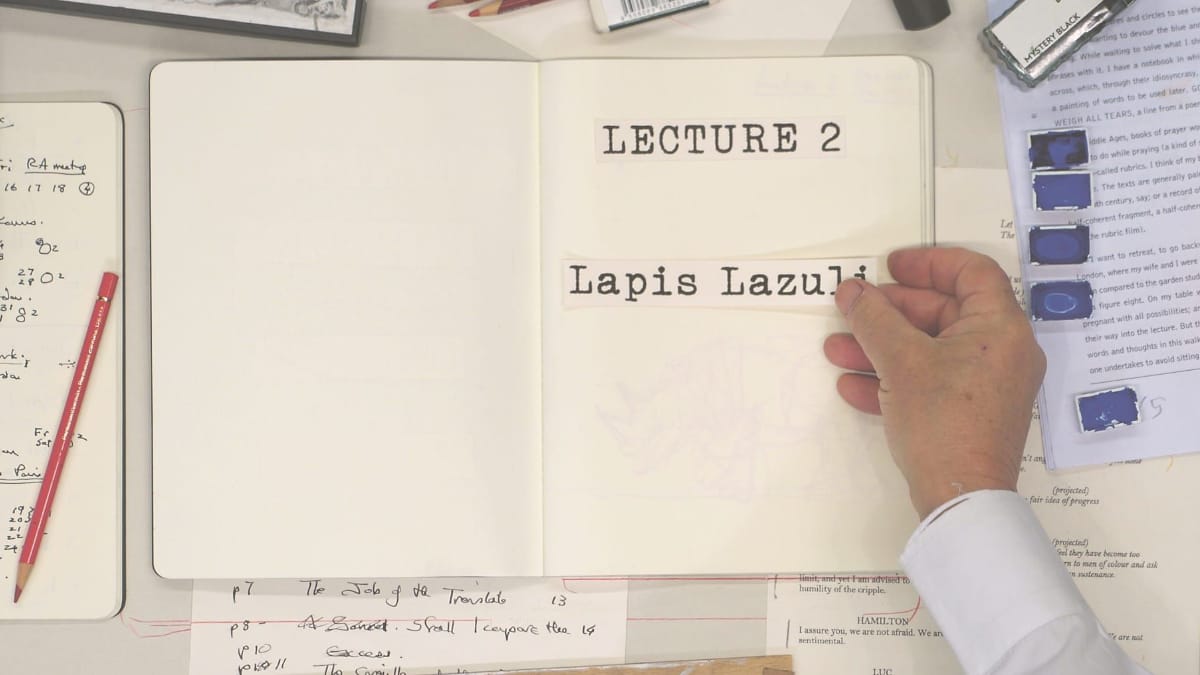
William Kentridge has long described his studio not as a sanctuary of polished perfection, but as a "safe space for stupidity." It is within this humble framework of trial and error that his complex, multi-layered works emerge. In a recent lecture delivered at the University of Oxford in 2024, Kentridge provided a rare glimpse into the "dendritic"—or branching—nature of his artistic evolution.
This philosophy is now codified in a new publication that dissects the anatomy of his studio practice. Perhaps the most compelling takeaway from this collection is his meditation on the color blue—specifically, the rare, luminous pigment derived from lapis lazuli.

"Some years ago, two friends gave me a block of watercolour, pure lapis lazuli from Afghanistan," Kentridge reflects. "Lapis lazuli is a precious pigment used sparingly in Renaissance painting, now more generally replaced by French ultramarine. But there is an intense blueness in lapis, a colour coming off the paper towards you that is unmatched by any synthetic colour."
For an artist whose monochromatic charcoal drawings have defined his visual language, the introduction of this vibrant, ancient pigment presented a psychological hurdle. Kentridge describes being "caught," overwhelmed by the urge to utilize the color yet paralyzed by the difficulty of integrating such an "unmatched" hue into his established aesthetic. His solution was characteristically oblique: he began by painting phrases and texts with the pigment, allowing the language to occupy the space that his figures could not. This anecdote serves as a microcosm of Kentridge’s broader career—a process of intellectual wrestling that prioritizes the journey of discovery over the finality of the product.
Chronology of Influence: From the Studio to the Global Stage
To understand the weight of Kentridge’s current insights, one must look at the arc of his six-decade career.
- The Early Years: Emerging during the tail end of the apartheid era in South Africa, Kentridge’s work was fundamentally shaped by the necessity of documenting a society in flux. His stop-motion animation films, featuring the recurring characters Soho Eckstein and Felix Teitelbaum, became essential viewing for those trying to map the psychological landscape of post-colonial trauma.
- The Institutional Pivot: Throughout the 1990s and 2000s, Kentridge transitioned from a regional powerhouse to an international fixture, with major retrospectives at the Museum of Modern Art (MoMA) and the Metropolitan Museum of Art.
- The Lecture Series (2024): His Oxford lectures marked a shift toward a more pedagogical phase of his career, where he began to explicitly deconstruct the methodology behind his success, emphasizing the "stupidity" and failure that precede breakthroughs.
- The Current Moment: Today, Kentridge’s work is increasingly concerned with the nature of archives, the permanence of the digital record, and the persistence of the human hand in an era of automation.
Supporting Data: The Economics and Ecology of Art
While Kentridge explores the ethereal nature of pigment, other sectors of the art market are operating with cold, hard figures. The recent sale of a Amedeo Modigliani nude for $63.9 million serves as a stark reminder of the financial stakes inherent in the industry. Such figures highlight the massive disparity between the "studio-as-laboratory" approach—favored by artists like Kentridge and painter Richard Tsao—and the "asset-class" reality of the auction house.
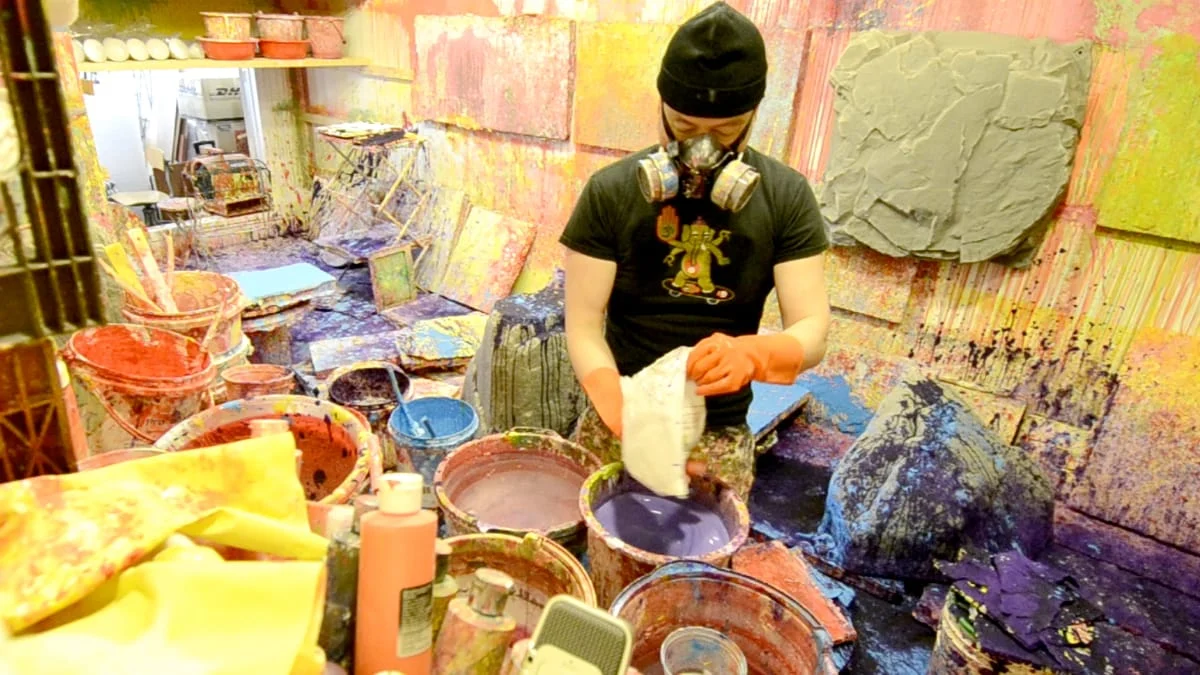
Richard Tsao, whose "Flood Room" paintings have garnered significant critical acclaim, offers a contrasting narrative to the high-stakes market. In a recent interview, Tsao compared his long-standing artistic practice to "the need for food." For Tsao, the act of painting is a fundamental biological requirement, a daily ritual that defies the market’s demands for constant novelty. This sentiment echoes the broader "Slow Art" movement, which advocates for sustained engagement with artistic objects rather than the rapid, speculative turnover that defines much of the contemporary scene.
Political Implications: The Venice Biennale and Executive Meddling
While artists grapple with the purity of their process, the institutions that house their work are facing unprecedented political pressure. Reports indicate that the Trump administration has begun to exert influence over the U.S. representation at the Venice Architecture Biennale.
The Venice Biennale, long considered the "Olympics of the Art World," has traditionally functioned as a platform for curatorial independence and cultural diplomacy. However, the prospect of executive meddling in the selection and thematic direction of the American pavilion represents a significant shift. Critics argue that such interference threatens to turn a space of international exchange into a theater for partisan signaling.
The implications are two-fold:
- Censorship of Vision: If the state dictates the narrative of the pavilion, it risks alienating the international architectural community and stifling the innovation that the Biennale is meant to foster.
- Institutional Erosion: The legitimacy of national pavilions relies on the perception of their relative autonomy. Should this autonomy be compromised, the U.S. pavilion risks becoming a pariah in a global context that prizes intellectual freedom.
This development serves as a sobering counterpoint to the creative freedom Kentridge advocates for in his studio. While Kentridge argues that the "safe space" for failure is where innovation lives, political meddling creates a "dangerous space" where creative risk is punished by administrative oversight.
A Look Ahead: Navigating the Cultural Landscape
As we navigate the latter half of the decade, the divide between the artistic process and the political sphere continues to widen. Whether it is the $90,000 fellowships offered by the Paul & Daisy Soros Foundation to support immigrant artists, or the grassroots energy found at events like Upstate Art Weekend, there remains a vital, beating heart to the arts that persists despite macroeconomic volatility and political interference.
Upstate Art Weekend, in particular, has become a bellwether for the shift away from urban-centric art consumption. By decentralizing the experience of art, the event encourages a more intimate, landscape-integrated engagement with the work. It is a reminder that art does not only exist in the "white cube" of the gallery or the pressurized environment of the Biennale; it exists in the connection between the artist’s hand and the viewer’s eye.
Conclusion: The Persistence of the Human Spirit
The news cycle this week—ranging from the intellectual rigor of Kentridge to the controversies surrounding the Venice Biennale—highlights a fundamental truth: the art world is at a crossroads. On one side, there is the inward-looking, deeply personal pursuit of creative truth; on the other, there is the outward-looking, often hostile reality of global power dynamics.
The challenge for the next generation of artists, curators, and collectors is to maintain the "safe space for stupidity"—the freedom to fail, to experiment, and to wonder—even as the external world demands an increasingly narrow, politicized output. As Kentridge’s own work demonstrates, the most enduring art is often that which is born from quiet, persistent inquiry, rather than the loud, reactive demands of the moment.
Whether it is through the deep, lapis-hued texts of a master or the resilient, daily practice of a dedicated painter, the act of creation remains a radical, necessary form of resistance. As we look toward the upcoming season, the question remains: will we protect the space required for this creation, or will we allow it to be consumed by the very forces it seeks to examine? The answer, as it always has been, lies within the studio walls.
 Muslim
 Evan Lee Salim
 Jia Lissa
