

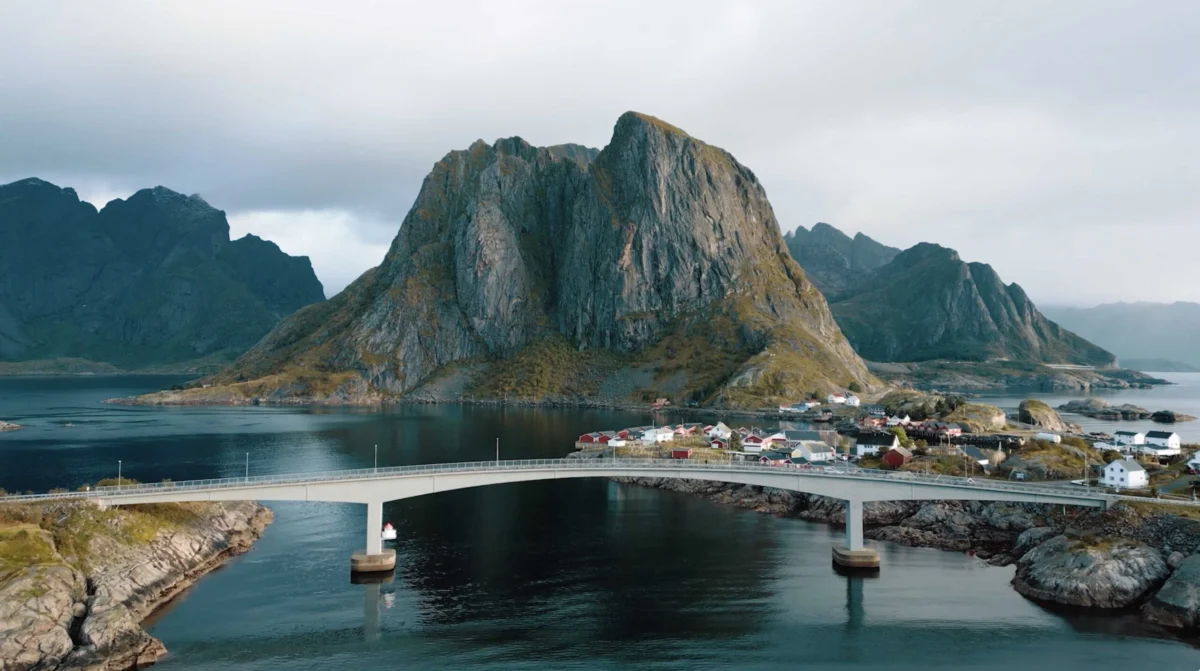
High above the Arctic Circle, where the jagged peaks of Norway’s Lofoten Islands pierce a perpetually shifting sky, the landscape is often defined by its extremes. It is a place of primordial geology, where mountains predate the Jurassic period and the Norwegian Sea crashes against granite shorelines with relentless intensity. For years, the global narrative of Lofoten has been one of rugged outdoor conquest—a playground for climbers, campers, and adventurers seeking the midnight sun.

However, in the southwestern reaches of the archipelago, within the village of Sørvågen, a quieter, more profound revolution is taking place. Here, at Holmen Lofoten, the focus has shifted from the elevation of the peaks to the depth of the plate. Through the "Kitchen on the Edge of the World" initiative, this former cod-liver oil factory has become a global epicenter for a new kind of culinary tourism—one that emphasizes land stewardship, deep connection to local ecosystems, and the radical intimacy of open-fire cooking.

The Evolution of an Arctic Sanctuary
Holmen Lofoten is not merely a hotel; it is a meticulously restored piece of maritime history. The site comprises traditional rorbuer—fishermen’s cabins on stilts—characterized by their corrugated metal roofs and, in some cases, traditional grass insulation. These structures, connected by weathered wooden walkways, offer a stark, elemental aesthetic where large picture windows frame the raw, untamed ocean.

The property is the brainchild of Ingunn Rasmussen, a daughter of the local fishing industry who returned to her roots to transform the family-linked site into a space for reconnection. "I wanted to build a space that felt like home, where we could all log off and reconnect with our natural roots," Rasmussen explains. Her vision has evolved into a hospitality model that eschews the impersonal luxury of modern resorts in favor of historical preservation and communal engagement.

A Chronology of Culinary Connection
The "Kitchen on the Edge of the World" event, launched in 2018, represents a departure from standard food festivals. Instead of rigid programming, the four-day event functions as an immersive, multi-sensory retreat.

- Arrival and Acclimatization: Upon arrival, guests are introduced to the volatile Arctic weather—"four seasons in an hour," as the locals joke. The initial phase of the experience is designed as an icebreaker, stripping away the social hierarchies of travel through communal living spaces filled with foraged flora and local artifacts.
- The Chef’s Residency: The 30th edition of the program was helmed by Matt Orlando, a California-born, Copenhagen-based chef known for his pioneering work in zero-waste fine dining. Orlando’s arrival was not a masterclass in ego, but an exercise in collaborative foraging.
- Foraging and Field-to-Table: Days were spent venturing into the surrounding hillsides to gather chickweed, corn shoots, and sheep sorrel, bridging the gap between the wild landscape and the kitchen’s wood-fired oven.
- Communal Feasting: Evenings were defined by family-style meals, where the use of silverware was often discouraged, encouraging a tactile relationship with ingredients like reindeer ribs and hedgehog mushrooms.
Supporting Data: The Sustainability of Sea and Soil
The culinary philosophy at Holmen is supported by a robust network of local producers who manage the delicate balance between tradition and environmental necessity.

The Role of Local Producers
The menu at Holmen is dictated by the availability of high-quality, local ingredients:

- Reindeer: Sourced from sustainable farms managed by Sámi herders, ensuring ethical animal husbandry.
- Lofotlam: Protected by Geographical Indication, this local lamb is a staple of the region’s culinary identity.
- Seaweed: The Lofoten Seaweed Company, a women-led enterprise, supplies the kitchen with seven varieties of local kelp, including sugar kelp and nori. These ingredients are not only used in dishes but are also processed for use in sustainable toiletries, highlighting a circular approach to local resources.
- Artisanal Tableware: The aesthetic experience is completed by local ceramicist Gunvor Tangrand, whose organic forms incorporate salvaged fishing yarn, physically grounding the dining experience in the maritime history of the islands.
Attentional Elasticity
The psychological impact of this immersion is notable. Participants often report a sense of "attentional elasticity"—a framework that allows the brain to move fluidly between the "big picture" of the mountain-meets-sea horizon and the microscopic detail of the subarctic flora beneath one’s feet. This cognitive shift is a primary goal of the programming, encouraging guests to find stillness in an increasingly chaotic world.

Official Perspectives: The Ethics of Tourism
The rise of tourism in Lofoten—where growth in Northern Norway has consistently outpaced national averages—brings with it significant challenges. Local experts, such as Bjørg-Elin Kærn of the organization Love Food, emphasize that the current model of "hitch-tents and mountain-climbing" is not sustainable for the local ecosystem.

"Conservation only works when the people living on the land and by the sea can make a good living," Kærn states. The mission of organizations like Love Food is to redirect the economic flow of tourism toward local agriculture. By incentivizing restaurants to source from small-scale farmers and seaweed harvesters, they create a financial incentive for the preservation of the landscape.

Audun Rasmussen, the hiking guide and brother of the founder, has adopted a protective stance, refusing to publicly name or map certain climbing routes. This move is a direct response to the "Instagrammable" trend of tourism, which often brings underprepared visitors to dangerous terrain, putting both the environment and the hikers at risk. The restriction of wild camping to designated areas is another policy change intended to mitigate the physical toll of high-volume, low-impact tourism.

Implications: A New Model for Global Hospitality
The implications of the Holmen Lofoten model are significant for the future of international travel. As travelers become more environmentally conscious, the "Kitchen on the Edge" approach offers a blueprint for how to bridge the gap between visitor and host.

- Transparency as Luxury: By removing the "curtain" between the kitchen and the dining room, Holmen offers a level of transparency that replaces the performative nature of traditional fine dining with a genuine, educational exchange.
- Cultural Stewardship: The inclusion of woodworking, foraging, and botanical art classes ensures that the visitor’s footprint is one of learning and participation rather than mere consumption.
- Economic Resilience: By focusing on the local food system, the property ensures that tourism acts as a support beam for local livelihoods, rather than a disruptive force that depletes resources.
As Matt Orlando noted during his residency, "Thinking on the fly and exploring the potential in things you’ve never worked with is where the coolest ideas come from." This spirit of improvisation—coupled with a deep, uncompromising respect for the Arctic environment—defines the current evolution of Lofoten.

Ultimately, the goal of this movement is to redefine why we travel. It suggests that the most meaningful souvenirs are not objects, but a newfound understanding of the delicate, complex systems that sustain life in the most remote corners of our planet. When the weather clears—or even when it remains a swirling, Baroque fog—the traveler who has engaged with the land through its flavors, its history, and its people, leaves not just with memories, but with a deeper, more awake connection to the world at large.
 Lina Irawan
 Suro Senen
