

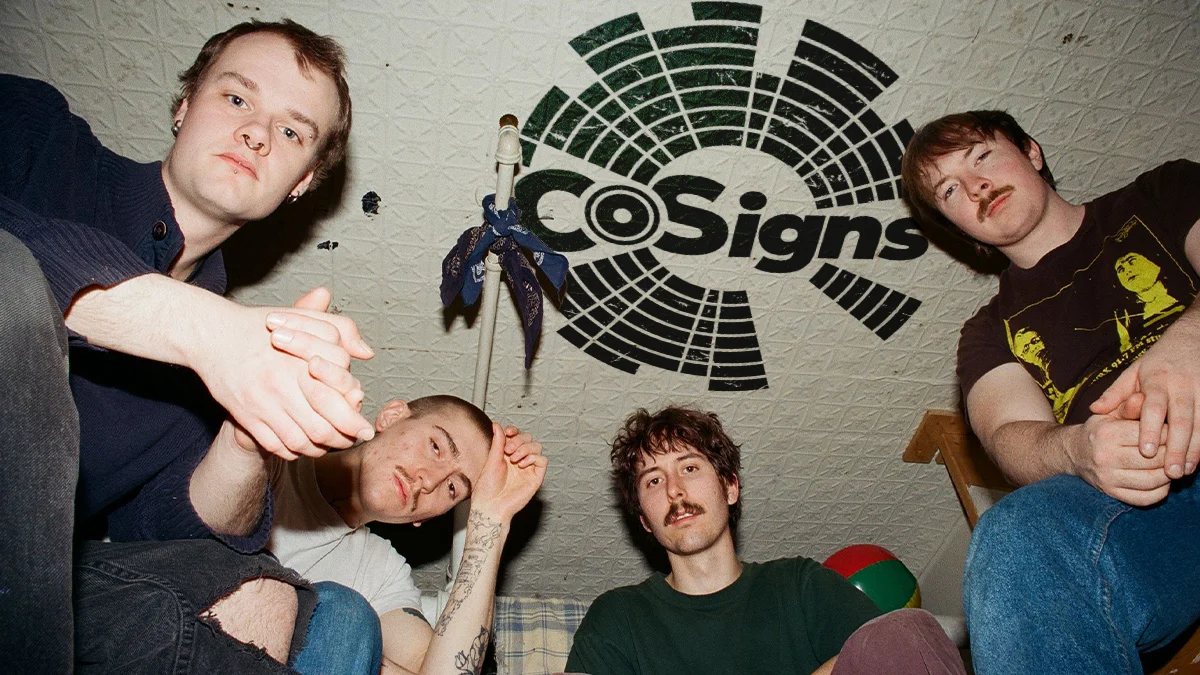
In the current landscape of modern music, where algorithms dictate trends and the commodification of "authenticity" has become an industry standard, Canadian sludge-rockers Truck Violence stand as a defiant, snarling anomaly. Featured as this month’s CoSign artist, the band has recently unleashed their sophomore full-length effort, The weathervane is my body—a sprawling, jagged, and profoundly ambitious record that demands more from the listener than a passive stream.
Frontman Karsyn Henderson and guitarist/banjoist Paul Lecours, the architects of this sonic chaos, operate with a philosophy that feels increasingly rare: they believe that if a musician isn’t putting in the work, they shouldn’t be making the art.
The State of the Craft: A Critique of Modern Lyricism
"I think a lot of lyricists are quite shit and lazy," Henderson says, his voice cutting through the static of a phone call from Brixton, London. "It’s not their fault that they’re shit and they’re lazy. The culture is shit and lazy. It encourages the path of least resistance, and that bleeds into how we write, how we perform, and how we consume."
This biting assessment is the heartbeat of Truck Violence. Their music—a volatile synthesis of sludge metal, experimental hardcore, and traditional banjo-driven folk—is not designed to be background noise. It is an exercise in intentionality. In an era where "vibes" often trump substance, Truck Violence offers a deliberate, guttural pushback. Whether they are exploring the alienation of rural upbringing or the absurdity of human existence through tracks with titles like "My dog would fuck the air," the band maintains a level of rigor that borders on the obsessive.
A Chronology of Obsession: From Alberta to the World Stage
The roots of Truck Violence are as unconventional as their sound. Henderson and Lecours first crossed paths as teenagers in a small, isolated town in Alberta. Henderson, having relocated from Halifax, Nova Scotia, found himself in a school class of fewer than ten people.
"If your interests are slightly more niche than what is going on with your couple of buds, then you can become alienated quite quickly," Henderson recalls. "I wasn’t able to connect in the same way that everyone else was, so I was looking for something."
That "something" arrived in the form of Lecours. Bonding over a shared affinity for rock music and an innate sense of teenage angst, the two became inseparable. Their early years were characterized by a manic productivity. Without a local scene to nurture them, they built their own. They operated DIY radio stations, managed local studios, and spent their hours pushing the boundaries of their musical knowledge.
"When we were that young, we were in such a vernal state that as soon as we realized that we could form a bond and grow together, the connection was unseverable," Henderson notes. "We would go to the lake at 5:00 in the morning to write music, just to see if the environment would change the way we wrote. We were recording bird songs, experimenting with microphones, just trying to see what we could pull out of the ether."
This early, experimental fervor led them through various iterations, including a stint in an "indie death metal" band and an absurdist hip-hop/noise-rap project called "no cru5t." By the time they moved to Montreal at age 17, they were seasoned experimenters, ready to synthesize their rural folk roots with their burgeoning interest in hardcore. By 2024, the arrival of their debut album, Violence, signaled their arrival in the Montreal scene, now bolstered by the addition of bassist Chris Clegg and percussionist Thomas Hart.
The Windmill and the Ethos of the "Nobody"
At the time of this interview, the band is in the midst of a two-night residency at The Windmill in Brixton. The venue is legendary in the UK indie scene, known as the incubator for acts like black midi and Black Country, New Road.
"It’s still super humble," says Lecours. "Tim [the promoter] was even saying his whole ethos is still to book ‘nobodies,’ because that’s how black midi started. So, respect to them. They haven’t sold out at all."
There is a thematic alignment between Truck Violence and the Windmill scene. While their music is undeniably heavier and more confrontational, the shared DNA lies in the refusal to cater to commercial expectations. Their current tour of the UK and their residency at the Windmill serve as a testament to their commitment to the "long game"—building a foundation brick by brick rather than relying on a viral moment.
Supporting Data: The Architecture of The weathervane is my body
The weathervane is my body is more than just a collection of songs; it is an artifact of the band’s collective history. By blending the abrasive, low-end heaviness of sludge metal with the rhythmic, percussive elements of folk instruments like the banjo, the record forces a dialogue between genres that are rarely seen in the same room.
Key Musical Components:
- Genre Fusion: Sludge metal textures contrasted with Appalachian-style banjo picking.
- Lyrical Depth: A rejection of "lazy" tropes, favoring poetic, often visceral imagery.
- DIY Roots: The album retains the raw, unpolished energy of their early experimental days while benefiting from years of technical refinement.
- Collective Input: With Clegg and Hart now fully integrated, the band’s dynamic has shifted from a duo-focused project to a fully realized quartet, adding layers of rhythmic complexity that were absent on their debut.
Official Responses and Industry Reception
The industry has taken notice, though perhaps not in the way the band would expect—or even care for. Their rise has been organic, fueled by word-of-mouth and the sheer intensity of their live performances. As Lecours recounts, their rise in the Montreal scene was marked by the kinds of absurd, behind-the-curtain moments that define a band’s "coming of age."
"We actually played a show with Angine de Poitrine before they were big at all," Lecours remembers. "We had no idea who they were. They were in our dressing room, and they got up in their polka-dotted outfits and stuff. My girlfriend said one of the guys was wearing polka dot underwear, even. So, apparently it goes deep."
This anecdote serves as a reminder that behind the noise and the serious-minded approach to their craft, Truck Violence remains a group of musicians grounded in the surreal, often hilarious realities of the touring life. They are not merely "serious artists"—they are observers of the absurd.
Implications: The Future of Rock in a Lazy Culture
The implications of Truck Violence’s emergence are significant for the broader rock scene. If, as Henderson suggests, the culture is indeed "shit and lazy," then the success of The weathervane is my body serves as a counter-argument to the necessity of that laziness.
By demanding intellectual and emotional participation from their audience, Truck Violence is challenging the listener to elevate their own standards. They are suggesting that if you want a scene, you must build it; if you want deep lyrics, you must write them; and if you want to be taken seriously, you must put in the work.
As they continue to tour and refine their sound, Truck Violence remains a beacon for those who feel alienated by the shallow, high-gloss production of modern rock. They are not here to entertain in the traditional sense; they are here to provoke. And in a world that is increasingly satisfied with the status quo, that provocation is precisely what is required.
For those looking for a record that refuses to be ignored, The weathervane is my body is the essential listening of the year. But don’t expect it to be easy—and that, as Henderson would surely agree, is the point.
 Asro
Asro
 Lina Irawan
 rifanmuazin
