

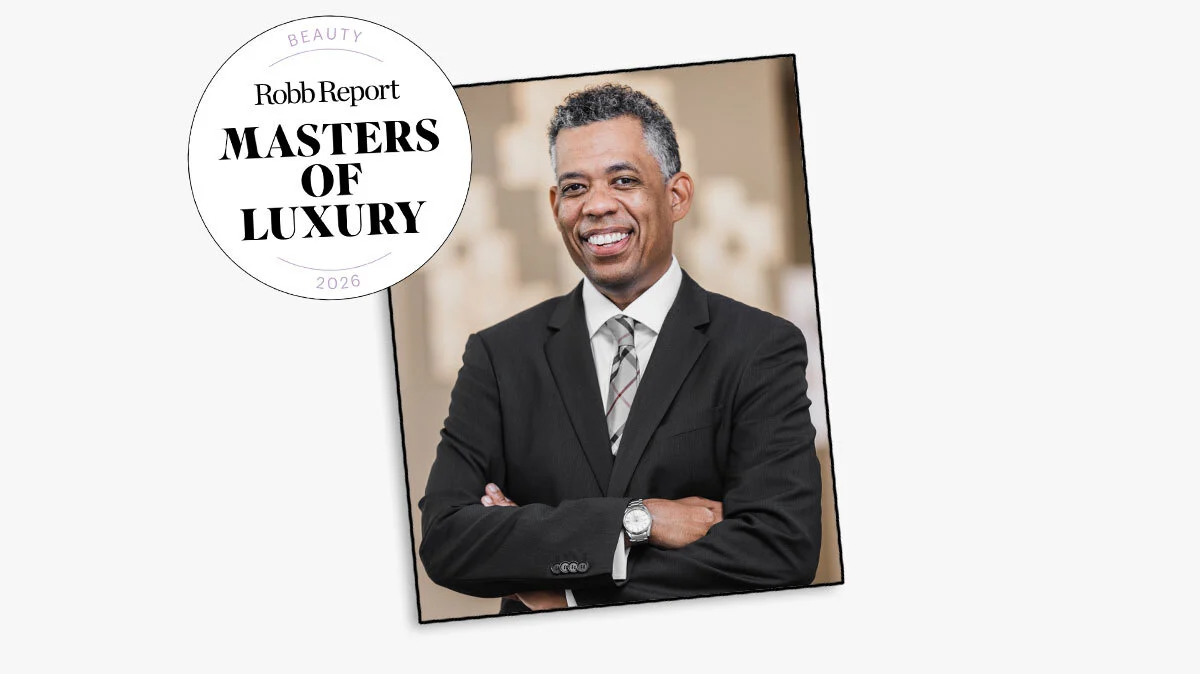
In the rarified world of high-end aesthetics, where the demand for perfection often intersects with the complexities of human biology, the most successful individuals know a universal truth: when the stakes are high, you don’t just need a practitioner—you need the person whom other practitioners call for counsel.
As part of Robb Report’s ongoing "Masters of Luxury" series, we turn our attention to Dr. Steven Williams. A Yale-trained luminary and the first African American president of the American Society of Plastic Surgeons, Dr. Williams has transitioned from a rigorous foundation in reconstructive surgery to become a primary authority for Silicon Valley’s elite. He specializes in elective interventions that synthesize surgical precision with a sophisticated understanding of longevity and modern aesthetics.
The Professional Profile
- Name: Dr. Steven Williams
- Occupation: Board-certified Plastic Surgeon and Aesthetic Innovator
- Headquarters: Bay Area, California
- Specialty: Comprehensive cosmetic surgery with a focus on male-specific anatomy and recovery optimization.
The Reality of Going Under the Knife: A Patient’s Guide
For the uninitiated, the prospect of elective surgery is often clouded by anxiety regarding downtime and long-term outcomes. Dr. Williams emphasizes that the surgery itself is only half the battle. "Aftercare is as important, perhaps even more so, than the surgical procedure itself," he explains.

Vetting Your Surgeon
Before committing to any intervention, Dr. Williams advises a critical litmus test: verify hospital privileges. "If a practitioner has privileges at a local hospital for plastic surgery, it is a testament to their board certification rather than mere competence in a specific cosmetic procedure," he notes. This distinction is vital for patient safety. It ensures that in the event of an emergency or complication, your surgeon has the institutional backing and proximity to manage your care effectively.
Debunking Pre-Surgical Myths
The market is saturated with pre-surgical supplements promising faster recovery or better results. Dr. Williams is blunt: "None of that is really true, provided your baseline nutrition and health are reasonable." Instead of focusing on expensive pills, patients should focus on an actionable recovery plan.
"You need to know how long to stay out of the gym, how long you’ll be off travel, and how to manage the disruption to your lifestyle," he says. For major procedures, such as body lifts, patients should prepare for four to six weeks of significant lifestyle adjustment.

The Healing Phase
One of the most overlooked aspects of plastic surgery is the maturation of scars. "It is common to ignore the healing phase, but that is precisely when scars become prominent," Williams warns. For patients of color, whose skin may be more prone to hyperpigmentation or keloid scarring, specific protocols—such as silicone sheeting or steroid injections—are essential. By the six-month mark, most scarring should begin to fade; if it does not, a follow-up with your surgeon is mandatory. While the full "final" result of a surgery can take up to a year to manifest, patients must understand that surgery is rarely a "one-and-done" event; maintenance is a reality of the process.
Chronology of Modern Intervention
The landscape of aesthetic medicine is evolving at a breakneck pace. From the rise of GLP-1 agonists to advancements in regenerative medicine, the tools available to a surgeon today are vastly different from those used even a decade ago.
The GLP-1 Paradigm Shift
The recent surge in popularity of weight-loss medications like Ozempic and Wegovy has fundamentally changed the surgeon’s workflow. Dr. Williams reports that nearly 60% of his current patient demographic are utilizing these GLP-1s.

"If you arrive in my office having lost 100 pounds, you are undoubtedly healthier, but you are also dealing with significant skin laxity," Williams explains. The surgical sequence for these patients has become a standard protocol:
- Abdominal Reconstruction: Addressing the core issue first.
- Gynecomastia Reduction: Correcting secondary aesthetic concerns.
- Body Lifts/Extremity Contouring: Treating the arms and thighs once the patient has reached a stable weight.
The Future of Hair Restoration and Color
While surgical hair restoration has moved away from the "doll-head" patterns of the 1990s, the next frontier is biological. Dr. Williams points to ongoing research in stem-cell therapy and direct genetic manipulation as the keys to permanently reversing gray hair. He estimates that a commercially viable solution for reversing graying via genetic therapy is likely five years away.
Supporting Data: Addressing Common Conundrums
In a "speed round" of professional insights, Dr. Williams addressed several high-profile questions regarding the limits and possibilities of cosmetic intervention.

- On Laser Hair Reduction: It is a mistake to seek "complete" removal. Men should look for reduction—the goal is to soften the appearance rather than eliminate hair entirely, as hair grows in distinct, staggered cycles.
- On Facelifts: The most important consideration is the visibility of scars. A patient must be psychologically prepared for incisions behind the ears and along the hairline.
- On Penile Enhancement: Williams offers a stern warning. "It is a highly specialized structure, and making it ‘bigger’ with fillers is fraught with danger." He cites the risk of filler migration and permanent scar tissue formation, noting that the complications often outweigh the aesthetic benefits.
- On the "Wandering Belly Button": Many men fear that a tummy tuck will distort their navel. Williams clarifies that the umbilical stalk is usually about 2cm long, meaning it possesses significant structural integrity and does not "wander" as easily as patients fear.
Official Responses and Clinical Implications
Dr. Williams’ philosophy centers on the idea that "the more invasive the technique, the more powerful it is." When comparing non-invasive treatments like CoolSculpting to surgical liposuction, he notes that while non-invasive options exist, they often require eight to ten cycles to achieve what a single, well-executed surgery can accomplish in a fraction of the time.
The "Vain but Lazy" Protocol
For the patient seeking maximum impact with minimal commitment, Williams advocates for a dual-pronged approach: laser resurfacing paired with diligent sunscreen use. "Beyond the obvious advice—stop smoking, sleep well, eat clean—the best return on investment is professional resurfacing. It prevents damage, and if you start early, it negates the need for more aggressive surgical interventions later in life."
The Importance of PRP
When comparing injectable treatments, Dr. Williams favors Platelet-Rich Plasma (PRP) over certain synthetic fillers. "PRP tends to be less lumpy and provides a more natural, uniform result," he says. This reflects a broader shift in the industry toward bio-stimulating, regenerative treatments that work with the body’s own healing mechanisms rather than relying solely on volume-adding synthetic materials.

Implications for the Future of Men’s Aesthetics
The conversation with Dr. Williams highlights a maturing industry. Men are increasingly moving away from the "secretive" surgery of the past and toward a more integrated, health-focused model of maintenance.
The primary takeaway is one of managed expectations. As technology advances, the ability to manipulate appearance increases, but the biological reality of healing, scarring, and structural integrity remains constant. The role of the master surgeon is no longer just to "fix" a problem, but to act as a consultant, helping the patient navigate the intersection of vanity, health, and reality.
For those considering their first step, the advice remains clear: prioritize board certification, demand transparency about the recovery process, and remember that the most effective interventions are those that prioritize long-term skin health and structural harmony over the fleeting promise of a "quick fix."

Disclaimer: Dr. Steven Williams is a board-certified expert. This article is for informational purposes only and does not constitute medical advice. Always consult with your own physician or a qualified healthcare provider before undergoing any surgical or cosmetic procedure.
 Evan Lee Salim
 Asep Darmawan
 Laily UPN
