

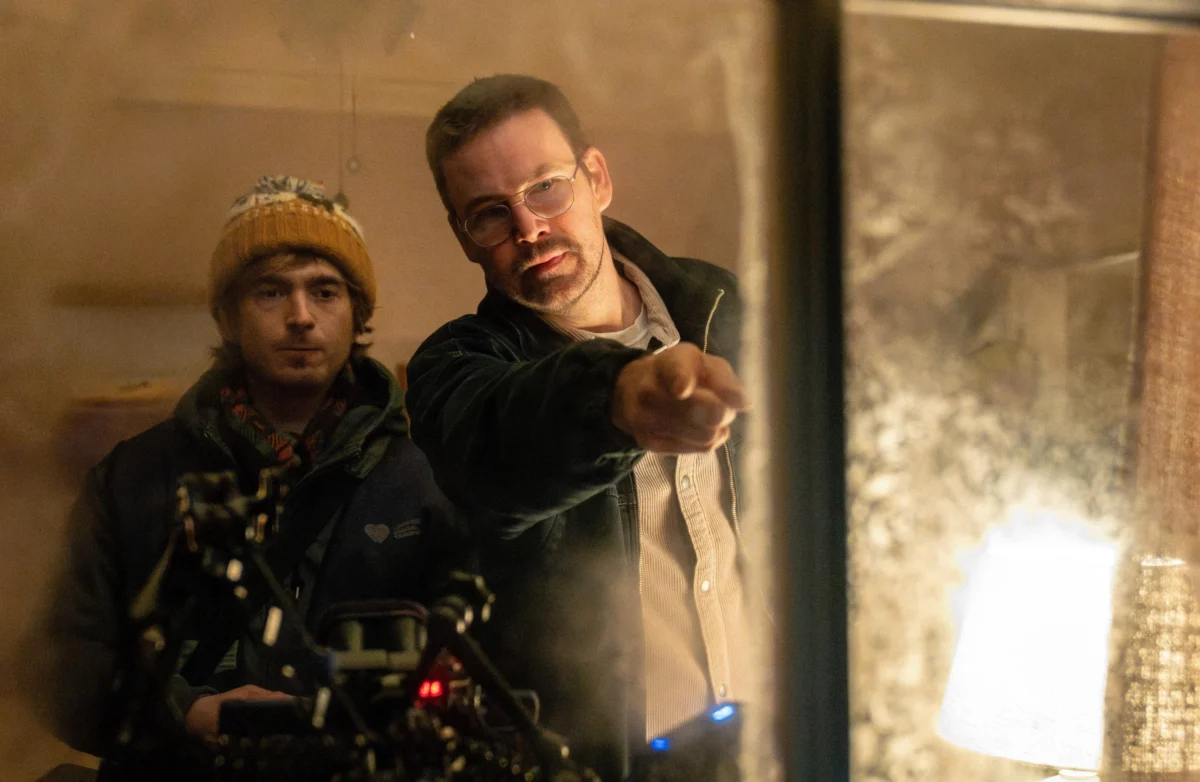
In a cinematic landscape often dominated by tired reboots and diminishing returns, Zach Cregger’s reimagining of Resident Evil has defied gravity. With a staggering $108.3 million global opening weekend, the film has not only eclipsed the lifetime theatrical performance of the 2002 original—which closed its run at $103 million—but has also signaled a seismic shift in the valuation of genre-defying filmmakers in Hollywood.
Cregger, once known primarily for his work in comedy, has successfully completed his transition into one of the industry’s most bankable auteurs. Following the lean, efficient success of Barbarian and the massive, award-winning cultural phenomenon of Weapons, the director’s latest venture for Sony’s TriStar Pictures, Constantin Film, and Davis Film proves that in the right hands, even the most exhausted intellectual property can be injected with new, terrifying life.
The Financial Breakdown: A Global Phenomenon
The numbers surrounding Resident Evil are nothing short of transformative for the franchise. The $108.3 million global haul was split between $60 million in domestic markets and $48.3 million internationally. While industry analysts are quick to note that inflation adjustments keep the 2002 Paul W.S. Anderson original relevant in a historical context, the raw, unadjusted velocity of Cregger’s debut is undeniable.
For a film with a $75 million production budget, a $100 million-plus opening weekend is a dream scenario. It guarantees profitability well before the film hits digital platforms, VOD, or secondary markets. This level of performance is particularly striking when contrasted with the franchise’s recent history, specifically the 2021 release Resident Evil: Welcome to Raccoon City. That film, which struggled to find an audience, grossed only $42 million against a $25 million budget—a figure that, after theatrical splits, resulted in a net loss for the studio.
A Chronology of a Turnaround
To understand the significance of this moment, one must look at the recent timeline of the Resident Evil intellectual property.
- 2002: The original Resident Evil film hits theaters, establishing a formula that would sustain the franchise for two decades but eventually lose its novelty.
- 2021: Resident Evil: Welcome to Raccoon City attempts a back-to-roots approach but fails to resonate, signaling that the "Resident Evil" brand may be losing its luster.
- 2022: Netflix cancels its Resident Evil television series after a single season, leading many analysts to believe the IP had reached a point of terminal decline.
- Late 2022/Early 2023: Sony and its partners, looking for a new direction, tap Zach Cregger to helm a reimagining. At this time, Cregger is considered a rising star following the success of Barbarian, but he has not yet solidified his reputation as a box-office juggernaut.
- 2025: Cregger’s Weapons hits theaters. It becomes a massive financial success, grossing $270 million, and earns critical acclaim, including an Academy Award for Amy Madigan.
- 2026: The release of Resident Evil marks the highest opening in the franchise’s history, cementing Cregger’s status as a Tier-1 director.
The Ascent of Zach Cregger: From Indie Darling to Powerhouse
The trajectory of Zach Cregger’s career serves as a masterclass in strategic growth. His breakout hit, Barbarian, was produced on a modest $4.5 million budget and returned $46.2 million, demonstrating that Cregger could deliver high-tension, high-quality horror on a shoestring. However, it was the subsequent release of Weapons that catapulted him into the stratosphere of the industry’s most powerful directors.

As recently noted by Vulture in their ranking of the 100 most powerful directors in Hollywood, Cregger’s ascent has been rapid. He currently sits at the 17th position, a ranking that is expected to climb even higher in the next cycle. His ability to blend visceral horror with deep, character-driven storytelling has created a "Cregger brand"—a style that audiences now actively seek out.
The studios involved in the production—TriStar, Constantin, and Davis Film—were remarkably prescient. By securing Cregger between his first and second major successes, they effectively locked in a visionary filmmaker before his "quote" (the industry term for a director’s asking price and creative leverage) reached its current astronomical peak.
Official Industry Responses and Implications
While the studios have remained relatively quiet, letting the box-office numbers speak for themselves, the industry reaction has been one of shock and awe. High-level executives at rival firms have noted that Cregger’s success with Resident Evil proves that "auteur-led genre films" are currently the most reliable path to theatrical stability.
"The industry has spent years trying to figure out how to keep these legacy franchises alive," one independent producer noted. "You can’t just recycle the old formulas. You need a director who has a distinct, singular voice—someone who can take a video game adaptation and turn it into a genuine piece of cinema. Cregger is that person."
The success of Weapons, which spawned an upcoming prequel focused on the origin of the character Aunt Gladys, further demonstrates that Cregger is capable of building cinematic universes that audiences actually want to inhabit. The fact that he was able to apply that same narrative care to an established property like Resident Evil has fundamentally changed the studio’s outlook on the franchise.
Looking Ahead: The Future of the Franchise
The immediate implication of this success is the inevitability of a sequel. While a follow-up was far from guaranteed just six months ago, the current financial reality makes it a necessity. The studio is now in the enviable position of having a rejuvenated, multi-film franchise on their hands.

Furthermore, Cregger’s newfound leverage cannot be overstated. He has transitioned from a director who has to pitch his vision to a director who is given "blank check" status. In the current Hollywood climate, he is one of the few names—alongside directors like Christopher Nolan or Jordan Peele—whose name on a poster is enough to guarantee a massive opening day.
Industry wags have joked that if Cregger decided to pivot to a three-hour, black-and-white drama about a CPA navigating the complexities of tax season, he could likely get it greenlit by tomorrow morning. While that may be an exaggeration, it captures the current mood in Hollywood: Cregger is the hottest talent in the business, and for now, he can do no wrong.
Conclusion
The story of this Resident Evil reboot is more than just a win for a horror franchise; it is a story of creative agency. It proves that even in an era of franchise fatigue, there is no substitute for a director with a clear, uncompromising vision. By betting on Zach Cregger, the studios behind Resident Evil have not only saved a dying property but have also redefined what it means to be a "powerful" director in the modern blockbuster era.
As the box office continues to climb, all eyes will be on Cregger’s next move. Whether he returns to the Resident Evil world or explores a completely original concept, one thing is certain: his audience will be waiting. The "Cregger Effect" is no longer a niche phenomenon—it is the new gold standard for studio filmmaking.
 Jia Lissa
 Lina Irawan
 Iffa Jayyana
