

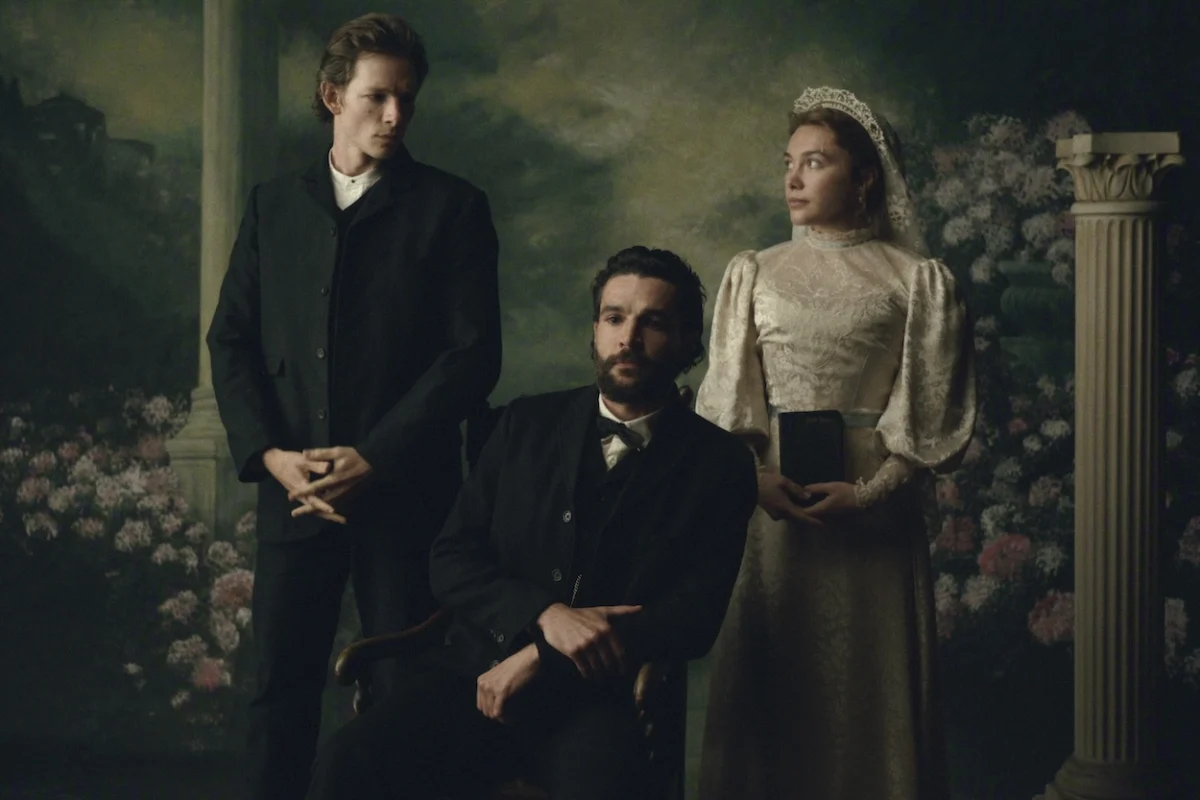
"There is a beauty in the truth, even if it is a dreadful beauty." This haunting sentiment serves as the thematic anchor for Netflix’s sweeping new adaptation of John Steinbeck’s 1952 masterpiece, East of Eden. Spearheaded by writer and co-showrunner Zoe Kazan, the seven-episode limited series is not merely a retelling of a classic; it is an aching, radiant excavation of the American psyche, exploring the generational trauma, systemic misogyny, and the radical, terrifying potential of human agency.
Premiering on Netflix on Thursday, October 1, the series arrives with the weight of expectation. Steinbeck’s novel, long considered the definitive American epic, has seen previous iterations, most notably Elia Kazan’s 1955 film. However, this modern adaptation—penned by the director’s granddaughter—reclaims the narrative, breathing fresh, visceral life into the Trask family saga.
The Architecture of the Trask Saga
At its heart, the series is a sprawling period drama that spans five decades, meticulously tracing the fractured lineage of the Trask family. The narrative begins with the cruel, stifling upbringing of Adam Trask (Christopher Abbott) under the thumb of his authoritarian, ex-military father, played with chilling precision by Tracy Letts.
This environment of toxic masculinity and emotional abandonment sets the stage for the next generation. Adam, forever seeking a grace he was never shown, becomes the parent of twin boys, Aaron (Joe Anders) and Caleb (Joseph Zada). The shadow of the past looms large over the brothers, just as it did over Adam and his own brother, Charles (Mike Faist). Faist delivers a standout performance as Charles—a man defined by his desperate, lonely longing for validation, forever standing in the periphery of a father’s cold indifference.

A Provocateur in the Garden: Florence Pugh’s Cathy
While the Trask men struggle with the inherited sins of their fathers, it is Cathy Ames—portrayed with ferocious intensity by Florence Pugh—who provides the series with its sharp, jagged edge.
In a departure from the novel’s more static portrayal of "innate evil," Kazan’s script reconstructs Cathy as a product of her environment. Introduced in a harrowing sequence where she crawls through the Trask family’s fields, bloodied and broken, she is initially perceived by Adam as a fallen angel in need of salvation. It is a classic, tragic miscalculation. Adam’s inability to see Cathy as a fully formed, independent entity—a woman fighting for her own survival in a world designed to crush her—becomes the catalyst for the family’s undoing.
Pugh’s performance is a masterclass in vigilance. She plays Cathy not as a villain, but as a survivor who has internalized the "misogynistic boot" of society. Her rebellion against the conventional roles forced upon her is brutal, yet deeply understandable. By grounding Cathy’s choices in personal trauma rather than supernatural wickedness, the series forces the audience to confront the "dreadful beauty" of a woman who refuses to remain still.
Chronology of an American Epic
The production values of East of Eden serve to elevate its status as a true epic. Directed by Garth Davis (Episodes 1–4) and Laure de Clermont-Tonnerre (5–7), the show captures the vastness of the American landscape—from fiery, mountainside sunsets to the claustrophobic intimacy of the homestead.

The narrative follows a deliberate, rhythmic progression:
- The 19th Century Origins: The focus rests on the formative, often abusive relationship between the elder Trask and his sons, Adam and Charles.
- The Migration: The story tracks the Trasks as they traverse a rapidly industrializing nation, navigating wars, economic shifts, and the evolving moral landscape of the early 20th century.
- The Modern Reckoning: The final acts focus on the twin sons, Aaron and Caleb, as they grapple with the legacy left by their father and the spectral presence of their mother.
Throughout this journey, the cinematography—led by Stuart Dryburgh and Sam Chiplin—mirrors the internal states of the characters, juxtaposing the "spectacle" of a changing world with the "intimacy" of a family tearing itself apart.
Supporting Players: The Pillars of Pragmatism
Amidst the roiling turmoil of the Trask family, two characters stand out as moral and intellectual compasses: Lee (Hoon Lee), the family’s housekeeper, and Samuel (Ciarán Hinds), an Irish immigrant and jack-of-all-trades.
Hoon Lee’s performance is a marvel of nuance. As a Chinese-American man navigating a society built on racial hierarchy, Lee portrays a character who must "code-switch" to survive. His intellect—evidenced by his quiet habit of reading philosophy while performing domestic chores—is a quiet rebellion. He is the repository of the family’s history and the keeper of its conscience.

Ciarán Hinds, as Samuel, offers a warmth that is both comforting and deeply grounding. He is the father figure Adam never had, providing a bridge between the past and the future. Together, Lee and Hinds provide the necessary friction to both Adam’s naive romanticism and Cathy’s cynical rejection of society.
Implications: The Philosophy of "Timshel"
The defining philosophical contribution of East of Eden—and the concept that anchors the entire series—is the Hebrew word "Timshel." As articulated by Lee, the term translates to "thou mayest." It serves as a direct rebuke to the idea of predestination.
The implications of this philosophy are profound. If humanity is not bound by lineage, laws, or the sins of the past, then we are entirely responsible for the choices we make. The series argues that growth is not found in the suppression of our darkest traits, but in the recognition of them. It is a call to move beyond the binary of "good" and "evil," urging characters—and viewers—to accept the "imperfect reality" in front of them.
A Critical Appraisal: Why It Matters
The brilliance of this adaptation lies in its ability to marry grand, sweeping spectacle with the microscopic details of human fallibility. By balancing the "big picture" of American development with the "small picture" of individual suffering, Kazan and co-showrunner Jeb Stuart have created a work that feels both timely and timeless.

The series does not shy away from the systemic failures of the era, nor does it let its characters off the hook for their personal failings. Instead, it invites a deeper understanding of why people hurt one another, and how, even in the shadow of a mountain or the heat of a field, one can choose to crawl toward a state of grace.
With a Grade of A- and a narrative depth that challenges the viewer at every turn, East of Eden is poised to be one of the most significant television events of the year.
Official Release Information:
- Platform: Netflix
- Release Date: Thursday, October 1
- Format: Limited series; all seven episodes will be available to stream simultaneously.
In an era of disposable content, East of Eden demands to be watched with intention. It is a reminder that while the truth may be dreadful, it remains the only path toward genuine liberation. As the final credits roll, the lingering question for the audience remains: Timshel—what will you choose?
 Jia Lissa
 Lina Irawan
 Iffa Jayyana
