

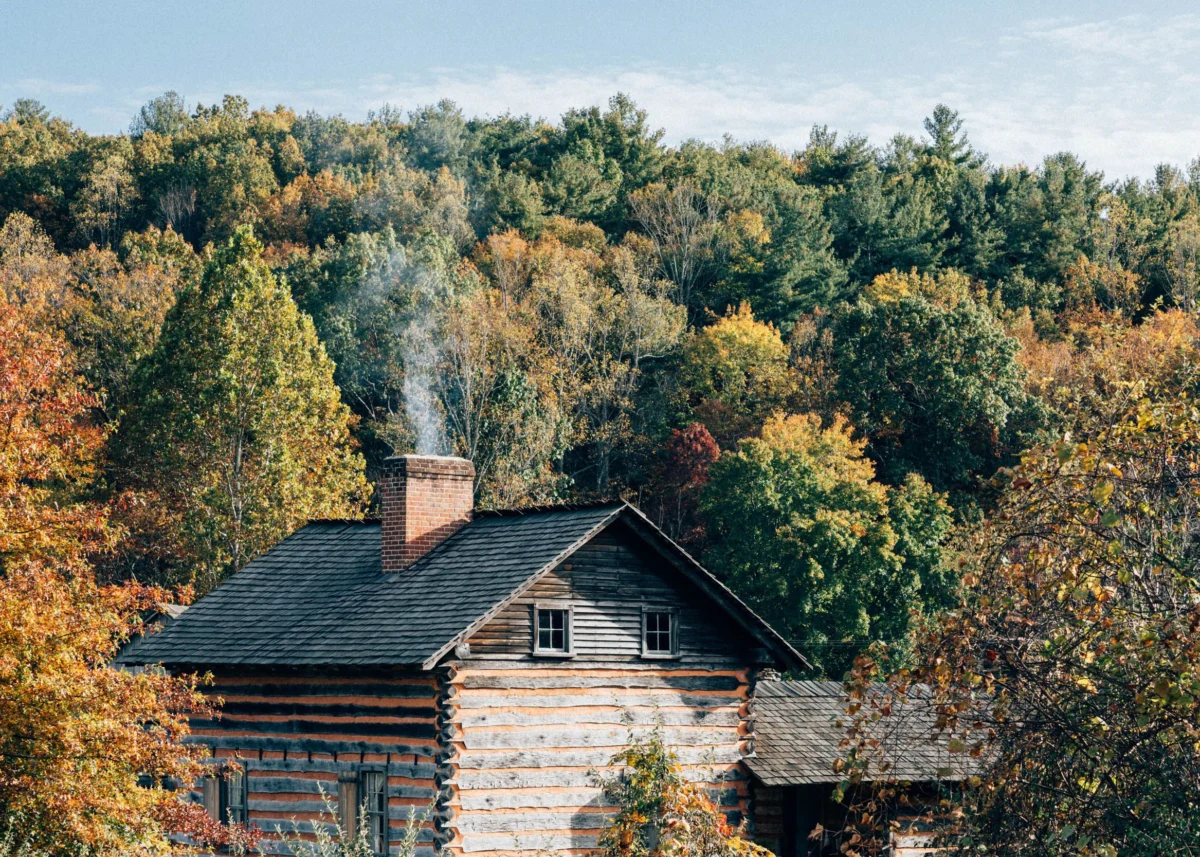
In the heart of Southwest Virginia, where the ridgelines of the Blue Ridge Mountains cut jagged silhouettes against an azure sky, there exists a 330-mile stretch of asphalt known as “The Crooked Road.” It is not merely a highway; it is a pilgrimage route through a musical cradle—a place where the folk traditions of Europe and Africa fused over centuries to birth the sounds that would eventually define American roots music. From the haunting strains of old-time fiddling to the high-lonesome drive of bluegrass, this region remains the epicenter of an acoustic legacy that refuses to fade.
The Genesis of a Musical Cradle: Main Facts
The Crooked Road was formally established two decades ago as a strategic tourism initiative, designed to revitalize an economy left reeling by the decline of traditional manufacturing. However, its true purpose has always been cultural preservation. The route connects the dots between legendary musical hubs like Galax, Floyd, and Bristol, weaving together the history of pioneers like the Carter Family, the Stanley Brothers, and Grayson & Whitter.
.jpg)
The region’s topography—isolated hollows and tightly knit mountain communities—acted as a natural pressure cooker for musical evolution. Because the area was geographically sequestered, the songs and instrumentation brought by early settlers remained untainted by mainstream commercialization for generations. This resulted in a communal, acoustic dance music that serves as the bedrock for modern country, bluegrass, and folk genres. Today, the Crooked Road functions as a living museum, where the music is not preserved behind glass but is played nightly in community centers, general stores, and theaters.
A Journey Through the Hills: Chronology of the Route
The experience of the Crooked Road is best understood as a chronological layering of history, beginning with the foundational old-time music of the early 20th century and moving toward the modern-day preservationist movement.
.JPG)
The Early Days (1920s–1950s): The history of this region was cemented in July 1927 in Bristol, when the Victor Talking Machine Company set up an ad hoc recording studio. This event, often cited as the "Big Bang of Country Music," captured the raw, unvarnished talent of local families, effectively exporting Appalachian sound to the world.
The Mid-Century Transition (1960s–1990s): As the manufacturing economy began to shift, many of the social hubs—such as local firehouses and community stores—saw their Friday-night dances wane. However, the culture persisted in private homes and through the tireless dedication of local musicians who kept the repertoire of fiddle tunes and ballads alive.
.JPG)
The Modern Era (2000s–Present): With the official designation of the Crooked Road as a cultural heritage trail, the focus shifted to infrastructure and accessibility. Establishments like The Floyd Country Store underwent major renovations, transitioning from a general supply depot into a globally recognized venue that hosts multiple performances weekly, alongside an integrated music school to teach the next generation.
The Pulse of the Region: Supporting Data and Observations
The vitality of the Crooked Road is measured not in ticket sales, but in the participation of the local community. A recent visit to The Floyd Country Store revealed a scene that defied the typical "tourist trap" narrative. On a Sunday afternoon, the venue was packed with locals and travelers alike, many of whom were engaged in learning the fundamentals of old-time music at free, public jams.
.JPG)
The demographics of the music scene are shifting. While the tradition was once held solely by elder practitioners, there is a burgeoning interest among younger generations. Tim Stafford, a veteran of Alison Krauss and Union Station and a historian of the genre, notes that he now hears "preservationists and innovators" fusing the traditional beat with modern sensibilities. The result is a sound that feels simultaneously ancient and evolving.
Furthermore, the region’s geography continues to be its greatest asset. The Crooked Road intersects with the Appalachian Trail and the Blue Ridge Parkway, providing a natural bridge between outdoor adventure and cultural immersion. The New River, believed by geologists to be the oldest river in North America, provides a literal and metaphorical backbone to the journey, anchoring the music in a landscape that has remained largely unchanged for millennia.
.JPG)
Official Voices and Perspectives
The preservation of this culture is a conscious, active effort. Heather Krantz, co-owner of The Floyd Country Store, views the mission as one of accessibility. "Our whole mission is to keep these traditions alive," she explained during a break between sets. "It needs to be accessible. If we’re not creating opportunities for that to happen, it’ll go away."
This sentiment is echoed by local musicians like Richard Bowman, a standard-bearer of the fiddle tradition, who views himself as a steward of a specific, localized sound. Along the Crooked Road, there is a palpable pride in the "regional variation" of the music. A fiddle style in Franklin County might differ subtly but significantly from one in Grayson County, a nuance that practitioners are deeply protective of.
.jpeg)
The Blue Ridge Institute & Museum (BRIM) at Ferrum College serves as the formal repository for this history. Through their Virginia Traditions series—a collection of albums documenting the region’s sound—and their annual Blue Ridge Folklife Festival, the museum provides the academic scaffolding necessary to validate the music’s historical importance.
Implications for the Future of Appalachian Culture
The success of the Crooked Road holds profound implications for how rural, historically neglected regions can leverage their intangible heritage for economic stability. By focusing on "authenticity" rather than "commercialization," the Crooked Road has managed to avoid the kitsch often associated with heritage tourism.
.JPG)
However, the road forward is not without challenges. As global connectivity blurs the lines between regional identities, the risk of "homogenizing" these specific, mountain-grown sounds remains a constant concern. The reliance on older musicians to pass down the craft means that the sustainability of the culture is tied directly to the success of educational programs like the Wayne C. Henderson School of Appalachian Arts.
The persistence of these songs—some of which are centuries old—proves that they possess a resilience that is rare in the digital age. When a musician in a small classroom in Marion begins to play "Arkansas Traveler," and a young student follows along, the circle is unbroken. The implications are clear: as long as there is a physical space for these people to gather, the music will continue to be a living, breathing component of the American landscape.
.JPG)
Practical Guidance for the Traveler
For those looking to experience the Crooked Road, a successful trip requires patience and planning.
- Logistics: Fly into Roanoke-Blacksburg Regional or Tri-Cities (near Bristol). Renting a car is essential, as the route is comprised of secondary roads and winding mountain passes.
- Timing: Research is paramount. Most venues are not open seven days a week. Use the official Crooked Road website to track the schedules of specific jams.
- Stays: Accommodations range from classic roadside motels to luxury retreats like Nicewonder Farm & Vineyards in Bristol. For an immersive experience, consider the apartments at The Farmer’s Supply in Floyd.
- Dining: Sample local delicacies like Brunswick stew and ramps. Don’t miss the live bluegrass performances often held at The Coffee Break in Stuart on Tuesday mornings.
In an era of rapid change, the Crooked Road stands as a testament to the power of place. It is a reminder that some things are worth keeping—not in a box, but on the strings of a fiddle, played by the light of a fading afternoon sun, in a room full of neighbors who know every note by heart.
 Asro
Asro
 Siti Muinah
