

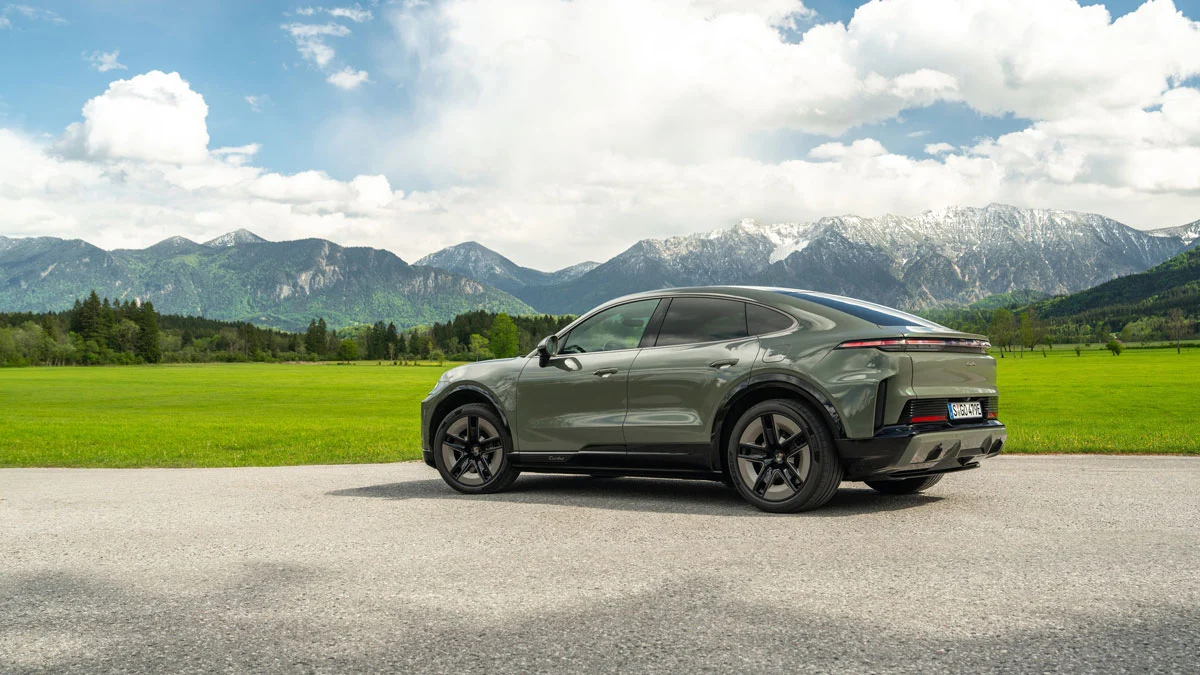
While Porsche has navigated a complex and occasionally turbulent transition toward full electrification—marked by the lingering developmental stasis of its electric Boxster and Cayman platforms—the marque has found a definitive, high-voltage triumph in its SUV lineup. The 2027 Porsche Cayenne Turbo Coupe Electric is not merely a battery-powered iteration of a popular hauler; it is a profound technological manifesto. Representing the pinnacle of the brand’s 78-year heritage, this vehicle stands as one of the most potent machines ever to bear the Porsche crest, regardless of whether that vehicle was built for the grocery run or the racetrack.
The Dawn of a New Era: Main Facts
For the 2027 model year, Porsche is effectively pivoting its flagship SUV strategy. While the Stuttgart-based automaker maintains its commitment to internal combustion and hybrid powertrains for global markets through 2030 and beyond, the fourth-generation Cayenne arrives as a pure-electric entity.

The headline figures are staggering. In its range-topping Turbo Coupe trim, the vehicle produces a staggering 1,139 hp and a torrential 1,106 ft-lbs of torque during launch-control maneuvers. These metrics comfortably eclipse the performance benchmarks set by the legendary 918 Spyder and the track-focused Taycan Turbo GT. Yet, the Cayenne manages to package this supercar-shaming performance within a luxurious, five-passenger, all-weather SUV chassis, proving that the transition to electric propulsion need not compromise the "Porsche DNA" of engagement and versatility.
A Chronological Shift: From Combustion to Current
The evolution of the Cayenne has been the cornerstone of Porsche’s financial health since its inception in the early 2000s. However, the 2027 model represents the most significant departure in the model’s history.

- 2019–2024: The third-generation Cayenne solidified Porsche’s dominance in the luxury SUV segment, bolstered by a mid-cycle facelift in 2024 that refined interior aesthetics and hybrid efficiency.
- Late 2026: Porsche begins the rollout of the fourth-generation Cayenne, exclusively as an all-electric platform.
- 2027: The market launch of the Cayenne Turbo Coupe Electric, introducing a bespoke architecture that shares zero body panels with its combustion-powered predecessors.
- 2028 and Beyond: The anticipated arrival of a redesigned internal-combustion Cayenne, ensuring a dual-track strategy to cater to Porsche’s diverse international customer base.
Engineering the Impossible: Supporting Data
The technical specifications of the 2027 Cayenne reflect a massive investment in proprietary hardware. The vehicle utilizes an 800-volt architecture, facilitating a 400-kilowatt charging rate that rivals the industry-leading Lucid Gravity. In practical terms, this allows the battery to surge from 10 percent to 80 percent charge in under 16 minutes—a vital statistic for long-distance grand touring.
Powertrain Innovation
The drivetrain centers on dual electric motors providing standard all-wheel drive. The rear motor, in particular, is a direct descendant of Porsche’s Formula E championship-winning technology. A critical engineering breakthrough here is the use of non-conductive cooling oil, which flows directly through the internal copper windings of the motors. Unlike conventional EVs that rely on external liquid jackets, this direct cooling allows for a remarkable 600-kilowatt regenerative braking rate, managing heat dissipation with unprecedented efficiency.

Suspension and Dynamics
The "Active Ride" suspension system is the secret sauce that separates the Cayenne from its peers. By integrating hydraulic dampers with electric motors at each wheel, the system can exert up to 2,250 pounds of resisting force per corner to counteract body roll. Whether in a serene "Comfort" mode that isolates the cabin from road imperfections or a taut "Sport" mode that hunkers down for corner-carving, the system provides a sensation of weightlessness that defies the vehicle’s nearly 6,000-pound curb weight.
Inside the Cockpit: A Digital Renaissance
Porsche has historically been conservative with interior tech, but the 2027 Cayenne breaks that trend. The dashboard is dominated by a 14.25-inch, vertically oriented OLED display that curves elegantly away from the driver.

Despite the digital-first approach, Porsche has retained a level of tactile engagement that competitors often sacrifice. Physical switches remain for key functions, including a satisfying volume knob. The optional passenger-side display is particularly well-integrated, featuring digital shielding that allows the occupant to stream video content without distracting the driver. The interior materials—including the "pepita" fabric seat inserts available in the Lightweight Package—offer a subtle nod to the 1960s, providing a touch of classic soul in an otherwise futuristic cabin.
Official Responses and Strategic Outlook
Porsche’s leadership has been vocal about the necessity of this "coexistence" strategy. By developing the electric Cayenne on a bespoke, standalone platform, the company is not merely updating a car; it is hedging its bets against global regulatory shifts while maintaining the emotional appeal of its combustion engines for purists.

"The goal," notes a company spokesperson, "is not to replace the driving experience, but to elevate it to a level where the energy source becomes secondary to the visceral feeling of the vehicle."
By offering the Lightweight Package—which strips 40 pounds from the vehicle and incorporates a carbon-fiber roof—Porsche is clearly signaling that it understands its core enthusiast demographic remains concerned with agility and mass, even in the age of electrification.

Market Implications: The Competitive Landscape
The pricing strategy for the 2027 Cayenne is as bold as its performance. Starting at $116,150 for the base model and stretching to over $233,000 for a fully optioned Turbo Coupe, Porsche is positioning the vehicle as a clear alternative to the Lamborghini Urus SE.
When one considers that the Cayenne Turbo Coupe reaches 60 mph in a blistering 2.4 seconds—a full second faster than the Urus SE—the value proposition becomes undeniable. The Lamborghini, while powerful, carries a price tag that can exceed $340,000 when similarly equipped, and its interior architecture has faced criticism for leaning too heavily on mainstream components. By contrast, the Cayenne feels like a cohesive, purpose-built machine.

Conclusion: A New Benchmark
The 2027 Porsche Cayenne Turbo Coupe Electric is a paradox. It is a massive SUV that drives like a compact sports car; it is a high-tech laboratory that still feels like a traditional driver’s machine; and it is an environmental statement that makes no apology for its raw, unbridled power.
For the "911 diehards" who fear the death of the enthusiast car, the Cayenne offers a compelling counter-argument. It proves that the future of the automobile isn’t necessarily a sterile, software-defined appliance. When engineered with the precision of a brand that has spent eight decades chasing the apex, the electric SUV can be just as intoxicating as any flat-six that came before it. As the automotive world braces for the 2030s, Porsche has effectively signaled that its transition won’t just be smooth—it will be record-breaking.
 Evan Lee Salim
 Asep Darmawan
 Laily UPN
