

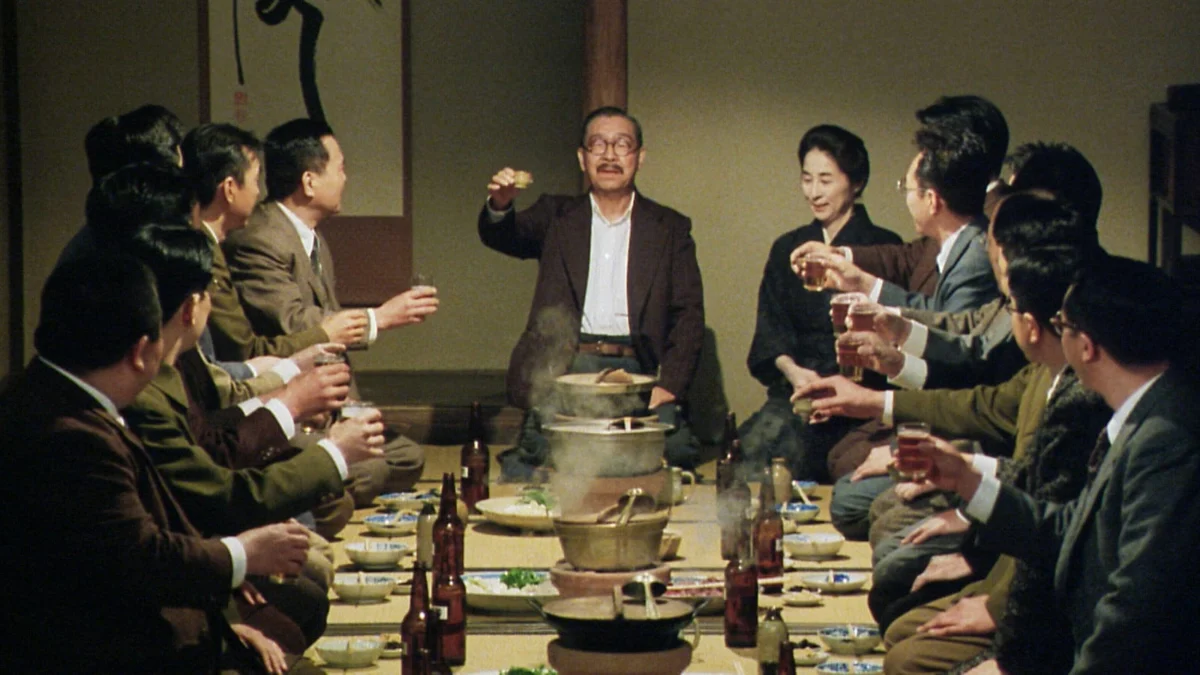
When Akira Kurosawa released Madadayo in 1993, he had already secured his place in the pantheon of global cinema. To the international film community, he was "The Emperor," a filmmaker whose visual language and narrative precision had fundamentally reshaped the medium. Yet, his final film—a gentle, episodic meditation on aging and the refusal to succumb to the inevitable—remained largely unseen by Western audiences for years. Today, through a definitive new physical media release and a shifting critical perspective, Madadayo is finally being recognized not as a minor coda, but as a profound final statement from a director who believed he was only just beginning to understand the true potential of film.
The Master’s Final Bow: Main Facts and Narrative Essence
Madadayo (1993) serves as the 30th and final feature film directed by Akira Kurosawa. Unlike the "thunderous" period epics that defined his mid-career—such as the revolutionary Seven Samurai (1954) or the Shakespearean grandeur of Ran (1985)—Madadayo is a work of quiet, domestic intimacy. It is a biographical tribute to the Japanese academic and author Hyakken Uchida (1889–1971), portrayed with whimsical gravity by Tatsuo Matsumura.
The film’s title, which translates to "Not Yet," refers to a ritualized exchange during an annual birthday party held for the professor by his former students. As they toast to his longevity, they ask if he is ready to depart for the next world; his defiant, playful response is always the same: "Madadayo!" (Not yet!).
The narrative is purposefully unadorned, eschewing traditional dramatic conflict in favor of a series of vignettes spanning two decades, beginning with the professor’s retirement during World War II. It tracks his life through the firebombing of Tokyo, his residence in a tiny hut, and his eventual move to a more comfortable home, all while maintaining a steadfast bond with the students who revere him. The film focuses on the small, the mundane, and the deeply human: the loss of a beloved cat, the shared joy of a drink, and the persistence of the spirit in the face of mortality.
A Delayed Journey to the West: The Chronology of Madadayo
The path of Madadayo from its Japanese premiere to global recognition was fraught with distribution hurdles and a lukewarm initial reception.
- April 1993: Madadayo premieres in Japan to respectful, if not ecstatic, reviews. At 83, Kurosawa was a living legend, but the Japanese film industry was shifting away from the expensive, meticulous style of his generation.
- May 1993: The film makes its international debut at the Cannes Film Festival, playing out of competition. The response from Western critics was muted; many, accustomed to the kinetic energy of Kurosawa’s samurai films, found the slow-paced, episodic structure of Madadayo to be sentimental or overly simplistic.
- 1993–1997: While the film saw limited theatrical runs in Europe, it failed to secure a distributor in the United States. This five-year absence is a striking historical anomaly, considering Kurosawa’s influence on the "New Hollywood" generation—directors like George Lucas, Steven Spielberg, and Francis Ford Coppola had previously stepped in to help fund and distribute his earlier works like Kagemusha.
- 1998: Madadayo finally receives a modest American theatrical release. Tragically, it arrives just as Kurosawa’s health was failing. The director passed away in September 1998 at the age of 88, shortly after his final film had finally reached the shores of his most ardent admirers.
- 2024: The Australian boutique label Imprint releases a comprehensive, high-definition Blu-ray edition, featuring a new 4K restoration and extensive archival supplements, marking a significant milestone in the film’s preservation and accessibility.
The Architecture of "Not Yet": Supporting Data and Technical Precision
To understand why Madadayo is a masterpiece, one must look past its simple plot and into the rigorous technical craft Kurosawa applied to every frame. Despite its modest scale, the film was produced with the same exacting standards as his historical epics.

The Visual Blueprint
Kurosawa was famously a trained painter before he became a director, and in his later years, his storyboards became independent works of art. The Imprint release highlights the startling correspondence between Kurosawa’s hand-painted storyboards and the final cinematography. Every gesture, every shadow in the professor’s cramped hut, and every hue in the film’s dreamlike finale was pre-visualized with obsessive detail. This precision ensures that even the most "quiet" scenes possess a compositional weight that grounds the film’s sentimentality in formal excellence.
The "Emperor" on Set
Supporting documentation provided in the new 90-minute "Making Of" documentary reveals a director in total command. Kurosawa was known for his demanding nature, but Madadayo shows a softer, more collaborative side of his process. He focused intensely on the "rhythm" of the performances, treating the ensemble of students almost like a chorus in a Greek tragedy. The documentary provides a "crash course" in Kurosawa’s directorial philosophy, showing how he used specific notes on breath and movement to elicit performances that felt both naturalistic and archetypal.
The Emotional Data: The Cat Subplot
Critics often point to the film’s middle section—where the professor loses his cat, Kurz—as the emotional heart of the work. Film historian Jonathan Rosenbaum famously noted that this sequence achieves a level of devastation that makes Hollywood tear-jerkers seem restrained. The "data" of this sequence is found in its pacing: Kurosawa uses a slow, steady stream of straightforward images to convey the crushing weight of grief over a "small" loss, mirroring the professor’s larger struggle with the disappearing world around him.
Critical Reception and Historical Context: Official Responses
The initial "official" response to Madadayo was colored by the shadow of Kurosawa’s own legacy. In 1993, the cinematic world was increasingly enamored with the "grunge" aesthetic of independent cinema and the burgeoning digital revolution. Kurosawa’s insistence on classical composition and humanist themes felt, to some, like a relic of a bygone era.
The Cannes Mute
At Cannes, the "muted response" was partly due to expectations. Critics were looking for another Ran—a grand, violent spectacle. Instead, they were given a film about an old man crying over a cat and drinking beer with his students. It was a mismatch of expectations that ignored the "late style" of the artist—a phenomenon where masters often strip away artifice to reach a purer, more personal form of expression.
The Legacy of Influence
Despite the initial cold shoulder, the film’s importance is underscored by the reverence other directors held for Kurosawa. During the period Madadayo was being filmed, Kurosawa received an honorary Academy Award. In his acceptance speech, he famously stated, "I’m only now beginning to see the possibility of what cinema could be, and it’s too late."

This sentiment is echoed in the works of his disciples. Spike Lee’s recent Highest 2 Lowest (2023) and the enduring DNA of Seven Samurai in modern blockbusters remind us that Kurosawa’s "grammar" is the foundation of contemporary cinema. Madadayo represents the final chapter of that grammar—the point where the language becomes so refined it appears invisible.
The Legacy of a Visionary: Implications for Film History
The reappearance of Madadayo in a high-quality format has significant implications for how we view the trajectory of 20th-century cinema. It forces a re-evaluation of Kurosawa’s "Late Period," which includes Dreams (1990) and Rhapsody in August (1991).
The "Late Style" Shift
Madadayo serves as a bridge between traditional narrative and a new, impressionistic form of storytelling. Along with final works by other masters—such as John Huston’s The Dead or Stanley Kubrick’s Eyes Wide Shut—it suggests that as great directors face their own end, they become less interested in "plot" and more interested in "essence." The implication is that Kurosawa was moving toward a cinema of pure emotion and observation, a path he unfortunately did not have the time to fully pave.
The Refusal to Retire
The film’s central theme of "Not Yet" is a meta-commentary on Kurosawa himself. He continued to write scripts and plan projects until his final days. Madadayo is not just a film about a professor; it is a manifesto against the concept of "finishing." It implies that for the true artist, the work is never done, and the "possibility of what cinema could be" is a horizon that keeps receding.
A New Generation of Preservation
The release of the film by Imprint signifies a shift in the physical media landscape. By providing scholarly context through interviews with historians like Jasper Sharp, these releases ensure that "difficult" or "quiet" films from masters are not lost to the algorithm-driven world of streaming. It allows Madadayo to be viewed not as an obscure footnote, but as an essential piece of the Kurosawa puzzle.
In conclusion, Madadayo remains a vital, elegiac, and ultimately hopeful film. It is a work that rewards patience and demands a quiet heart. As the professor in the film dreams of his childhood—of playing hide-and-seek and shouting "Not yet!" to the approaching darkness—we see a reflection of Kurosawa himself: a man who, after fifty years of making movies, was still playing the game, still discovering the light, and still not ready to say goodbye.
 Jia Lissa
 Lina Irawan
 Iffa Jayyana
