

For four decades, the screams echoing through Hollywood’s casting offices have often been orchestrated by one woman. While directors like Sam Raimi and Zach Cregger provide the vision, and actors like Liam Neeson and Sophie Thatcher provide the face, Nancy Nayor provides the soul. As one of the industry’s most prolific casting directors, Nayor has transitioned from a self-described "horror geek" to a gatekeeper of the genre, responsible for some of the most iconic performances in horror history.
In an industry where genre films were once dismissed as "schlock," Nayor’s career represents a bridge between the classic era of psychological thrillers and the modern "elevated horror" boom. From her early days as a Vice President at Universal Pictures to her current status as an independent powerhouse, her journey offers a masterclass in the art of identifying talent, managing eccentric creative visions, and advocating for the artistic legitimacy of the macabre.
Chronology: From the Twilight Zone to the Universal Backlot
Nancy Nayor’s path into the entertainment industry was paved with the flickering lights of black-and-white television. Growing up, her entertainment preferences were a source of bewilderment for her parents. While her peers might have been drawn to sitcoms or traditional dramas, Nayor would race home from school to immerse herself in the surreal landscapes of The Outer Limits, the moral fables of The Twilight Zone, and the gothic atmosphere of Dark Shadows.
"I was such a horror geek, and my parents just couldn’t figure me out," Nayor recently told IndieWire. "It wasn’t what they expected."
This early obsession provided her with an intuitive understanding of the genre’s mechanics. She understood that horror was not just about the jump scare; it was about the atmosphere, the pacing, and, most importantly, the vulnerability of the characters. This intuition served her well when she entered the corporate side of Hollywood.

By the mid-1980s, Nayor had risen to the position of Vice President of Casting at Universal Pictures. It was a high-pressure role that saw her overseeing the casting for the studio’s entire feature film slate. However, her true passion remained the "in-house" projects that allowed her to get back to her genre roots.
The turning point came in 1986 with Psycho III. The film was a daunting prospect: a sequel to an Alfred Hitchcock masterpiece, directed by its legendary star, Anthony Perkins. For Nayor, who grew up idolizing films like the original Psycho and The Bad Seed, the assignment was a dream.
Working with Perkins shattered Nayor’s preconceptions about horror creators. "I only knew the character from the film, and the character was so edgy," she recalled. "I thought, ‘He’s going to be complicated and mysterious.’ But he was the sweetest guy, straightforward, caring, and communicative." This experience established a recurring theme in Nayor’s career: the discovery that the people who make the most terrifying films are often the kindest individuals in the industry.
Supporting Data: The Mechanics of the Scream
Casting a horror film requires a different set of skills than casting a romantic comedy or a period drama. In Nayor’s world, the audition room is a place of extreme emotional vulnerability. Actors are often asked to perform "possession" scenes, flee from imaginary monsters, or emit blood-curdling screams—all while standing in a sterile office in front of a camera.
The Nurturing Environment
Nayor emphasizes that a casting director’s primary job in horror is to provide a "safe space" for insanity. She recalled an office she once occupied that sat directly above a dentist and a chiropractor. Actors would arrive for auditions, see the medical signs, and become self-conscious about making noise.

"Their first few screams would be a little timid," Nayor said. Her solution was to become a cheerleader for the chaos, assuring them that the neighbors were well-aware of the "scream factory" upstairs. "Nobody’s going to call the police. Just scream at the top of your lungs," she would tell them. This nurturing approach has allowed her to capture the raw, uninhibited performances seen in recent hits like Barbarian and Companion.
The "Unknown" Advantage
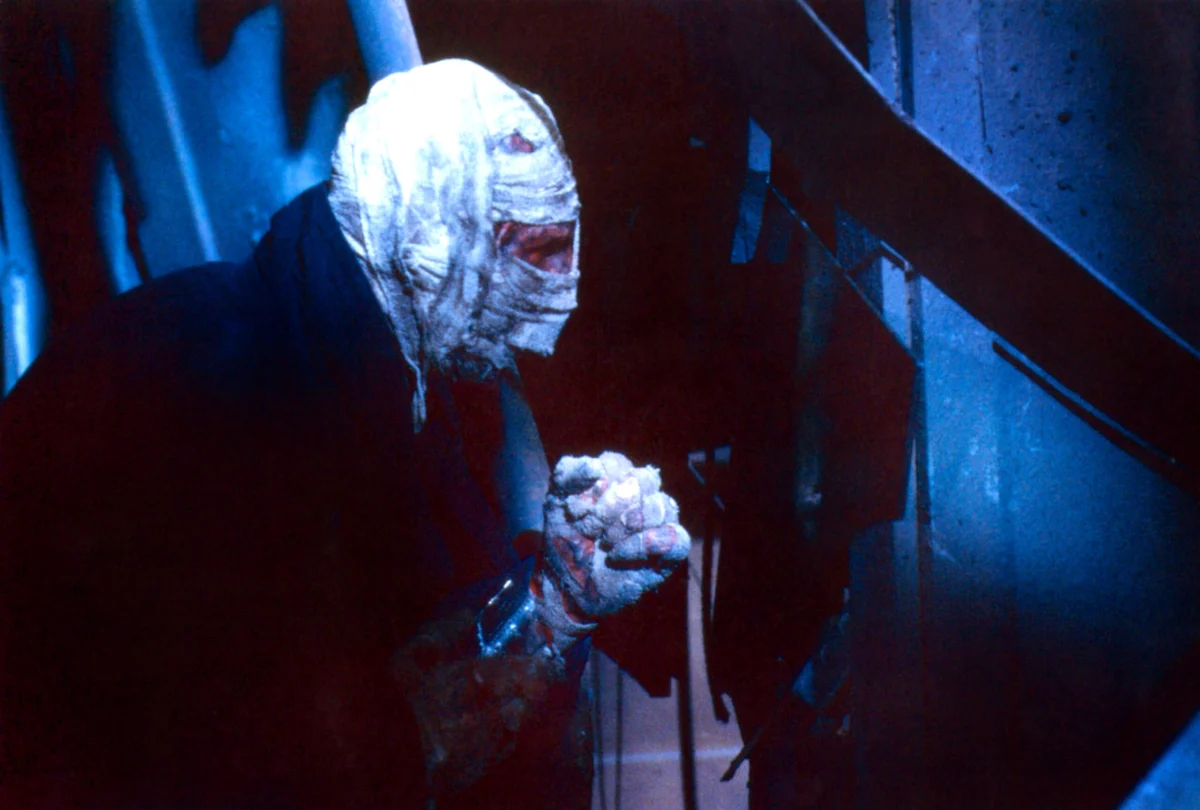
One of the most significant data points in Nayor’s career is her success in casting unknown actors in lead roles. In 1990, she worked with Sam Raimi on Darkman. While the studio likely wanted a bankable star, Nayor and Raimi pushed for a then-obscure Irish actor named Liam Neeson.
Nayor noted that casting an unknown gives the audience a cleaner slate. "There’s something exciting about audiences immersing themselves in the story because they’re not overly familiar with the lead," she explained. In Neeson, she saw a "soulful presence" that could ground the film’s more fantastical elements. This strategy has become a hallmark of her work, as she scours independent films, Broadway, and Off-Broadway stages to find talent before they become household names.
Official Responses: Navigating Industry Snobbery
Despite the financial success of horror, the genre has historically faced a "prestige gap" in Hollywood. Nayor has often found herself in the position of "Genre Evangelist," convincing elite actors and their representatives that a horror script is a worthy artistic endeavor.
The Aaron Paul Case Study
A prime example of this occurred during the casting of the 2009 remake of The Last House on the Left. Nayor was convinced that Aaron Paul—who was just beginning to gain traction for his role in Breaking Bad—was perfect for a key role. However, his agents were hesitant, expressing a desire to avoid "genre films."

Nayor’s response was tactical. Rather than arguing with the agents, she reached out to Paul directly. She asked him to ignore the "horror" label and simply watch director Denis Iliadis’ previous work. After viewing the film, Paul called her and said, "I’m in. I want to do this film."
A Shift in Perception
Nayor observes that the tide is finally turning. The recent critical acclaim for films like Smile, Talk to Me, and the works of Jordan Peele has made horror a "prestige" destination. She points to actors like Demi Moore and Amy Madigan receiving accolades for genre work as evidence that the old prejudices are crumbling.
"Agents have a really hard job," Nayor admitted, noting that they are often juggling hundreds of offers for popular clients. However, her persistence in "leaving no stone unturned" has helped bridge the gap between high-caliber talent and terrifying scripts.
The Technological Evolution: From Offices to the Woods
The casting process has undergone a radical transformation in the last decade, moving from in-person cattle calls to the ubiquity of self-tapes. While some casting directors lament the loss of personal interaction, Nayor sees it as a boon for horror.
"People can literally be out screaming in the woods for their audition," she said. Self-taping allows actors to utilize their environment to enhance the atmosphere of their performance. They are no longer confined by the four walls of a casting office or the fear of disturbing the dentist downstairs. This freedom, Nayor believes, allows actors to "release the Kraken" and deliver more authentic, visceral auditions.

Implications: The Future of the Horror Boom
The current state of the film industry suggests that we are living in a "Golden Age of Horror." For Nayor, this is not just a trend but a validation of a career spent in the trenches of the macabre. The success of directors like Zach Cregger (with whom she worked on Barbarian) and Sam Raimi’s continued relevance (she recently cast his project Send Help) indicates that there is a massive appetite for high-quality, character-driven genre stories.
Upcoming Projects
Nayor shows no signs of slowing down. She recently wrapped casting on My Boyfriend’s a Demon and is currently finishing work on Drew Hancock’s follow-up to Companion. Her involvement in these projects ensures that the next generation of horror stars will continue to be chosen with the same eye for "soulfulness" and "presence" that she brought to Darkman nearly 35 years ago.
The Legacy of the "Geek"
The broader implication of Nancy Nayor’s career is the professionalization of the horror fan. By bringing a fan’s passion and a corporate executive’s discipline to the casting room, she has helped elevate horror from a niche interest to a central pillar of the global film economy.
"I think it’s just such a cool profession," Nayor concluded. "I can’t believe I get to do it for a living."
As the industry continues to evolve, Nayor remains a steadfast guardian of the genre. Her career serves as a reminder that behind every great cinematic scare is a carefully chosen human face—and a casting director who wasn’t afraid to let them scream.
 Lina Hope
 Asep Darmawan
 Jia Lissa
