

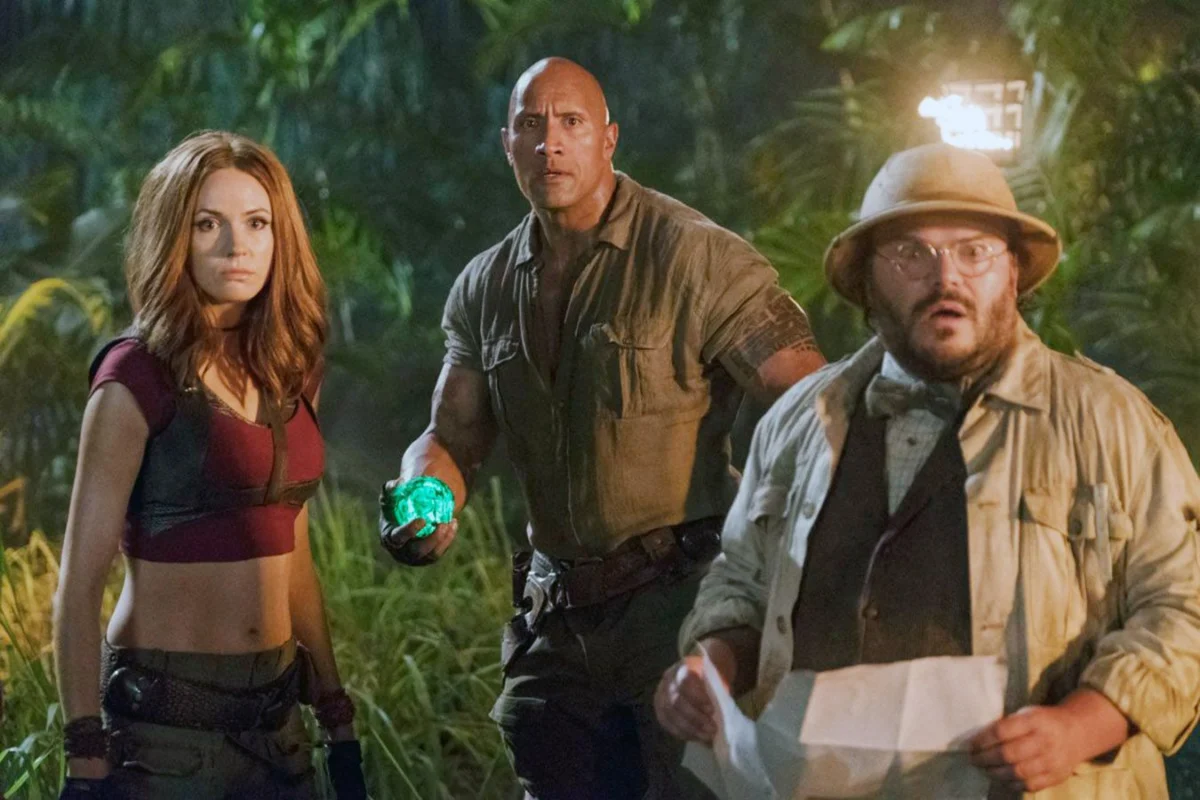
When Sony Pictures announced they were reviving Jumanji for a new generation, the initial public reaction was one of skepticism bordering on hostility. The 1995 original, starring the legendary Robin Williams, occupies a sacred space in the pantheon of 90s nostalgia. To many, the prospect of updating a film that defined an era of childhood wonder felt like a cynical cash grab. Yet, upon the release of Jumanji: Welcome to the Jungle in 2017 and its 2019 successor Jumanji: The Next Level, the cultural consensus shifted.
The modern Jumanji films are not merely successful blockbusters; they are fundamentally superior pieces of cinema. By pivoting from the board game concept to a video game meta-narrative, the franchise successfully bypassed the limitations of its predecessor.
The Core Premise: Board Game Nostalgia vs. Video Game Agency
To understand the disparity between the films, one must examine their foundational structures. The 1995 film, directed by Joe Johnston and based on Chris Van Allsburg’s 1981 children’s book, posits the board game as a mystical, sentient entity. It is a film about the intrusion of the supernatural into the mundane. When the dice are rolled, the jungle enters the suburbs.
While the premise is charming, it relies heavily on a static narrative device. The board game is a ticking clock, but it offers little agency to its players. The characters are largely reactive, spending the film’s duration fleeing from manifestations of a jungle that appears to have no logic other than "chaos."
Conversely, the 2017 reboot, Welcome to the Jungle, ingeniously updates the medium to match the modern digital zeitgeist. By transforming the game into an Atari 2600-style console—a clever nod to the transition from physical play to virtual immersion—the film introduces a Freaky Friday-esque body-swapping dynamic. This shift provides the script with an inherent engine for character growth. The teenagers are no longer just survivors; they are players navigating a set of rules, lives, and character archetypes. This allows for a deeper exploration of identity, insecurity, and social hierarchy that the 1995 film simply could not touch.
A Chronology of the Franchise
- 1981: Chris Van Allsburg publishes the original picture book, Jumanji.
- 1995: The first film adaptation hits theaters, grossing $262.8 million worldwide against a $65 million budget. It becomes a staple of home video and television syndication.
- 2005: Zathura: A Space Adventure, a spiritual successor directed by Jon Favreau, attempts to expand the universe but fails to capture the same box-office magic.
- 2017: Jumanji: Welcome to the Jungle premieres, surprising critics with a 76% score on Rotten Tomatoes and a massive $962 million global box office haul.
- 2019: Jumanji: The Next Level cements the franchise’s status as a billion-dollar juggernaut, further refining the body-swapping comedy of the first reboot.
Technical Limitations and the CGI Trap
One of the most difficult hurdles to clear when revisiting the 1995 original is its reliance on primitive computer-generated imagery. In the mid-90s, the marriage of practical effects and early digital rendering was in its infancy. The results in Jumanji are, by modern standards, jarring.
The lion and the stampeding monkeys, while ambitious for the time, fail to integrate convincingly with the live-action plates. When the internal logic of a fantasy film relies on the audience fearing these creatures, the "uncanny valley" effect of the 1995 CGI actively works against the tension. In contrast, the 2017 and 2019 films were produced during an era where CGI had become a seamless tool for world-building. Even when the effects in the reboots are clearly digital, they serve the tone of the movie—a heightened, video-game reality—rather than attempting a realism the film cannot sustain.
The Robin Williams Paradox
Perhaps the most controversial aspect of this critique is the role of Robin Williams. There is no denying the immense talent and cultural impact of the late actor. However, from a screenwriting perspective, the 1995 Jumanji never quite figured out how to use him.

The character of Alan Parrish is a man traumatized by 26 years in the jungle, yet the screenplay treats him with a levity that contradicts his backstory. He is neither allowed to be the manic, improvisational comedian that made Williams an icon, nor is he given the dramatic depth of his work in Good Will Hunting or Dead Poets Society. In retrospect, the script seems to have been written for a generic action lead, with Williams simply "slotted in."
The reboots, however, are tailor-made for their ensemble. By casting Dwayne Johnson, Kevin Hart, Jack Black, and Karen Gillan in roles that allow them to play against their usual screen personas, the filmmakers create a synergy that is absent in the original. Watching Jack Black channel the mannerisms of a self-absorbed teenage girl or seeing Dwayne Johnson struggle with the anxiety of a nerdy high schooler provides a comedic payoff that is both clever and consistent.
Supporting Data: Box Office Performance
The financial disparity is significant, though it must be adjusted for inflation. The 1995 film was a hit, but it was not a cultural phenomenon of the scale we see today. Welcome to the Jungle and The Next Level effectively turned Jumanji into a premier global franchise.
- 1995 Jumanji: $262M worldwide (Adjusted: approx. $540M).
- 2017 Welcome to the Jungle: $962M worldwide.
- 2019 The Next Level: $801M worldwide.
The sustained interest in the sequels, particularly after the massive success of the first reboot, demonstrates that audiences weren’t just showing up for nostalgia; they were showing up because the modern films are genuinely entertaining experiences that scale well across international markets.
The "Legacy" Argument and Its Implications
Critics of the new films often cite "nostalgia protection" as the primary reason for their dislike. The original film holds a specific emotional resonance for those who grew up in the 90s, and to criticize it feels like criticizing one’s own childhood. However, film criticism requires the ability to separate personal attachment from narrative quality.
The implication of the Jumanji reboot’s success is a lesson for Hollywood: reinvention is often better than preservation. By respecting the spirit of the original—the idea of a dangerous game that swallows you whole—without being tethered to the limitations of the original, the filmmakers created a template for how to handle intellectual property.
Conclusion
When viewed through a contemporary lens, the 1995 Jumanji is a film defined by the era of its creation—clunky, experimental, and sentimental. It is a relic of the mid-90s, valuable for its history but limited in its execution. The modern Jumanji films, by embracing their identity as high-concept, ensemble-driven comedies, have evolved into something more substantial. They provide the laughs, the spectacle, and the character development that the original promised but failed to deliver.
For the adult viewer today, the choice is clear: while the 1995 version will always have its place on a "nostalgia shelf," the reboots are the superior films in every measurable category. They are not just better than the original; they are the definitive versions of the Jumanji story.
 Basiran
 Suro Senen
