

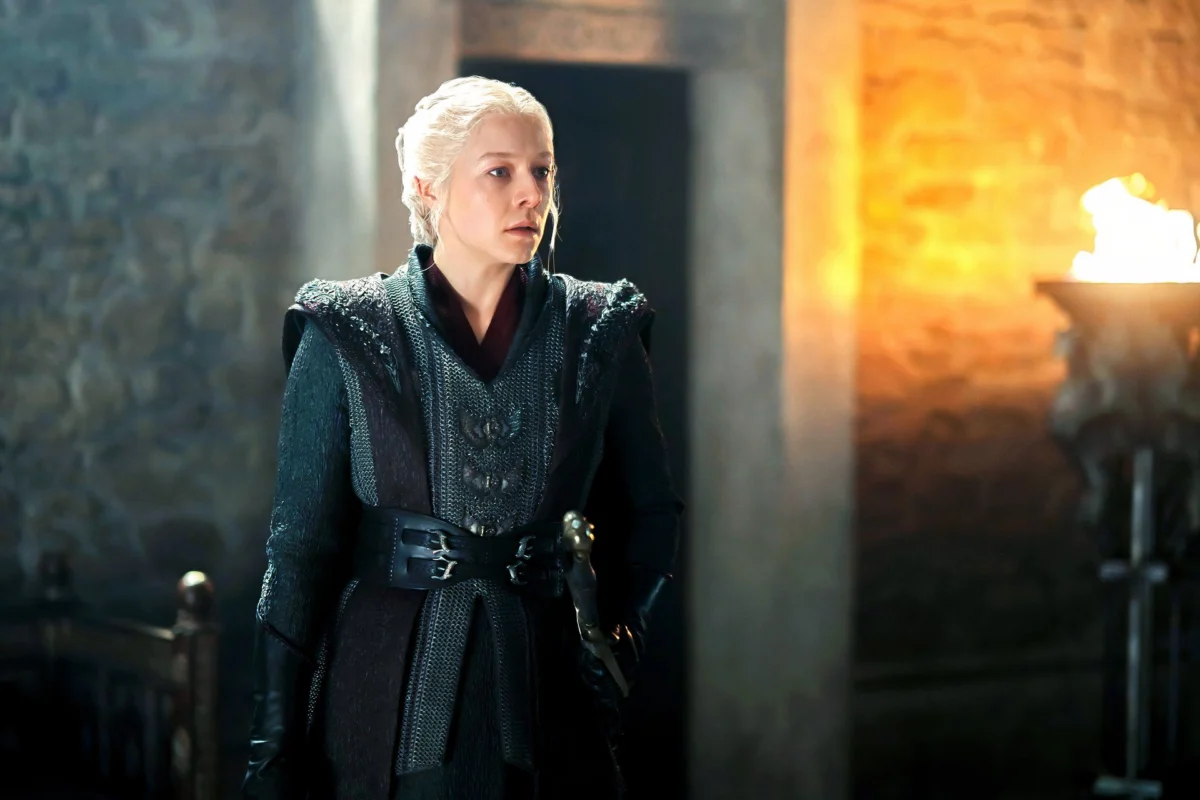
The political landscape of Westeros has been irrevocably altered. Following the explosive conclusion of the Battle of the Gullet, the third season of HBO’s House of the Dragon has officially pivoted from a war of attrition to a brutal consolidation of power. In a defining sequence during the second episode, the conflict reached a bloody crescendo within the Red Keep, culminating in the execution of one of the series’ most pivotal architects: Otto Hightower.
For fans of George R.R. Martin’s Fire & Blood, the death of Otto Hightower serves as the definitive closing of a chapter that began in the series premiere. His demise, orchestrated by the opportunistic Larys Strong and carried out by Rhaenyra Targaryen, marks a point of no return for the Dance of the Dragons.
The Chronology of Conflict: From the Gullet to the Throne Room
The current season has moved at a breakneck pace. The premiere episode established the high stakes of the Battle of the Gullet, a naval confrontation that saw the death of Prince Jacaerys “Jace” Targaryen. The fallout from this tragedy occupies the first half of episode 2, as Rhaenyra Targaryen descends into a grief-stricken paralysis on Dragonstone.
However, the inertia of mourning is shattered by the return of Daemon Targaryen, who brings intelligence regarding Aemond Targaryen’s flight to Harrenhal. With the Greens’ military leadership in disarray and King Aegon II nowhere to be found, the path to King’s Landing is left unguarded.
![House of the Dragon season 3 episode 2 ending explained: Let's talk about [SPOILERS] big death](https://static0.polygonimages.com/wordpress/wp-content/uploads/2026/06/emma-d-arcy_0.jpg?w=1600&h=900&fit=crop)
The Infiltration of the Red Keep
Rhaenyra’s arrival at the capital was not the triumphant spectacle of a conquering hero, but a surgical strike. Accompanied by Daemon and the dragonseeds, Ulf White and Hugh Hammer, the Queen successfully navigated the city’s defenses. The surrender of the city, facilitated by the diplomatic efforts of Queen Alicent Hightower and Helaena Targaryen, allowed the Blacks to infiltrate the Red Keep with minimal resistance.
The subsequent confrontation in the Throne Room was characterized by a shifting of loyalties. Ser Luthor Largent, captain of the Gold Cloaks, proved that the influence of the former Commander of the City Watch—Daemon—remains potent. With the Kingsguard neutralized, the stage was set for the final reckoning.
The Long Road to the Executioner’s Block
Otto Hightower’s journey to this moment has been one of the most complex character arcs in the franchise. As Hand of the King, he was the primary strategist behind the Green claim to the Iron Throne, a man who spent decades maneuvering his own bloodline into the highest position of power.
A History of Manipulation
Otto’s influence was the catalyst for the current schism. By positioning his daughter, Alicent, as a companion to the widowed Viserys I, he secured the birth of Aegon II and effectively planted the seeds for the civil war. His methodology was always defined by a preference for political maneuvering over open warfare. However, this cautious approach eventually alienated him from his grandson, Aegon II, who sought a more aggressive military posture.
![House of the Dragon season 3 episode 2 ending explained: Let's talk about [SPOILERS] big death](https://static0.polygonimages.com/wordpress%2Fwp-content%2Fauthors%2F69120a4964522-headshot.jpg?fit=crop&w=90&h=90)
The Mystery of the Imprisonment
The audience’s last clear view of Otto was in the season 2 finale, where he was seen languishing in a dungeon. The reveal in the latest episode provides the missing context: Larys Strong, the Master of Spies, had been holding Otto as a high-value political prisoner. Whether this was a fail-safe for Larys or a calculated move to keep the old fox of the Reach off the board, it resulted in the ultimate "gift" for Rhaenyra upon her return.
The Significance of the Act: Why Rhaenyra Had to Strike
The execution of Otto Hightower was not merely a moment of vengeance; it was a necessary political performance. Rhaenyra, haunted by the loss of her sons Luke and Jace, was initially hesitant to act. However, as the court looked on, mercy would have been perceived as a sign of weakness—a fatal error in the cutthroat environment of the Red Keep.
The Symbolism of Dark Sister
By wielding Daemon’s Valyrian steel sword, Dark Sister, Rhaenyra physically claimed the mantle of the warrior-queen. The fact that the first blow was imprecise, requiring a second, speaks to the psychological toll the war has taken on her. She is no longer the peace-seeking diplomat; she is the Queen who will do what is necessary to secure her reign.
The death of Jasper Wylde, the Master of Laws, immediately following Otto’s execution, served to clear the board of the previous regime’s most loyal defenders, signaling that the era of Hightower influence in the capital is officially at an end.
![House of the Dragon season 3 episode 2 ending explained: Let's talk about [SPOILERS] big death](https://static0.polygonimages.com/wordpress/wp-content/uploads/2026/06/tom-cullen.jpg?q=49&fit=crop&w=825&dpr=2)
Implications for the Dance of the Dragons
The impact of this episode will reverberate through the remaining episodes of season 3. The immediate consequence is the complete fracture of the fragile truce that seemed to be forming between Rhaenyra and Alicent.
The Breakdown of Diplomacy
The final shot of the episode—Alicent and Helaena witnessing the aftermath of the execution—destroys any hope for a peaceful resolution. For Alicent, the sight of her father’s body on the floor of the throne room represents the final failure of her life’s work. The personal friendship that the two women had attempted to rekindle has been sacrificed at the altar of the Iron Throne.
The Power Vacuum in the Reach
With Otto dead, the political influence of House Hightower in Oldtown and the broader Reach is now in total disarray. Without their primary strategist, the Greens must rely on Aemond’s erratic leadership and the remaining loyalists. Furthermore, the question of King Aegon II’s whereabouts remains the most significant variable in the war. If he is alive and rallying forces, the Black victory in King’s Landing may prove to be a hollow one.
Strategic Outlook: The Road Ahead
The war has now transitioned from a ideological struggle to a fight for survival. Rhaenyra’s presence on the Iron Throne, while a symbolic victory, places her in the center of a city that may not fully accept her rule.
![House of the Dragon season 3 episode 2 ending explained: Let's talk about [SPOILERS] big death](https://static0.polygonimages.com/wordpress/wp-content/uploads/2026/06/rhys-ifans-1-1.jpg?q=49&fit=crop&w=825&dpr=2)
- The Dragonseeds’ Role: With Ulf and Hugh now physically inside the Red Keep, their loyalty will be tested. They represent a new, unpredictable element in the Targaryen power structure.
- The Alicent Factor: Now that the person who kept her grounded—her father—is dead, Alicent may turn her grief into a new form of radicalized opposition.
- Daemon’s Ambition: Having been the one to push Rhaenyra toward the execution, Daemon’s influence is clearly growing. How Rhaenyra balances her own authority with his aggressive counsel will be a major point of tension.
In conclusion, House of the Dragon season 3 has successfully raised the stakes by removing the series’ most consistent antagonist. The death of Otto Hightower is not just the end of a character; it is the death of the old guard. As the series moves forward, the focus shifts to the next generation—the dragonriders, the opportunists, and the survivors—who will now dictate the fate of the Seven Kingdoms. The throne has been taken, but the war for the soul of the Targaryen dynasty has only just begun.
 Nana Muazin
 Layla Zulfa
 Basiran
