

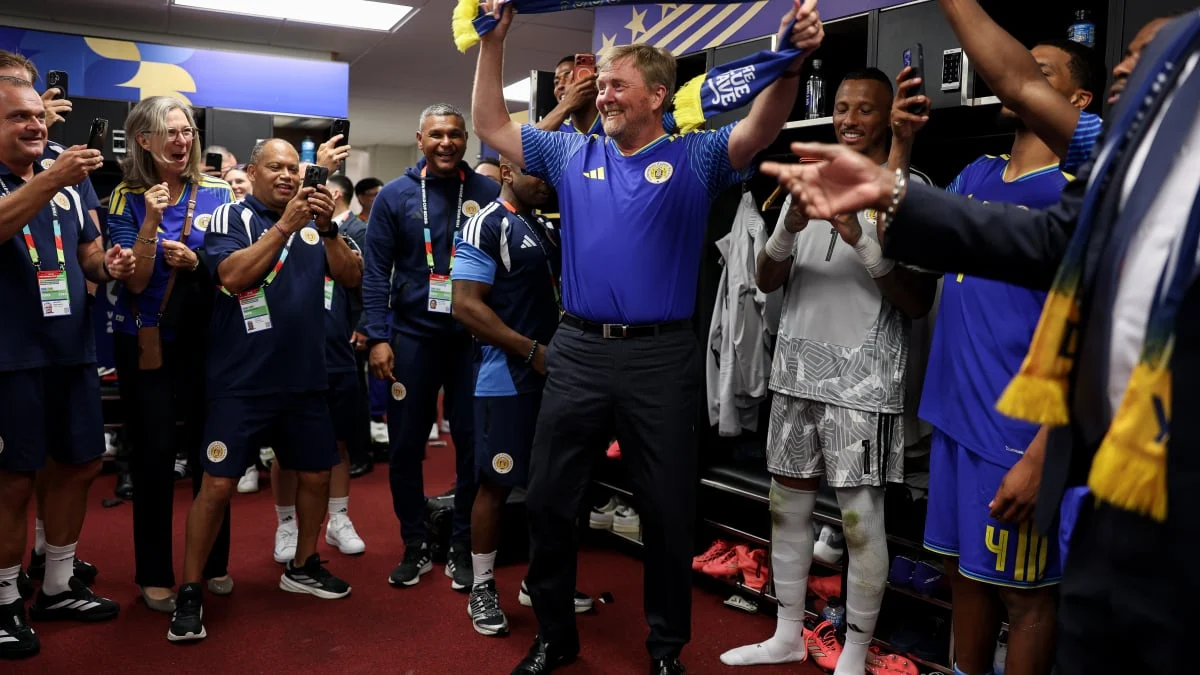
Since the inaugural tournament in 1930, the FIFA World Cup has functioned as the ultimate theater of the human spirit. While history books often focus on the gilded trophy and the eventual champions, the soul of the tournament is frequently found in the margins—in the grit of nations that have never stood on the global stage before, and in the sheer, unadulterated joy of an underdog achieving the impossible.
The 2026 FIFA World Cup has already cemented its status as a tournament of disruption. It is a competition defined not by the expected dominance of traditional powerhouses, but by the meteoric rise of the global game’s smaller voices. From the tiny island nation of Curaçao holding the line against titans, to Egypt ending a nearly century-long wait for a victory, this year’s tournament is a testament to the fact that, in football, the impossible is merely a starting point.
The Anatomy of an Upset: Why 2026 Feels Different
The 2026 edition has introduced a paradigm shift in how we perceive the "small" footballing nation. Historically, the gap between the world’s elite and the tournament’s newcomers was a chasm that rarely closed. However, with tactical evolution and the global scouting network now reaching every corner of the earth, the playing field has leveled in unprecedented ways.
A Chronology of Breakthroughs
The opening weeks of the tournament provided a rapid-fire series of "where-were-you-when" moments:
- Day 1-3: Curaçao’s defensive masterclass against Ecuador signaled that no team would go quietly into the night.
- Day 5: Cape Verde, the tournament’s darling, stunned the world by holding Spain to a stalemate, followed by a high-octane draw against Uruguay.
- Day 8: Egypt broke a 92-year curse, securing its first-ever World Cup win and sparking nationwide jubilation in Cairo.
- Ongoing: The emotional resonance of teams like Haiti and Uzbekistan—nations returning to or debuting on the world stage—has provided the tournament with its cultural heartbeat.
Small Nations, Massive Impact: Case Studies in Grit
Curaçao: The Defiance of the Smallest
With a population of just 156,000, Curaçao arrived in the tournament as the smallest nation ever to participate in a World Cup. After a demoralizing 7-1 opening loss to Germany, the narrative suggested an early exit. Yet, the team’s response to adversity was nothing short of miraculous.
Against Ecuador, goalkeeper Eloy Room became a symbol of national pride, producing 15 saves in a relentless barrage of attacks. While the match ended in a 0-0 draw, for the people of Willemstad, it felt like a championship victory. It was not just a point in the standings; it was a statement that despite their limited resources and population, Curaçao belonged in the conversation of the world’s elite.
The Blue Sharks of Cape Verde
If there is a team that has captured the collective imagination of the global footballing public, it is Cape Verde. The "Blue Sharks" have turned their debut into a masterclass in heart. Their journey has been bolstered by a unique viral sensation: their 40-year-old goalkeeper, Vozinha.
Vozinha’s journey from relative obscurity to having his Instagram following surge to 15 million is emblematic of the "World Cup Effect." Beyond the statistics, his story became a beacon of hope when he revealed his mother’s struggle to secure a visa to watch him play. The subsequent diplomatic intervention—involving U.S. government officials—to bring his mother to Miami for the match against Uruguay transformed a sporting event into a profound human interest story. Furthermore, the team’s recruitment of an Irish-born player via a LinkedIn direct message has added a layer of modern-day serendipity to their Cinderella run.
The Human Element: Dignity in the Face of Complexity
Not all underdog stories are measured in goals or saves. Some are measured in grace. Iran’s journey during this tournament was hampered by logistical and geopolitical restrictions, with the squad forced to commute from a base in Tijuana, Mexico, for their U.S.-based matches.
Despite the pressure, their 0-0 draw against Belgium at SoFi Stadium in Los Angeles was a tactical triumph. The lasting image, however, was not the scoreline, but a handwritten note left in their locker room. The team expressed their gratitude to the city and their fans, stating, "We came to Los Angeles with pride, competed with honour, and leave with dignity." This gesture served as a poignant reminder that the World Cup is a bridge between cultures, even when political barriers attempt to build walls.
Statistical Milestones and Historical Context
The 2026 tournament is effectively rewriting history books for several nations:
| Nation | Achievement | Significance |
|---|---|---|
| Egypt | First World Cup win | Ends a 92-year wait since their debut |
| Uzbekistan | First tournament goal | Historic first for Central Asian football |
| Haiti | 52-year return | First appearance since 1974 |
| Curaçao | First tournament point | Smallest nation to earn a point in history |
These data points serve as more than just trivia; they represent the professionalization of football programs in regions that were previously marginalized by global governing bodies. The success of Uzbekistan, in particular, has opened the door for Central Asian nations to invest further in youth academies and domestic league structures.
Official Responses and Global Implications
FIFA officials have noted that the 2026 format, which encourages a wider representation of global teams, has been a catalyst for these underdog narratives. "The growth of the game is not measured by the dominance of one nation, but by the competitiveness of all," said a spokesperson for the organizing committee.
The economic implications are equally significant. For nations like Cape Verde and Haiti, the increased visibility provides a platform to drive sports tourism and domestic investment. The "Egypt Effect"—where national morale surged following their victory—demonstrates the "soft power" capabilities of football. When a national team succeeds, the internal social cohesion of the country often strengthens, providing a brief but powerful respite from the complexities of domestic socio-economic challenges.
The Road Ahead: What’s Next?
As the tournament progresses toward the final 32, the pressure on these underdog teams will only intensify. The Blue Sharks of Cape Verde face a critical group-stage finale against Saudi Arabia—a match that could propel them into the knockout stages and cement their legacy as the most successful debutants in the 21st century.
Meanwhile, the established giants are now on notice. The "easy" matches that were once penciled in as automatic three points have become high-stakes battles. This is the beauty of the 2026 FIFA World Cup: it is a tournament where the scouting report is secondary to the spirit of the players on the pitch.
Whether it is the tactical discipline of Iran, the sheer resilience of Curaçao, or the historic perseverance of Egypt, the 2026 World Cup is proving that the most memorable moments of the tournament are rarely the ones that end with a trophy lift. They are the moments of realization—the seconds when a player, a team, and a nation realize that they are capable of standing toe-to-toe with the legends of the game.
As we look toward the final stages, one thing is certain: the underdogs have already won the most important battle—the right to be remembered. The 2026 World Cup has ceased to be a mere tournament; it has become a global narrative of hope, proving that even in a world of giants, there is always room for the dreamer.
 Nana Wu
 Neng Nana
 Reynand Wu
