

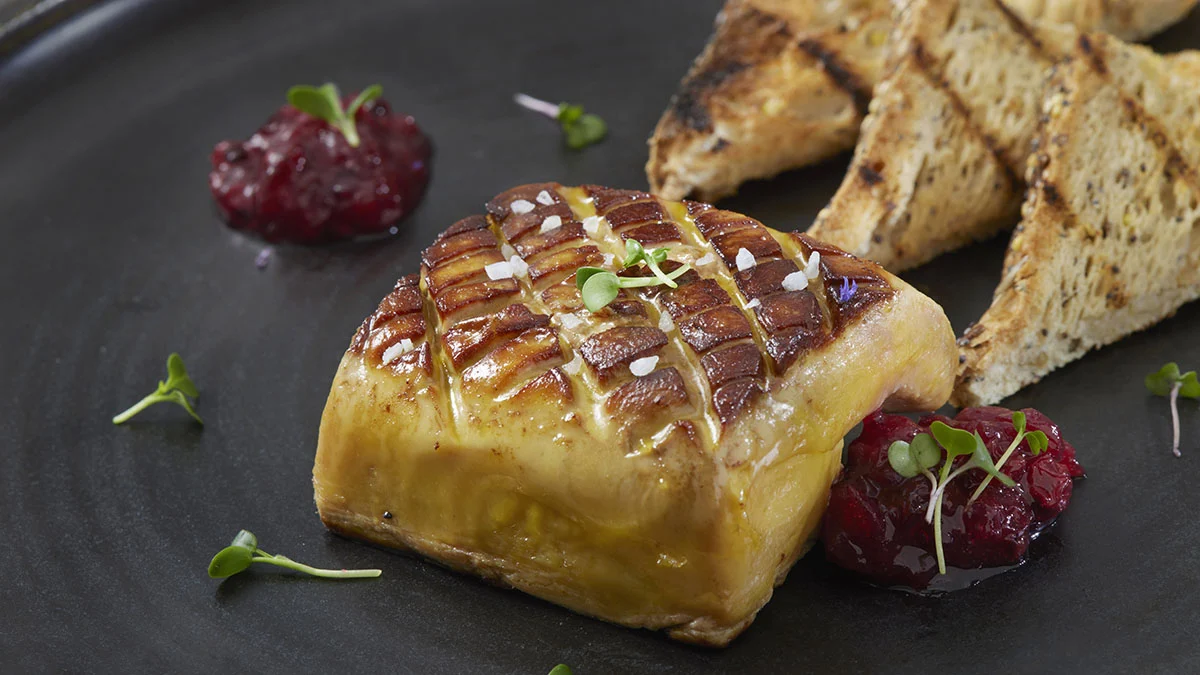
For centuries, the very mention of foie gras—the rich, buttery liver of a duck or goose—has been inextricably linked to the rolling countryside of France. It is a symbol of Gallic culinary heritage, protected by French law as part of the nation’s cultural and gastronomic patrimony. Yet, in a seismic shift that has sent shockwaves through the kitchens of Paris and the boardrooms of the French agricultural sector, the global hierarchy of this delicacy is being fundamentally rewritten.
China, once a marginal player in the luxury food market, has rapidly ascended to become the world’s most formidable producer of foie gras. This is not merely a story of shifting market share; it is a tale of industrial strategy, changing palates, and the relentless march of globalization into the most traditional of European artisanal spheres.
The Main Facts: A Changing of the Guard
The numbers tell a story of rapid industrial encroachment. According to recent data, China produced approximately 14,000 tons of foie gras in 2025—a staggering 30 percent increase over the previous year. Meanwhile, France’s output has seen a slight, concerning decline to 15,044 tons. With China now accounting for 45 percent of the global supply, the once-unassailable French dominance is no longer a certainty; it is a precarious lead that may vanish within the next fiscal cycle.
This surge is not accidental. It is the result of a deliberate, state-backed industrial strategy that emphasizes scale, efficiency, and vertical integration. While the average French farmer operates on a boutique scale, producing roughly 10 tons of foie gras annually, Chinese firms are operating at a scale that defies traditional European perceptions of the trade. Companies like Changhao Biotechnology are projecting an output of 500 tons per year—a disparity that has effectively decoupled the price of foie gras from the "luxury" premiums historically associated with the French product.
Chronology of a Culinary Revolution
To understand how China arrived at this threshold, one must look at the timeline of its agricultural evolution:
- 2000–2010: Early Experimentation. During the early 2000s, Chinese agricultural firms began testing the viability of foie gras production, primarily catering to high-end hotels and international restaurant chains in major metropolitan hubs like Shanghai and Beijing.
- 2015–2020: The Infrastructure Pivot. Recognizing an opportunity to boost rural economies, the Chinese government began providing subsidies for the construction of large-scale duck and goose farms. This era saw the importation of French technical expertise and breeding stock.
- 2021–2023: The Domestic Surge. Chinese consumer trends shifted rapidly. Foie gras ceased to be a rare, imported treat reserved for five-star dining; it began appearing in creative, localized dishes, from foie gras-infused fried rice to experimental dessert concepts.
- 2024–2025: The Tipping Point. Production reached a critical mass, allowing Chinese producers to undercut French competitors significantly on price. The global market began to acknowledge China not as an imitator, but as the new center of gravity for the industry.
Supporting Data: The Scale of Production
The economic reality of this shift is best illustrated by the manufacturing divide. In France, foie gras production is often synonymous with family-run farms that adhere to strict, labor-intensive traditions. This methodology creates a superior, terroir-driven product, but it also creates a high floor for retail pricing.
Conversely, the Chinese model leverages state-of-the-art, climate-controlled industrial facilities. By standardizing the feed, the environment, and the processing chain, Chinese producers have achieved a level of cost-efficiency that makes foie gras accessible to the burgeoning Chinese middle class.
Market analysis suggests that as production costs continue to plummet due to the economy of scale, the "price-gap" between French and Chinese foie gras is widening. While a French label currently commands a premium, the quality of Chinese industrial output has improved so drastically that, for many culinary applications, the distinction is becoming increasingly difficult for the average consumer to discern.
Official Responses: The French Anxiety
The mood in France is one of defensive apprehension. Fabien Chevalier, chair of the French foie gras industry group CIFOG, captured the sentiment of an industry caught off guard. "It’s worrying that they’re developing so quickly," Chevalier admitted to reporters. "We didn’t see them coming like that."

French industry leaders are now scrambling to protect their brand. They are advocating for stricter "Geographical Indication" (GI) protections, which would legally prevent non-French producers from using the term "foie gras" in specific contexts or at least ensure that the consumer understands the distinction between "French Foie Gras" and "Foie Gras."
The European Union has begun to formalize these barriers, introducing stringent labeling requirements. The goal is to prevent Chinese imports from being "passed off" as European-made, ensuring that the French heritage remains a protected, premium category in the global marketplace.
The Caviar Precedent
This is not the first time China has disrupted a luxury food market. The case of caviar offers a chilling preview of the current foie gras situation. A decade ago, the caviar market was dominated by wild-caught sturgeon from the Caspian Sea. China invested heavily in indoor sturgeon farming, eventually producing roe of such exceptional consistency and quality that elite chefs—including Thomas Keller of The French Laundry—began sourcing their supply from China.
If the trajectory of caviar is any indication, the "stigma" of Chinese production will likely vanish as quality continues to climb. When a chef of Keller’s stature validates a product, the market perception shifts, moving from skepticism to acceptance. The foie gras industry fears that a similar "normalization" is already underway.
Implications: A Global and Regulatory Tug-of-War
The implications of this shift are multifaceted, touching on trade, ethics, and gastronomy.
1. The Global Expansion Strategy
While the vast majority of Chinese-produced foie gras is currently consumed domestically, the infrastructure is in place for a global export surge. Producers are already testing the waters in Dubai and Macao. As Chinese firms refine their supply chains to meet international food safety standards, European and American markets are the next logical frontiers.
2. The Ethical and Regulatory Headwinds
Despite the industrial success of the product, the road to global expansion is paved with regulatory obstacles. In the United States, animal-rights advocacy remains a potent force. The ongoing legal battles in New York City and the restrictive laws in California serve as significant barriers to entry. Even if Chinese foie gras becomes the most affordable option on the market, it will continue to struggle against a legal environment that is fundamentally hostile to the production method.
3. The Future of Gastronomy
For the global culinary industry, the rise of Chinese foie gras presents a paradox. It democratizes a luxury ingredient, potentially opening up new avenues for innovation in fusion cuisine. However, it threatens the economic viability of the traditional French producers who define the "gold standard" of the dish.
As we look toward the remainder of the decade, the foie gras market appears to be bifurcating. One segment will remain rooted in the high-cost, high-heritage artisanal methods of France, while the other will be driven by the high-volume, cost-efficient industrial model of China. For the consumer, this may mean more choice, but for the French producers, it signals the end of an era where they held the absolute monopoly on taste. The goose, it seems, is no longer exclusively French.
 Evan Lee Salim
 Asep Darmawan
 Laily UPN
