

By Bethany Allard
June 27, 2026
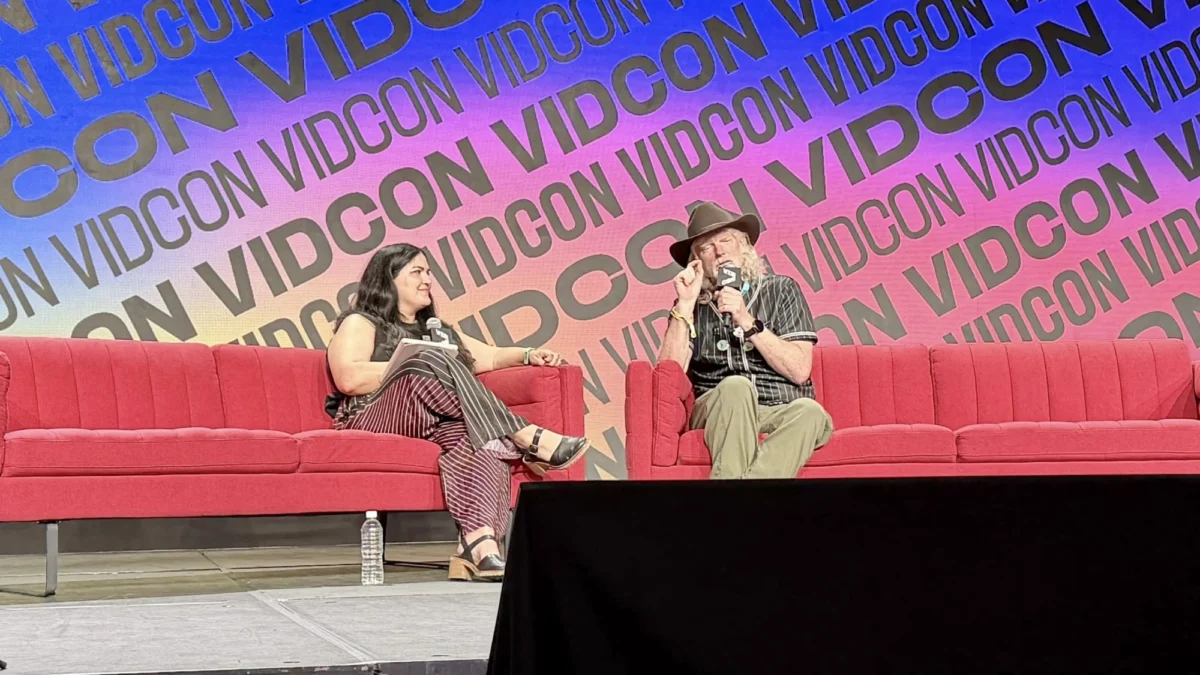
In an era defined by algorithmic feeds and the rapid-fire consumption of short-form video, the digital landscape feels increasingly fragmented. As users spend hours "passively scrolling" through TikTok, Instagram Reels, and YouTube Shorts, a sense of digital isolation has begun to permeate the online experience. At VidCon 2026, Twitch CEO Dan Clancy offered a bold counter-narrative: the future of internet connection isn’t found in a 15-second loop, but in the intentional, shared reality of live streaming.
The State of the Creator Economy
During a high-profile fireside chat titled “Why Live is the Future of Connection: From Passive Scrolling to Real Connection,” Clancy addressed the existential questions facing the creator economy. For Twitch, a platform built on the bedrock of long-form, real-time interaction, the rise of short-form discovery platforms presents both a challenge and a mirror.
"Social media, interestingly, has become anti-social," Clancy remarked, addressing the audience at the Anaheim convention. "It started as a technology that connected us with people, but now, sitting and swiping actually leaves you a little more isolated. It doesn’t make you feel connected, and that’s why live is coming on strong now."

Chronology of a Shifting Landscape
The evolution of Twitch has been marked by a transition from a niche platform for competitive gaming to a broad-spectrum entertainment hub. In the early 2010s, Twitch was primarily a destination for esports enthusiasts. By 2020, the platform had exploded into a "third place" for global audiences during the pandemic.
However, the 2023-2025 period saw significant friction. As competitors like TikTok matured, the demand for high-velocity, algorithm-driven content grew, putting pressure on Twitch’s discoverability model. Following controversies regarding creator safety at physical events like TwitchCon and ongoing debates over revenue sharing, Clancy has been tasked with steering the platform back toward its core strength: community.
Supporting Data: Why ‘Live’ Stays Longer
Clancy’s argument rests on the psychological difference between passive consumption and active participation. According to the CEO, the "stickiness" of a Twitch stream is rooted in a unique social contract. When a viewer watches a TikTok, they are a spectator to a finished product. When a viewer joins a Twitch stream, they are a participant in a live event.
"People often think sports are about watching the world’s best athletes. It’s not about that at all. It’s about community—it’s about shared identity," Clancy explained. "Twitch is the same thing. The affinity you’re gathering around is a streamer, but then you form these bonds horizontally. The same thing that happens in sports is exactly what happens on Twitch."

The data supports this: Twitch viewers exhibit significantly longer session times compared to short-form platforms. When a streamer takes a break, the audience doesn’t simply disappear; they acknowledge the absence, discuss it in chat, and often congregate in the streamer’s Discord or offline social channels, proving that the bond transcends the video player.
Addressing the Discovery Dilemma
One of the most persistent criticisms leveled against Twitch by mid-to-small-sized creators is the "lack of discoverability." Unlike YouTube, which utilizes a massive recommendation engine to push content to new viewers, Twitch’s internal structure has historically favored existing audiences.
When asked if the platform intended to move toward an aggressive, TikTok-style algorithmic feed, Clancy remained steadfast in his refusal. "If I said, ‘I’m going to solve the discovery problem,’ the only way I could fully solve it is by taking them off your page, putting more stuff on your page to distract them, more stuff to get them away from you," he argued. "And that is exactly what our creators don’t want."
Instead, Clancy envisions a hybrid model. He is advising creators to use external platforms like Instagram, TikTok, and YouTube for discovery—casting a wide net to bring in new viewers—while using Twitch as the "home base" for long-form emotional connection and monetization.

To bridge this gap, Twitch is doubling down on "Recaps," an evolution of their existing stories feature. The goal is to allow creators to easily package highlights from their live streams into short-form content that lives directly on Twitch, keeping the audience within the ecosystem without disrupting the flow of the live broadcast.
The Integration of Generative AI
As AI begins to dominate discussions across the tech industry, Clancy was clear about its role on Twitch. While there are concerns about AI-generated "bot" channels potentially flooding the platform, Clancy noted that these experiments have yet to pose a threat to human-centric content. "They aren’t engaging enough to hold a viewer’s attention for the same amount of time as a human creator can," he said.
However, he is bullish on AI’s utility as a tool for safety and accessibility. Specifically, Twitch is looking at Large Language Models (LLMs) to enhance the platform’s AutoMod feature. By utilizing AI to more accurately flag and filter harassment, the platform hopes to make chat rooms safer and more welcoming, allowing creators to focus on community building rather than moderation.
Beyond the Gamer Archetype
Perhaps the most significant shift for Twitch has been the diversification of its creator base. It is no longer just a haven for League of Legends or Fortnite players. Artists, musicians, actors, and even non-profit organizations managing animal sanctuaries have found that the live, interactive nature of Twitch is the perfect medium for their work.

Clancy noted that when he meets celebrities or industry professionals today, the conversation has shifted. "Almost 70 percent of the time when they hear I’m the CEO of Twitch, they go, ‘Oh, yeah, I’ve been thinking I should do something,’" he noted, signaling that Twitch is increasingly viewed as a legitimate, high-value professional destination for all types of creators.
Safety and the Path Forward
The shadow of previous safety concerns, particularly the incidents at past TwitchCon events, looms large. For the community to flourish, the physical and digital environments must be secure. Clancy emphasized that the company has undergone a total overhaul of its event logistics.
"We’ve updated how we do meet and greets so that they’re more structured. We don’t allow signups on the day of; you have to reserve a spot," Clancy said. "So that restricts it a little bit, but it restricts us in a way to protect the creators. I feel very confident about where we’re at right now in terms of our ability to make sure something like that doesn’t happen again."
Implications for the Future
The implications of Clancy’s vision are profound. If Twitch succeeds in positioning itself as the "anti-algorithm" alternative, it may capture a demographic of creators and viewers who are growing weary of the burnout associated with the "content treadmill."

However, the strategy is not without risk. By resisting the algorithmic discovery trends that have fueled the growth of its competitors, Twitch is essentially betting on the loyalty of its user base. It is a gamble that depth of connection is more valuable than breadth of reach.
As VidCon 2026 continues, the creator community is left with a clear choice: the high-speed, high-stress world of infinite scrolling, or the deliberate, community-driven reality of the live stream. According to Dan Clancy, the choice isn’t just about entertainment—it’s about the kind of internet we want to build for the future.
"Live is coming on strong," he concluded. "Because when you’re live, you’re never truly watching alone."
 Suro Senen
 Nana Wu
 Neng Nana
