

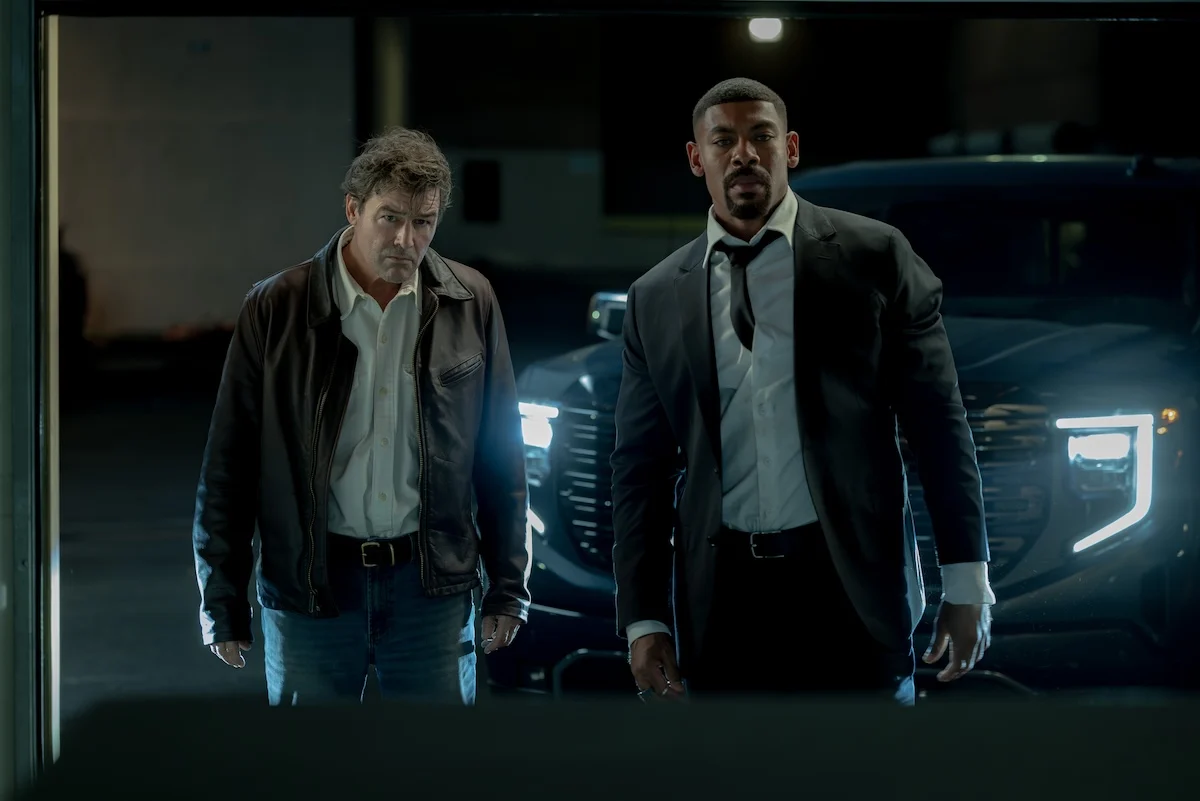
Editor’s Note: The following review contains significant spoilers for "Lanterns" Episode 7, "The Jordan Boys," including plot resolutions and character developments.
The latest installment of HBO’s Lanterns, titled "The Jordan Boys," serves as a pivot point for the series, shifting from a standard procedural murder mystery into a profound meditation on inherited trauma, the burden of legacy, and the definition of humanity. With the season finale looming, Episode 7 forces its protagonists to confront the ghosts of their pasts—both literal and metaphorical—while challenging the audience’s assumptions about the death of Hal Jordan.
The Man Behind the Legend: A Stubborn Inheritance
Hal Jordan (Kyle Chandler) has always been defined by his unyielding, often infuriating, stubbornness. Throughout the series, we have seen him as a man who operates on his own terms, frequently at the expense of his own well-being and the comfort of those around him. Whether it was his reckless provocation of an alien race at the cost of a small town’s safety or his refusal to leave a Little League mound despite the physical toll on his body, Hal’s life has been a testament to his own ego.
However, "The Jordan Boys" peels back this abrasive layer to reveal the rot underneath: the "Jordan legacy." As articulated by the "Hal-o-gram"—the digital consciousness left behind by the deceased hero—this is not merely a reputation for toughness, but a cycle of depression that plagued his father, Martin (Jake B. Miller), and grandfather before him.

The episode reveals a heartbreaking truth: Martin believed his family would be better off without him, unable to bear the weight of his own internal pain. Hal spent his life desperately trying to outrun this "broken" inheritance, fearing that he was destined for the same tragic end. It is in this realization that the show’s central conflict becomes clear: Hal wasn’t just fighting space-faring threats; he was fighting his own biology.
Chronology of the Investigation: Digging for Answers
The episode begins with John Stewart (Aaron Pierre) making a desperate move: exhuming Hal’s grave to retrieve the ring, a necessary step to activate the "fail-safe" box Hal left behind. What follows is a dive into the surreal, as the duo accesses the contents of the container—an eclectic, almost mundane collection of survival gear that includes a canteen, a poncho, and a "dark matter manhole" acting as a portal to an alien world.
Upon entering this desolate, upside-down city on Antaan’s world, the narrative reaches a fever pitch. The environment itself is a psychological weapon; the lingering gas from a Manhunter attack drives those who inhale it to madness. John is nearly lost to his own trauma, haunted by visions of his father and his younger self, teetering on the edge of suicide. It is the Hal-o-gram, an entity designed to be a tool, that ultimately becomes his savior, grounding him in the present.
The journey leads them to a confrontation with Sinestro (Ulrich Thomsen), who has been trapped on this "dead planet." This encounter serves as the episode’s primary structural shift, moving the investigation from "Who killed Hal?" to "What was Hal trying to contain?"

Supporting Data: Suspects and Theories
With one episode remaining, the murder of Hal Jordan remains the series’ central enigma. The audience has been presented with several red herrings:
- Sheriff Kerry (Kelly Macdonald): While the Hal-o-gram immediately identified her as a suspect, the theory holds little water. Her lack of fear when facing the "risen" Hal suggests either innocence or a lack of culpability that the show is likely saving for a more complex reveal.
- Noah (Shea Pritchard): The "hat ceremony" subplot might seem like filler, but it serves a vital purpose in establishing character traits—leadership, hidden anger, and a lineage tied to the Manhunter legacy. Noah remains the prime candidate for a "twist" villain who has been hiding in plain sight.
- Sinestro: Despite his presence, he does not appear to know that Hal is dead. He is a prisoner, and the question remains: was Hal his jailer, or his protector?
The Nature of the Hal-o-gram: An Emotional Synthesis
Perhaps the most compelling aspect of Episode 7 is the development of the Hal-o-gram. Is he a machine? A ghost? A memory? As the character navigates his own existence, he begins to show signs of a soul. His reaction to learning of his own death—and his subsequent, surprisingly tender meeting with Sheriff Kerry—humanizes him in a way the living Hal never allowed himself to be.
The scene between the Hal-o-gram and the Sheriff is the episode’s emotional anchor. He admits, "I’m not him. I’m not your Hal… I just wanted to meet you, that’s all." This vulnerability, coupled with John’s realization that his mentor was a flawed, deeply human man, creates a powerful father-son dynamic that transcends the grave. The shift from calling him a "digital backup" to simply "Hal" marks the transformation of John Stewart from a man who despised his mentor to a man who finally understands him.
Implications for the Finale
"The Jordan Boys" suggests that the series is not building toward a simple "who-done-it" reveal, but a resolution to the generational trauma of the Jordan family. The gun provided in the fail-safe box is not necessarily for the killer; it may be for Sinestro, or perhaps for the final act of a man who refused to let his legacy be defined by his father’s suicide.

John Stewart’s decision to continue this investigation is no longer just about justice; it is about preservation. He is protecting the image of a man who, despite his faults, was capable of love, sacrifice, and the foresight to leave a map for those he left behind. The episode ends on a note of bittersweet hope: the Hal-o-gram may be a simulation, but the impact he has on John is undeniably real.
Points of Clarity
- Technical Notes: The baseball sequence, while narratively symbolic, remains a point of contention for those looking at the technical reality of Little League pitching, though it serves its purpose in demonstrating Hal’s "stubbornness."
- Performance: Aaron Pierre deserves significant credit for his portrayal of a man struggling with his own history. His decision to lean into John’s lack of musical ability during the karaoke segments is a subtle, grounded choice that avoids the common TV trope of the "hidden talent."
- Musical Motif: The use of "Shake Your Booty" by KC and the Sunshine Band as Hal’s personal anthem perfectly encapsulates the character’s blend of bravado and absurdity.
As we look toward the finale, Lanterns has successfully transitioned from a cosmic mystery to a character study of the highest order. The stakes are no longer just the life of a Green Lantern, but the sanctity of the legacy he leaves behind.
Grade: A-
Lanterns releases new episodes Sundays at 9 p.m. ET on HBO and is available for streaming on Max.
 Jia Lissa
 Lina Irawan
 Iffa Jayyana
