

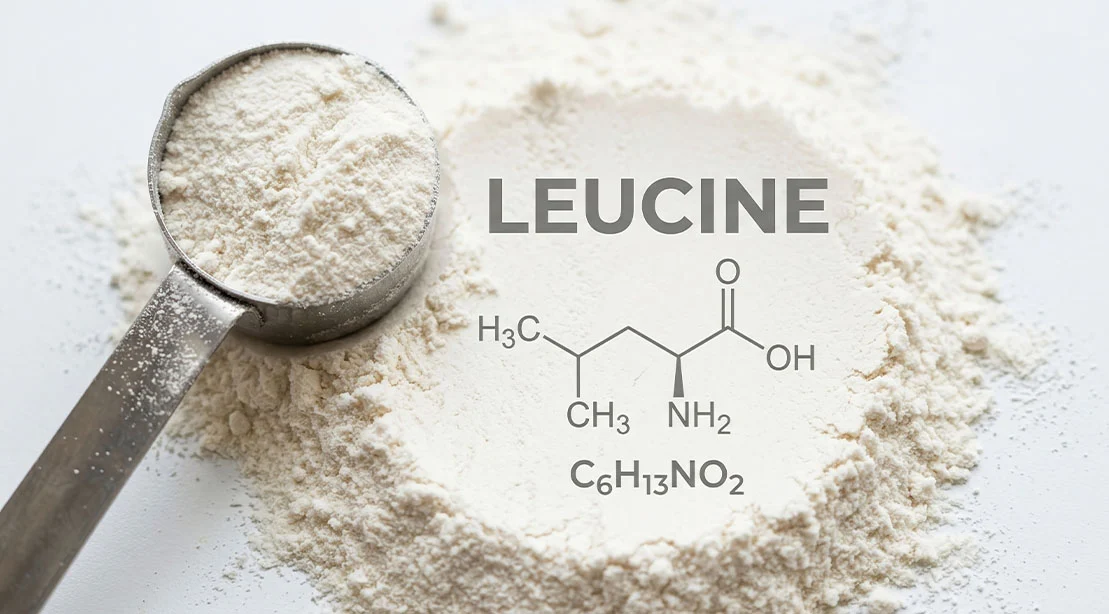
For decades, leucine has been the darling of the bodybuilding world. Often found at the top of the ingredient list in branched-chain amino acid (BCAA) supplements, it has long been championed as the primary "anabolic trigger"—the essential key required to flip the switch for muscle protein synthesis. However, a groundbreaking discovery from the University of Cologne suggests that we have been underestimating this potent amino acid. Beyond its role in building bicep peaks and quadriceps, leucine is now emerging as a fundamental regulator of the cell’s "power plants": the mitochondria.
This revelation shifts the narrative of leucine from a mere supplement for gym-goers to a critical metabolic mediator that could hold the key to treating complex diseases. As researchers peel back the layers of how our cells convert food into fuel, leucine has taken center stage as a primary conductor of mitochondrial efficiency.
Main Facts: The New Frontier of Amino Acid Science
Leucine is an essential amino acid, meaning the human body lacks the metabolic machinery to synthesize it. It must be acquired through dietary intake. Traditionally, nutritionists have focused on its role as a building block for tissue repair. However, recent findings published in the journal Nature have fundamentally altered our understanding of its biological utility.
The core discovery is that leucine does not simply "fuel" the cell; it acts as a high-level signaling molecule. It interacts with the surface proteins of the mitochondria, effectively clearing the path for enhanced energy production. By down-regulating inhibitory proteins—specifically those like SEL1L that can clog or hinder mitochondrial efficiency—leucine acts as an "unlocked door" for cellular metabolism. When leucine levels are high, the cell perceives a state of nutrient abundance and responds by accelerating its energy-producing capabilities, allowing the body to adapt to physical and metabolic stress with greater precision.
A Chronological Deep Dive: From Muscle Builder to Cellular Architect
The journey to this discovery has been a long-standing pursuit in the field of biochemistry.
- The 20th Century Consensus: For decades, the scientific community viewed leucine primarily through the lens of muscle hypertrophy. Research focused on the mTOR pathway, identifying leucine as the primary nutrient that signals the body to initiate the construction of new muscle fibers.
- The Mitochondrial Mystery: As the 21st century progressed, researchers began to focus on the "mitochondrial decline" theory of aging. It was theorized that as we age, our cellular power plants become less efficient, leading to fatigue, metabolic syndrome, and neurodegenerative conditions. While scientists knew nutrients were involved, they could not pinpoint which specific amino acids modulated mitochondrial protein turnover.
- The University of Cologne Breakthrough (2025): A team led by Dr. Qiaochu Li conducted a sophisticated study that monitored mitochondrial respiration in relation to specific amino acid concentrations. They observed that cells starved of leucine exhibited "sluggish" mitochondrial output, while those with supplemented leucine showed an immediate spike in ATP (adenosine triphosphate) production.
- The Current Paradigm: Today, we are moving into an era where leucine is no longer viewed just as a post-workout recovery aid, but as a preventative nutrient that maintains the "metabolic house" of the human body.
Supporting Data: Quantifying the Leucine Requirement
Understanding how much leucine we need is essential to harnessing its metabolic benefits. The biological math behind this is straightforward but often misunderstood by the general public.
The Recommended Daily Allowance (RDA)
Standard nutritional guidelines suggest an intake of approximately 17.7mg of leucine per pound of body weight. For a 180-pound adult, this equates to roughly 3.19 grams of leucine per day. This amount is sufficient to maintain baseline muscle health and general metabolic homeostasis for a sedentary individual.
The Athletic Exception
The International Society of Sports Nutrition (ISSN) suggests a much higher threshold for those engaging in high-intensity training. Because exercise places massive oxidative stress on mitochondria, athletes are advised to consume upwards of 3 grams of leucine per serving, repeated every four hours, to maintain a positive nitrogen balance and ensure mitochondrial energy production keeps pace with physical output.
Dietary Sources: Where to Find It
To meet these targets, one must look at high-quality protein sources. The concentration of leucine in common foods varies, but the following are the "gold standard" sources:
- Parmesan Cheese: ~3.4g per 100g (The undisputed leader in concentration)
- Lean Beef: ~2.6g per 100g
- Chicken Breast: ~2.5g per 100g
- Eggs: ~0.54g per large egg
Official Responses: The Scientific Perspective
The academic community has received the University of Cologne’s findings with considerable enthusiasm. Dr. Qiaochu Li, the lead author of the study, emphasized that this discovery provides a "metabolic roadmap" for how cells sense their environment.
"We were thrilled to discover that a cell’s nutrient status, especially its leucine levels, directly impacts energy production," Dr. Li stated in a press release. "This mechanism enables cells to swiftly adapt to increased energy demands during periods of nutrient abundance. It isn’t just about ‘having energy’; it’s about the cell’s ability to allocate resources efficiently."
Independent experts in metabolic research have noted that this provides a plausible mechanism for why high-protein diets often lead to improved metabolic profiles. By keeping leucine levels consistent, the body may be avoiding the "mitochondrial stagnation" that occurs when the cell does not receive the necessary chemical signals to optimize its energy output.
Implications: A New Era for Disease Therapy
The implications of this research extend far beyond the gym. If scientists can prove that leucine-induced modulation of mitochondrial proteins can be targeted, it opens the door to a new class of "metabolic therapeutics."
Fighting Metabolic Disorders
Type 2 diabetes and obesity are often characterized by mitochondrial dysfunction, where the cell becomes inefficient at burning fuel. If clinicians can utilize leucine—or molecules that mimic its effects on SEL1L proteins—they may be able to "reboot" the mitochondria in patients with metabolic syndrome, helping them process glucose more effectively.
Oncology and Cellular Energy
Perhaps the most ambitious implication is in the field of cancer research. Cancer cells have distinct metabolic requirements and often hijack mitochondrial processes to fuel their rapid growth. Understanding how leucine regulates the "power plant" of the cell could provide insights into how to starve malignant cells of energy or, conversely, how to protect healthy cells from the mitochondrial degradation often seen in cancer cachexia (muscle wasting).
Beyond Supplements: The Future of Holistic Health
While consumers currently flock to red-light therapy, cold plunges, and intermittent fasting to "hack" their mitochondria, the evidence suggests that the most effective tool may already be on our dinner plates. The synergy between high-leucine whole foods and metabolic health is becoming impossible to ignore.
As we move forward, the conversation will likely shift from "how much protein do I need to build muscle?" to "how can I optimize my leucine intake to protect my cellular longevity?" The discovery that our energy levels are dictated by such a precise chemical handshake within our mitochondria is a reminder that human health is a complex, delicate system—one that responds remarkably well when given the right tools.
In conclusion, the findings from the University of Cologne do not just validate the use of leucine for athletes; they elevate it to a vital component of preventative medicine. Whether through a balanced diet rich in lean meats and dairy or through targeted nutritional strategies, the focus on leucine marks a significant milestone in our quest to understand, maintain, and enhance the very engines of human life.
 Lina Hope
 rifanmuazin
 Laily UPN
