

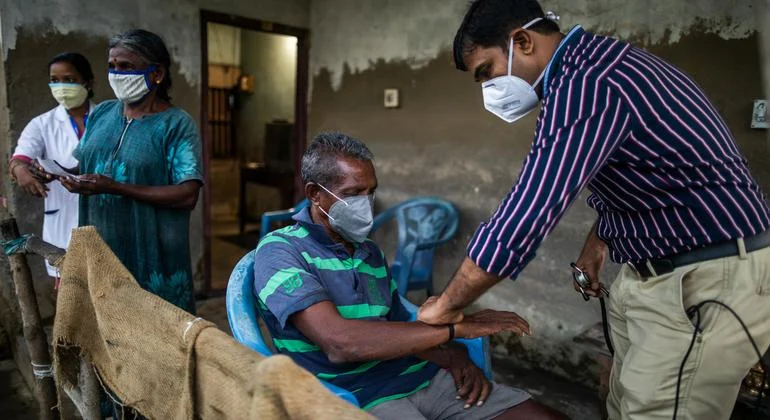
The scars left by the COVID-19 pandemic run deep, not only in the seven million lives lost but in the profound systemic fractures it exposed. As the international community gathers at the United Nations General Assembly this September 2026, the focus is shifting from the trauma of the past to the urgent necessity of the future. With the convergence of emerging infectious diseases, climate-related instability, and geopolitical conflict, the world is in a race against time to fortify its defenses. The goal: to build a truly pandemic-proof global architecture.
The Lessons of the Recent Past: Ingenuity and Failure
The COVID-19 pandemic was, in the words of UN Secretary-General António Guterres, a "story of human ingenuity and human failure." The ingenuity was undeniable—the rapid development of mRNA vaccines and the unprecedented mobilization of the global scientific community saved countless lives. Yet, the failure was equally stark. The world witnessed a catastrophic breakdown in solidarity, where the most vulnerable populations were left at the back of the queue, while wealthy nations consolidated access to diagnostics, therapeutics, and vaccines.
This uneven distribution was not merely a moral failing; it was a strategic blunder. By allowing the virus to circulate unchecked in under-resourced regions, the global community inadvertently fueled the emergence of new variants, prolonging the crisis for everyone. The pandemic shattered economies and paralyzed health systems, serving as a brutal reminder that in a globalized world, a health threat in one corner of the globe is a threat to every doorstep.
Chronology of a Global Wake-Up Call
- 2020–2022: The COVID-19 pandemic ravages global health systems, exposing deep-seated inequalities in manufacturing capacity and healthcare infrastructure.
- 2023–2024: Intense multilateral negotiations begin under the auspices of the World Health Organization (WHO) to draft a legally binding instrument for pandemic preparedness.
- May 2025: The World Health Assembly adopts the landmark WHO Pandemic Agreement, the first global accord of its kind, establishing a framework for cooperation.
- September 2026: Member States advance critical negotiations on the Pathogen Access and Benefit-Sharing (PABS) annex.
- September 25, 2026: The UN General Assembly convenes a high-level meeting on pandemic prevention, preparedness, and response to solidify political commitment and address financing gaps.
Supporting Data: The "One Health" Imperative
The scientific consensus is clear: we are living in an era of heightened pandemic risk. Data from the World Health Organization indicates that over 60 percent of emerging infectious diseases are zoonotic—meaning they jump from animals to humans. This intersection of human, animal, and environmental health, known as the "One Health" approach, is no longer a theoretical framework but an operational necessity.
Surveillance systems must now be integrated across these three sectors. Climate change, which forces animal populations to migrate and interact with human settlements in new ways, is effectively acting as a risk multiplier for the next outbreak. Without robust, real-time data sharing and cross-border surveillance, the international community remains blind to the initial sparks of a potential pandemic.
The Equity Gap: Beyond the Needle
The "equity gap" identified during the pandemic was not limited to vaccine shipments. It was a failure of the global ecosystem. Poorer nations lacked not only the final medical products but also the foundational infrastructure: cold-chain logistics, trained medical personnel, and the regulatory frameworks to manage emergency rollouts.
True equity requires a fundamental shift in how the world handles medical resources. It involves decentralized manufacturing, where developing nations are empowered to produce their own medical countermeasures, and a sustainable financing model that does not depend on the charitable impulses of wealthy donors during a crisis. The current push for a "coordinating financial mechanism" is intended to replace ad-hoc donations with predictable, sustainable funding streams that allow countries to build resilience before the next emergency occurs.
Official Responses and the Path to a Pandemic Agreement
The adoption of the WHO Pandemic Agreement in May 2025 was a milestone, but as diplomats are acutely aware, a document is only as strong as its implementation. The current focus is the PABS (Pathogen Access and Benefit-Sharing) annex. This mechanism is the heartbeat of the agreement: it creates a "quid pro quo" system where countries that provide data or samples of a novel pathogen are guaranteed a percentage of the resulting medical countermeasures at affordable prices.
"We must not repeat the mistakes of the past when the next pandemic strikes, as we know it will," Secretary-General Guterres has emphasized. The political declaration expected from this week’s UN General Assembly is designed to lock in these commitments. For the agreement to enter into force, it requires 60 national ratifications. This process is a test of political will, requiring nations to subordinate short-term national interests to the long-term benefit of global security.
The Pillars of Future Preparedness
To transform the rhetoric of "never again" into reality, the international community is focusing on four structural pillars:
- Sustainable Financing: Moving away from emergency-only funding toward long-term, domestic and international investments in health systems.
- Legal Architecture: Implementing the Pandemic Agreement to provide a clear, binding set of rules for data sharing, intellectual property, and resource allocation.
- Global Logistics: Establishing a permanent, scalable supply chain network that can distribute life-saving medical supplies regardless of market disruptions.
- Scientific Cooperation: Enhancing global research and development (R&D) to ensure that platforms for diagnostics and treatments can be pivoted rapidly to address new, unknown pathogens ("Disease X").
Implications: A New Era of Global Health Governance
The implications of these efforts extend far beyond epidemiology. They represent a shift in the philosophy of international relations. For decades, global health was treated as a secondary issue, separate from "hard" security concerns. Today, pandemics are recognized as existential threats to global stability, comparable to climate change and nuclear proliferation.
The ongoing UN High-Level Meeting serves as a crucible. World leaders are being asked to commit to a future where health is a public good, not a commodity. The success of these negotiations will determine whether the next generation views the 2020s as the era where the world finally learned to cooperate, or as a period of missed opportunities that led to further preventable catastrophes.
Conclusion: The Time for Preparation is Now
The defining lesson of COVID-19 is that preparedness cannot begin when hospitals are already overflowing. By the time a pandemic emergency—defined as a widespread, system-overwhelming outbreak—is declared, the opportunity for containment has largely passed. True resilience is built in the quiet intervals between crises.
As the international community debates the final technicalities of the PABS annex and the broader political declarations at the UN, the stakes remain high. The race to build a pandemic-proof world is not merely a bureaucratic exercise; it is a fundamental act of protecting the future of human society. Protecting people anywhere, as the core principle of this new era states, is the only way to protect people everywhere. The next pandemic is not a matter of "if," but "when"—and the world’s ability to withstand it will be defined by the actions taken in this defining year.
 Lina Hope
 Asro
Asro
 Layla Zulfa
