

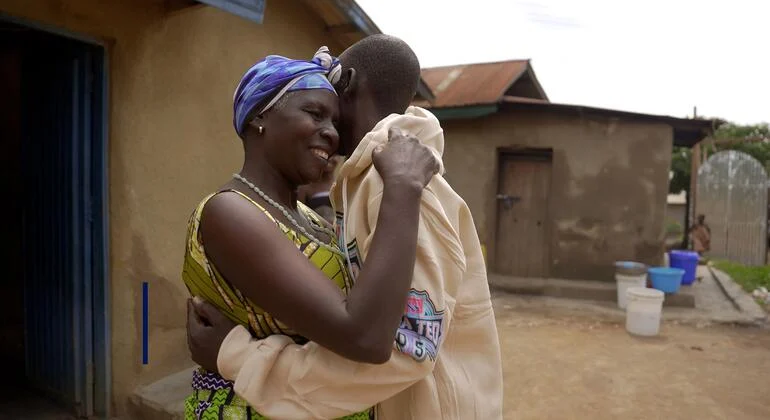
The Democratic Republic of the Congo (DRC) continues to grapple with the brutal resurgence of the Ebola virus, a crisis that has transcended the boundaries of a standard health emergency to become a profound humanitarian catastrophe. While the virus itself is indiscriminate in its biological impact, its social and economic fallout is heavily skewed. In the city of Bunia, the current epicenter of the crisis, the reality is stark: women and girls are bearing the heaviest burden, serving as the primary caregivers for the sick while simultaneously being sidelined from the decision-making processes that could save their lives.
Dr. Setcheme Mongbo, the UN Women Representative in the DRC, recently returned from a harrowing fact-finding mission in Bunia. Her assessment provides a grim look at how traditional gender roles—the expectation that women provide care within the home—have essentially turned the domestic sphere into a high-risk transmission zone.
The Anatomy of the Crisis: Gendered Vulnerability
The Ebola virus thrives on physical contact, a fact that places women and girls at the center of the transmission chain. In the DRC, cultural and social expectations dictate that women are the primary health providers within the family. When a loved one falls ill, it is the mother, daughter, or sister who provides water, food, and comfort. Tragically, this caregiving extends to the dead.
"Women are not only present in health facilities as attendants, but also in communities and homes where they care for the sick, provide them with food and water, and even participate in washing corpses as well as funeral activities," Dr. Mongbo explained during a press briefing in Geneva.
This unpaid, often invisible labor is performed without the benefit of personal protective equipment (PPE). Consequently, women are not just vulnerable; they are the frontline responders in an environment where they lack the tools to stay safe.
Supporting Data: The Statistical Toll
The numbers released by health authorities confirm the anecdotal evidence gathered on the ground:
- Confirmed Patients: Women account for more than 54 percent of all confirmed Ebola cases in the DRC.
- The Youth Demographic: Among the 10-to-17-year-old age group, girls make up 51 percent of cases.
- The Hidden Death Toll: A significant number of deaths occur in homes, often bypassing official records. Reports from the field indicate that in some areas, up to two-thirds of deaths occur within the community, leaving them invisible to the official data collection systems that drive international aid responses.
Chronology of a Mounting Emergency
The current outbreak in the DRC is the latest in a series of flare-ups that have plagued the nation, exacerbated by decades of systemic instability.
- Pre-Outbreak Conditions: Long before the first Ebola case was confirmed in the current cycle, the healthcare system was already crumbling. Conflict, insecurity, and decrepit road infrastructure had made it nearly impossible for the average citizen to access reproductive and maternal health services.
- The Onset of the Crisis: As cases began to surge in the eastern Ituri Province, particularly in Mongwalu and Bunia, the immediate focus of the international community was on centralized treatment centers.
- The Shift to Community-Based Transmission: By the time the scale of the outbreak was fully understood, the virus had entrenched itself in households. The fear of Ebola Treatment Centres (ETCs)—often perceived as "one-way journeys" where families are forcibly separated—led many to hide their sick relatives at home, leading to the "community deaths" that Dr. Mongbo highlighted.
- The Current Phase: As of today, the strategy is shifting toward community-led engagement. Organizations like UN Women are pushing for a transition from rigid, top-down medical interventions to a more inclusive, gender-sensitive response.
Implications: The Multi-Dimensional Cost
The impact of the Ebola crisis on women and girls extends far beyond the immediate threat of infection. It is a total disruption of their socioeconomic existence.
The Erosion of Livelihoods
In the affected regions of the DRC, women are the backbone of local trade. The measures implemented to curb the virus—travel restrictions, border closures, and the shuttering of local markets—have decimated their income. Interviews with female traders in Bunia revealed a daily income loss of between $20 and $30. While these figures may appear modest to global markets, in the context of the DRC, this represents the difference between subsistence and starvation. Without income, these women are unable to feed their families, leading to malnutrition, which in turn leaves them even more immunocompromised and susceptible to infection.
The Breakdown of Essential Services
The preoccupation with Ebola has resulted in the "crowding out" of other essential health services. Maternal and reproductive healthcare, already scarce, has become virtually non-existent in some regions. Women who are pregnant or in need of routine medical care are being forced to navigate a landscape where they are either too afraid to seek help or simply have nowhere to go.
Stigma and Psychosocial Trauma
The fear of the virus has created a deep sense of isolation. Women who survive Ebola often return to communities where they face stigma and potential ostracization. The trauma of being separated from children during treatment—often without knowing if they will ever return home—has left a lasting psychological scar on an entire generation of women in the affected provinces.
The Role of Women-Led Organizations: A Missed Opportunity
Perhaps the most startling finding from the UN Women investigation is the disconnect between the expertise of local women’s organizations and the international response effort.
Local women-led organizations have spent years building trust within these communities. They are the most effective conduit for health messaging and vaccination outreach. Yet, according to a recent UN Women study:
- Funding Gaps: 86 percent of surveyed women-led organizations reported that they had received zero funding for the Ebola response.
- Exclusion from Policy: Nine out of 10 of these organizations stated they had no role in the decision-making processes regarding the outbreak.
This represents a catastrophic failure of the current aid architecture. By failing to integrate these organizations, the global response is ignoring the very people who possess the cultural knowledge and community access required to halt the spread of the virus.
Official Responses and Future Strategy
In response to these findings, the UN and its partners are attempting to pivot. Dr. Mongbo emphasized that the upcoming comprehensive gender-response strategy is designed to correct these historical imbalances.
The strategy focuses on four pillars:
- Raising Awareness: Utilizing women leaders to disseminate information on protection and hygiene in ways that are culturally respectful and effective.
- Increasing Participation: Mandating that women’s organizations have a seat at the table in health policy and resource allocation meetings.
- Addressing Gender-Based Violence (GBV): Implementing safeguards to protect women who are already vulnerable due to the breakdown of social structures.
- Direct Funding: Channeling resources directly to grassroots women’s groups who are on the front lines of the containment effort.
"Women are not only Ebola survivors, but an important part of the solution," Dr. Mongbo asserted. "Women and their organizations are key to stopping the Ebola outbreak in the DRC."
Conclusion: The Path Forward
The Ebola crisis in the DRC is a litmus test for international humanitarianism. It highlights the fatal consequences of ignoring gendered data and failing to empower local actors. For the women of Bunia, the current crisis is a struggle for survival on two fronts: against a lethal virus, and against a system that has historically failed to account for their needs.
If the international community is to succeed in ending the current outbreak, it must move beyond viewing women merely as victims or passive recipients of aid. They must be recognized as essential partners in the response. Without the inclusion of women’s voices in the strategy, the "one-way journey" to the treatment center will continue to be a reality for too many, and the silent deaths in the home will continue to go unrecorded, leaving the cycle of transmission unbroken. The time for a gender-responsive approach is not merely recommended—it is an absolute necessity for global health security.
 Lina Hope
 Asro
Asro
 Layla Zulfa
