

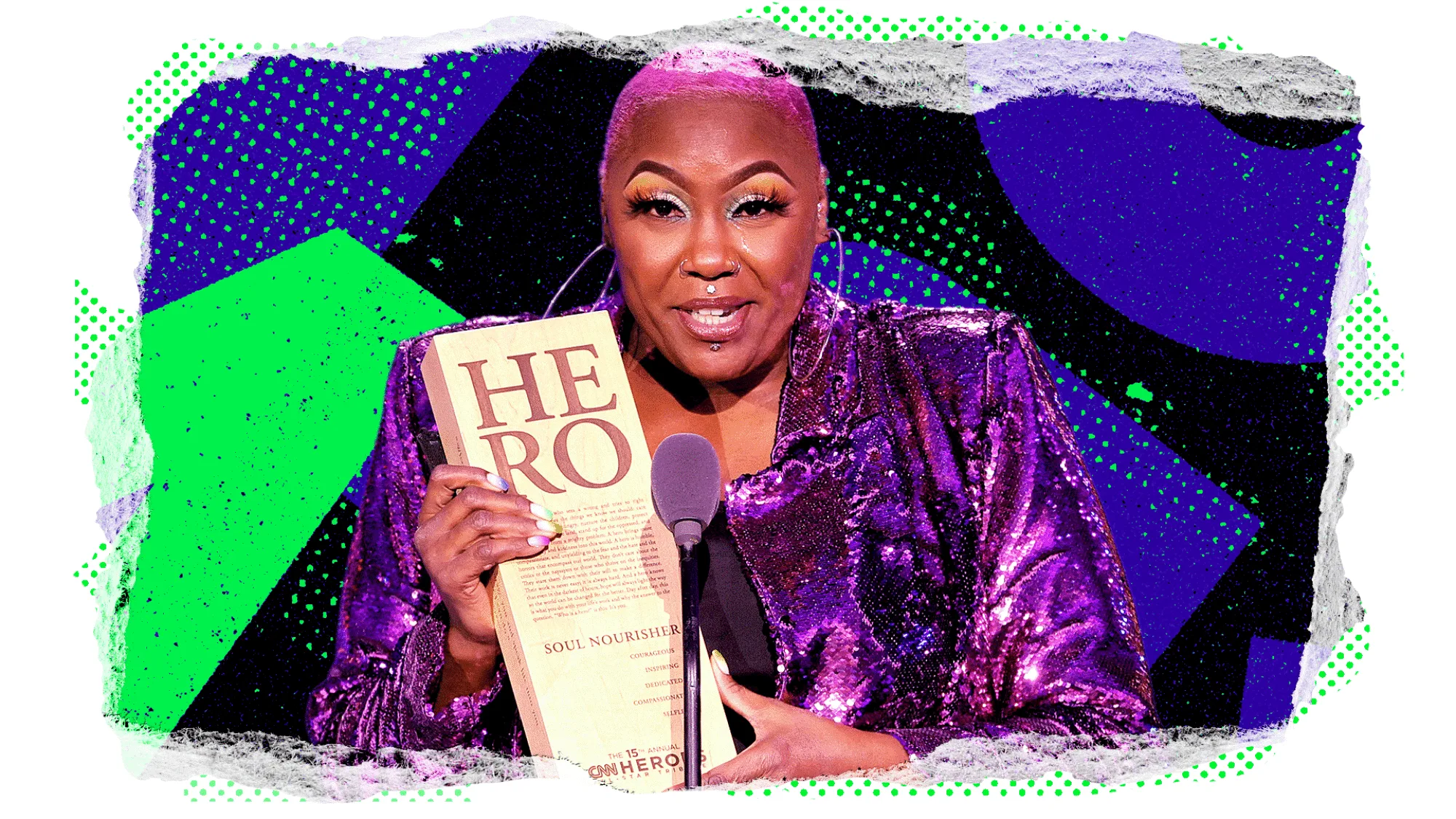
When the news of Shirley Raines’ passing broke in January 2026, the silence that fell over the streets of Los Angeles was profound. For nearly a decade, the woman affectionately known as "Ms. Shirley" had been the heartbeat of Skid Row. Her death, caused by hypertensive heart disease at the age of 58, left a void not just in the local community she served, but across a global digital landscape that had come to view her as a beacon of radical empathy.
Raines was more than a philanthropist; she was a disruptor of the digital status quo. In an era where social media is frequently criticized for fostering vanity and division, Raines utilized the platforms of TikTok and Instagram to bridge the gap between the housed and the unhoused. By documenting the raw, unfiltered reality of life on the streets while simultaneously restoring the dignity of those living there, she created a blueprint for modern humanitarianism.
The Genesis of a Movement: From Personal Grief to Public Service
To understand the reach of Beauty 2 The Streetz, one must first look at the woman behind the camera. Born in Compton, California, Raines’ life was defined by both immense tragedy and a resilience that bordered on the miraculous. Her journey into service was not sparked by a desire for fame, but by the shattering loss of her young son in 1990.
The grief that followed was, in her own words, all-consuming. For years, she struggled to find meaning in the wake of such profound loss. However, rather than succumbing to the isolation that often accompanies trauma, she sought to heal by helping others who were suffering. She began by distributing food and basic necessities to the homeless population in Los Angeles. She quickly realized, however, that while food and clothing were essential, they did not address the deeper, systemic issue of dehumanization.

In 2017, she formalized her efforts under the banner of "Beauty 2 The Streetz." The concept was simple yet revolutionary: provide the homeless with the dignity of beauty services—haircuts, makeup, and hygiene—that most people take for granted. She understood that when an individual is treated as a person worthy of care and aesthetics, their sense of self-worth is restored. This, she believed, was the first step toward stability.
A Digital Revolution: Breaking Through the Algorithm
By 2026, Raines had amassed a following of 7 million people across her social platforms. Her rise to digital prominence was not orchestrated by a marketing team or a PR firm; it was organic, driven by the authenticity of her interactions.
Unlike typical "influencers" who leverage poverty for shock value or performative virtue, Raines treated her subjects with profound respect. Her videos often featured her calling those she served "kings" and "queens," a small linguistic gesture that challenged the stigma surrounding homelessness.
"I was looking for a place to volunteer," says Joy Taylor, the renowned TV and radio personality who eventually became a board member for Beauty 2 The Streetz. "There are a lot of different ways that you can give back, but I really wanted to be boots on the ground. I reached out to [Raines] on DM and was like, ‘Can I come help?’ She was gracious enough to say, ‘Yes.’ So I went down to Skid Row, and the experience of working with her is spiritual in a way."

This "spiritual" component is what separated Raines from the noise of the algorithm. In a digital ecosystem where engagement is often fleeting, her followers remained deeply invested, funding her operations to such a degree that they even purchased an abandoned building in Las Vegas to serve as a new hub for her outreach.
The Data of Impact: A Chronology of Recognition
Raines’ influence eventually transcended the digital realm, capturing the attention of major institutions. Her career trajectory is a testament to the power of consistent, boots-on-the-ground activism:
- 2017: Official founding of Beauty 2 The Streetz, transitioning from informal street outreach to a structured nonprofit.
- 2021: Raines is named a "CNN Hero of the Year," bringing national attention to the efficacy of her unique approach to homelessness.
- 2025: Raines is inducted into the Time100 Creators list, cementing her status as one of the most influential figures in the digital space.
- 2025: Wins the Outstanding Social Media Personality award at the NAACP Image Awards Creative Honors.
- 2026: Passes away in January, sparking a wave of national mourning.
- June 2026: Posthumously honored as an Icon Grand Marshal for LA Pride, acknowledging her intersectional work in supporting marginalized communities.
The Human Connection: Why Dignity Matters
Critics of social media often argue that digital interactions are inherently superficial. However, Joy Taylor argues that Raines used the platform to prove the exact opposite.
"Most Americans take it for granted that they can have a hot shower or blow-dry their hair," Taylor explains. "When you feel good about yourself, that flows over into how you treat other people, how you feel, how you look, your motivation to go to work."

This philosophy was the core of Beauty 2 The Streetz. During their outreach events, which included everything from hot meals to "Restoration Brunches" featuring volunteer estheticians, the goal was never just to provide a resource; it was to provide a human connection. For many on Skid Row, Raines was the only person who looked them in the eye, touched their hair, or asked them about their day without an agenda.
Lawrence Carroll, the board president of LA Pride, who worked alongside Raines during the pandemic, reflects on this unique quality: "She just reminded me of family. When we’re talking about being of service to a community and the world—I’m starting to get emotional about it, because Shirley embodied all of that. She was just so real, so much of herself."
Implications for the Future: Beyond the Screen
The death of Shirley Raines presents a critical crossroads for digital philanthropy. Can a movement so deeply tied to the charisma and tireless work ethic of one person survive without them?
According to Joy Taylor, the answer is a resounding yes. Beauty 2 The Streetz continues to operate, maintaining its outreach in Los Angeles and Las Vegas. The organization is no longer just a woman with a camera; it is a formalized structure that carries the DNA of her mission.

However, the broader implication of Raines’ life is a challenge to all content creators: she proved that social media does not have to be a "cesspool of wasted time." Instead, it can be a tool for mobilization. Her legacy suggests that the most effective way to address systemic crises is to combine technological reach with localized, human-centric service.
As Lawrence Carroll noted while announcing her as an LA Pride Grand Marshal, the world needs more "Ms. Shirleys." In an age of increasing digital fragmentation, she reminded us that we are social beings by nature.
"No matter how much technology influences our day-to-day, you can’t substitute human connection," Carroll says. "We are social beings by nature. So getting out there like Ms. Shirley and actually being able to talk to somebody, to listen to them in real time, see their facial expressions, and read their body language is such a unique opportunity to connect to somebody. [It’s something] that a device, a phone, and social media could never do."
Conclusion: A Legacy Carved in Compassion
Shirley Raines leaves behind a world that is slightly more aware of the humanity hidden in plain sight. She turned the camera away from herself and onto those who had been forgotten, using her platform not to build a brand, but to build a bridge.

Her life serves as a definitive argument against the cynicism that permeates modern culture. Whether through a simple haircut, a warm meal, or a viral post that galvanized millions of dollars in donations, Ms. Shirley proved that one person, armed with nothing but compassion and a smartphone, can indeed change the world. While the streets of Los Angeles are quieter without her, the echoes of her service continue to resonate in every person she touched and every follower she inspired to pick up the mantle of service. Her work remains, and in that, the angel of Skid Row lives on.
 Suro Senen
 Nana Wu
 Neng Nana
