

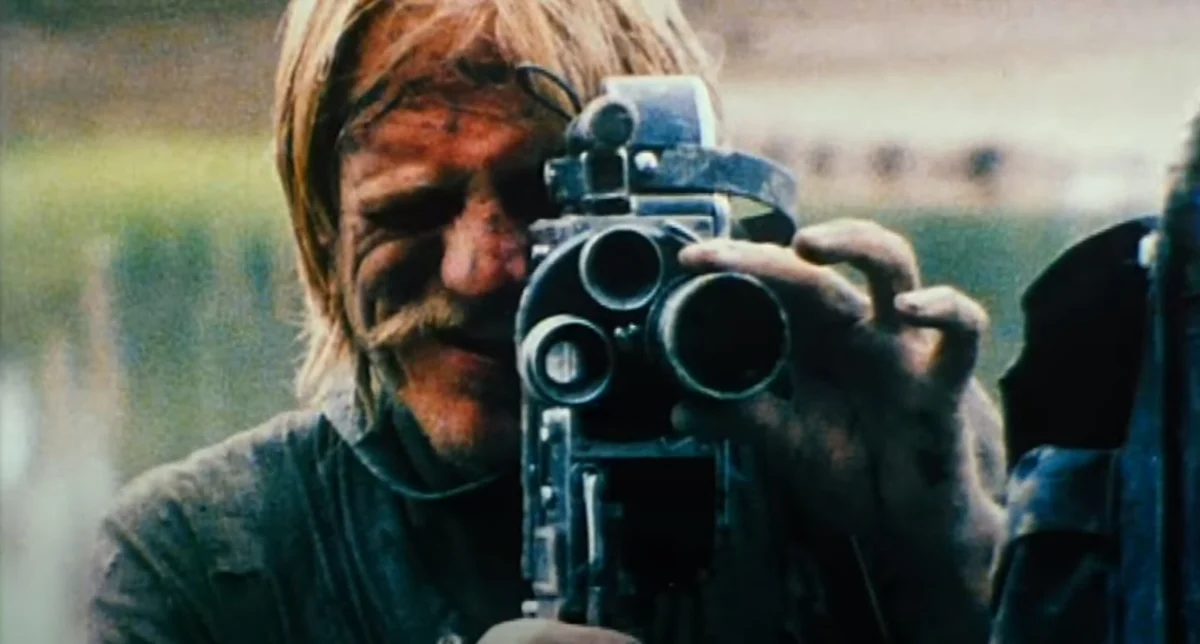
In the annals of cinematic history, few titles evoke as much visceral dread and intellectual debate as Ruggero Deodato’s 1980 magnum opus, Cannibal Holocaust. Often cited as the "most controversial movie ever made," the film’s reputation precedes it, defined by its pioneering use of the "found footage" aesthetic, its harrowing depictions of violence, and a legal history that saw its director facing life imprisonment under the suspicion that he had actually murdered his actors on camera.
Decades after its initial shockwaves subsided, Cannibal Holocaust is returning to the cultural forefront. Grindhouse Releasing, the boutique distribution house founded by Academy Award-winning editor Bob Murawski and the late Sage Stallone, has completed a multi-year, exhaustive 4K restoration of the film. This project aims not only to preserve a piece of fringe cinema history but to present it with a technical clarity that challenges even the most seasoned horror aficionados to look closer at its disturbing brilliance.
Main Facts: A Definitive Restoration for a Polarizing Masterpiece
The core of this new release is a 4K restoration supervised by Bob Murawski, an editor known for his work on The Hurt Locker and his long-standing collaboration with director Sam Raimi. The restoration was conducted at the world-renowned L’Immagine Ritrovata lab in Bologna, Italy—a facility widely considered the gold standard for film preservation.
The restoration package is unprecedented in its scope, offering three distinct versions of the film:
- The Original Uncensored Theatrical Cut: The version known to audiences since 1980, featuring the "Green Inferno" documentary footage as a 1.85:1 35mm blow-up.
- The Special Edition: A new presentation that restores the documentary footage to its native 1.37:1 aspect ratio, scanned directly from the 16mm camera negative.
- The Secret Third Version: A surreal, alternate-take version of the film that Murawski has teased as a significant discovery for completionists.
Beyond the visual upgrades, the restoration includes a comprehensive audio overhaul by sound supervisor Jussi Tegelman and a meticulous frame-by-frame cleanup by restoration expert Marcus Johnson. The project is a culmination of over three decades of effort by Grindhouse Releasing to bring the film into the mainstream consciousness of film preservation.
Chronology: From the Amazon to the Archive
The journey of Cannibal Holocaust from a scandalous Italian exploitation film to a 4K prestige restoration is a saga of legal battles, technological shifts, and a changing cultural landscape.

1980: The Infamous Debut
Ruggero Deodato released Cannibal Holocaust in 1980, telling the story of an anthropologist who recovers the footage of a missing documentary crew in the Amazon. The film’s "found footage" second half was so convincing that Italian authorities confiscated the film ten days after its premiere. Deodato was charged with obscenity and eventually murder, as the court believed the actors had been killed for real. He was only cleared after bringing the "deceased" actors onto a live television show to prove they were alive.
1988–1996: The Underground Era
In the late 1980s, Bob Murawski discovered the film through underground fanzines like Deep Red Magazine. During this period, the film was largely available only via poor-quality bootleg VHS tapes. In 1996, while in Rome to acquire elements for Grindhouse Releasing, Murawski and Sage Stallone officially licensed the film for North American distribution.
1999: The Blair Witch Comparison
When The Blair Witch Project became a global phenomenon in 1999, the "found footage" genre was retroactively traced back to Deodato. Murawski attempted to bring Cannibal Holocaust to independent theaters to capitalize on this interest, but many bookers, once they viewed the film’s graphic content and real animal cruelty, refused to screen it.
2021–2024: The 4K Restoration Process
In May 2021, Grindhouse Releasing began the formal 4K restoration process. This involved a complex negotiation to move the original film elements from a facility in Rome to the lab in Bologna. After years of scanning, color grading, and searching for lost audio tracks, the restoration premiered at select festivals and revival houses in 2024, including a high-profile screening at the Roxy Cinema in New York.
Supporting Data: Technical Innovation and the Welles Connection
The technical philosophy behind the new 4K restoration is rooted in an unexpected place: the unfinished work of Orson Welles. Bob Murawski, who worked on the completion of Welles’ The Other Side of the Wind, applied the same logic of "mixed formats" to Cannibal Holocaust.
The Aspect Ratio Logic
In the original theatrical release, the 16mm documentary footage (the "Green Inferno") was cropped to fit the 1.85:1 wide-screen theatrical standard. Murawski’s "Special Edition" restores this to its full-frame 1.37:1 ratio.

- Visual Gain: This allows the audience to see approximately 50% more image area that was previously cropped.
- Artistic Intent: Murawski argues that Deodato composed these shots for full-frame 16mm, similar to how Sam Raimi shot The Evil Dead. By restoring the square aspect ratio, the "documentary" portions feel more authentic and visually distinct from the 35mm narrative framing.
The Lab Work
The decision to use L’Immagine Ritrovata in Bologna was a point of contention with the film’s original producers, who were hesitant to ship the negative. Murawski insisted on the move, citing the Bologna lab’s superior scanning equipment compared to the facilities in Rome. The result is a master that Murawski claims is "the definitive release… from here on in," capturing the fine grain and visceral textures of the Amazon jungle with unprecedented precision.
The "Last Road to Hell" Discovery
A significant technical hurdle was the "Last Road to Hell" sequence—a montage of supposed real-world atrocities within the film. The original negative for this sequence had been missing for decades. Following months of searching through foreign-release elements, the lab located the footage, allowing it to be integrated into the restoration for the first time in its complete form.
Official Responses: Resistance and Recognition
Despite the film’s status as a cult classic, the response from the industry remains as divided as it was in 1980.
Bob Murawski notes a strange dichotomy in the film’s modern reception. On one hand, Cannibal Holocaust has been "mainstreamed," appearing on "Top 10" lists in publications like Entertainment Weekly and being sold at major retailers like Best Buy. On the other hand, the theatrical experience remains a battleground.
"Theater bookers were now familiar with the title and interested in it," Murawski told IndieWire, reflecting on the post-Blair Witch era. "But once they actually saw the movie, they refused to return my phone calls!" Even with the new 4K restoration, Murawski reports continued resistance from "sensitive" bookers, a reaction he views as a testament to the film’s enduring power to provoke. "I wouldn’t have it any other way!" he stated, embracing the film’s outsider status.
The restoration has also reignited the debate over the film’s real-life animal cruelty. While Murawski acknowledges that the killing of animals on screen is "morally indefensible," he argues that it serves a conceptual purpose: it conditions the audience to believe everything they are seeing is real, thereby heightening the impact of the staged human violence that follows. This complexity makes the film a difficult subject for critics to "champion," even as they acknowledge its undeniable importance to horror history.

Implications: The Future of Fringe Cinema Preservation
The restoration of Cannibal Holocaust carries significant implications for the future of physical media and the preservation of "extreme" cinema.
The Preservation of the Fringe
Grindhouse Releasing’s commitment to high-end restorations of titles like Cannibal Holocaust, Hollywood 90028, and the upcoming Scarlet Warning 666 suggests a shift in the archival world. It posits that "exploitation" or "fringe" cinema is as deserving of 4K preservation as the works of Kubrick or Coppola. By treating these films with the same technical rigor as Academy Award-winning dramas, restorers are ensuring that the full spectrum of cinematic history—no matter how uncomfortable—is maintained for future study.
The Theatrical Priority
In an era dominated by streaming, Grindhouse Releasing remains "firmly committed" to theatrical playdates. The strategy of touring the 4K restoration through revival houses before releasing a "super-deluxe 6-disc UHD box set" reinforces the idea that cinema of this intensity is best experienced as a collective, immersive event.
A Legacy of Influence
Ultimately, the restoration solidifies Ruggero Deodato’s legacy. While he passed away in 2022, this definitive version of his most famous work ensures that his craftsmanship—often overshadowed by the film’s gore—is finally visible. As the "found footage" genre continues to evolve in the digital age, Cannibal Holocaust stands as its raw, uncompromising progenitor.
As the restoration makes its way across North America, it remains a stark reminder of a time when cinema sought not just to entertain, but to assault the senses and the conscience. In the words of Bob Murawski: "There will never be another Cannibal Holocaust." Through this restoration, the nightmare is preserved in its most terrifyingly clear form yet.
 Jia Lissa
 Lina Irawan
 Iffa Jayyana
