

In the landscape of contemporary horror, the most terrifying monsters are rarely those that jump out from the shadows; they are the ones that reside within the structures of society and the recesses of the psyche. In Adrian Chiarella’s haunting new feature Leviticus, distributed by Neon, the supernatural and the sociological collide in a visceral exploration of queer identity and religious trauma. While the film’s narrative—centering on two Australian teenagers subjected to the horrors of conversion therapy—is inherently gripping, it is the meticulous work of costume designer Zohie Castellano that provides the visual vocabulary for this harrowing journey.
Through a sophisticated use of texture, silhouette, and color, Castellano transforms contemporary clothing into a psychological map. In Leviticus, the clothes do more than just dress the actors; they chart the evolution of Naim (Joe Bird) and Ryan (Stacy Clausen) as they navigate a world that views their very existence as a curse.
Main Facts: A Supernatural Lens on Queer Struggle
Leviticus follows Naim and Ryan, two young men whose burgeoning attraction to one another is met with the draconian intervention of a "Deliverance Healer" (Nicholas Hope). In this community, gay longing is treated as a demonic infestation. The healer places a curse upon the boys: if they give in to their desires, they will be hunted and destroyed by a creature that takes the form of the thing they most want. In a cruel twist of irony, the monster is a mirror of their love.
Castellano’s approach to the project was rooted in the idea that horror serves as a unique sanctuary for marginalized voices. "Castellano sees horror as the genre space wherein we can actually come face to face with the monstrous forces making the world so unsafe for queer people," a sentiment that echoes throughout the film’s visual design. By externalizing the internal shame and societal pressure through costume, the film allows the audience to witness the physical weight of oppression.

The production, which features a standout performance by Mia Wasikowska as Arlene, utilizes the "Australian Gothic" aesthetic—a subgenre characterized by isolation, harsh landscapes, and a sense of lingering colonial or spiritual dread. Within this framework, Castellano’s costumes act as a bridge between the mundane reality of rural Australia and the heightened, nightmarish realm of the supernatural.
Chronology: From Script to Sartorial Realization
The creative process for Leviticus began with Adrian Chiarella’s script, which provided Castellano with a rich tapestry of metaphorical imagery. Early in the pre-production phase, Castellano identified key motifs that would define the film’s aesthetic: frogs, snakes, and spiders. These biological markers of "uncleanliness" in a biblical context were translated into textural choices for the cast’s wardrobe.
Phase 1: Identifying the Texture of the Demonic
The initial stage of design involved establishing the look of the religious community. To evoke a sense of "demon texture," Castellano turned to knotty knits, leather, and lace. These materials provided a tactile hostility, suggesting a world that was "almost right but isn’t." This sense of "decaying beauty" became the cornerstone of the film’s visual identity.
Phase 2: The Evolution of Naim and Ryan
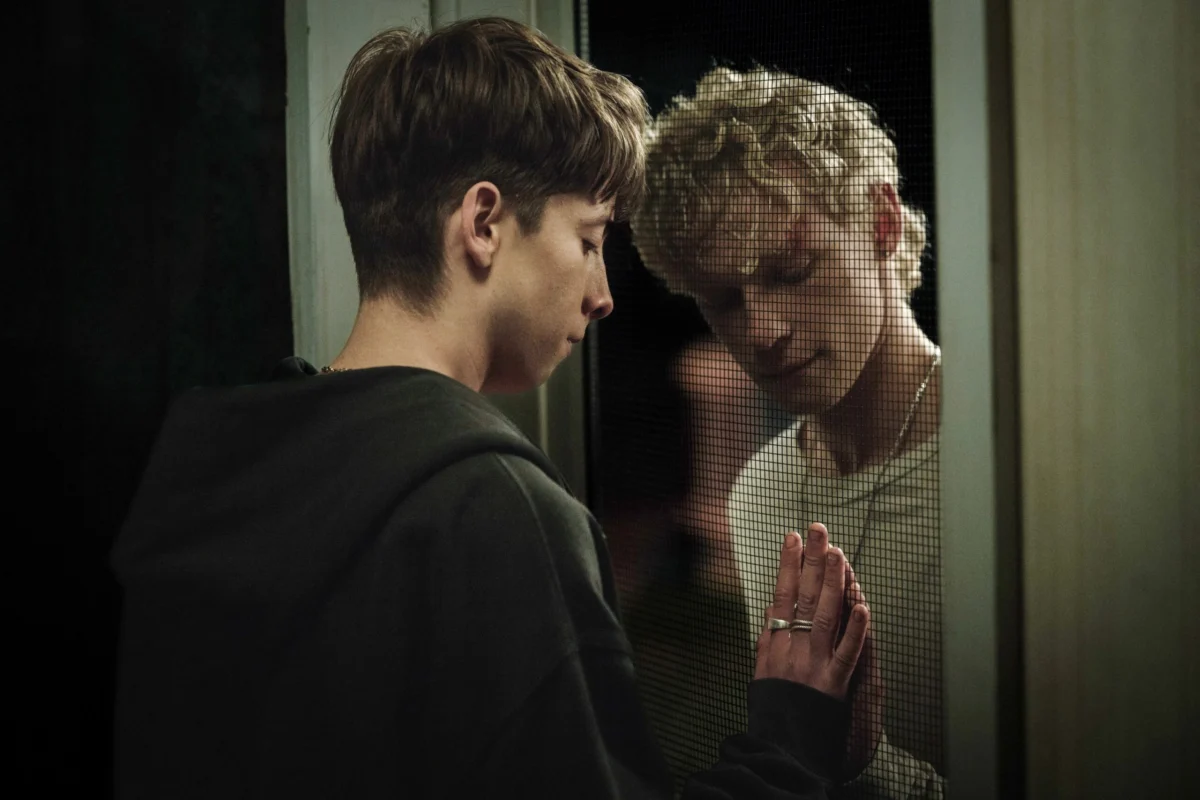
As the filming progressed, the costumes were used to track the characters’ internal shifts. Naim’s journey, in particular, is told through the fit of his clothes. Starting in oversized, baggy layers designed to hide his body and his identity, he eventually moves into more form-fitting attire as he begins to confront his reality. Conversely, Ryan’s wardrobe—specifically a white shirt worn on the day he is "saved"—becomes the foundational look for the monster that haunts Naim, creating a chronological link between a moment of religious trauma and the subsequent supernatural haunting.

Phase 3: Building the Australian Gothic World
The final stages of the design process involved heavy collaboration with production designer Bethany Ryan and Director of Photography Tyson Perkins. The team worked to ensure that the costumes felt alienated from their environments. While the sets were imbued with color, the costumes remained restrained, highlighting the characters’ isolation and the "industrial beauty" of their surroundings.
Supporting Data: The Technicality of Textures
The effectiveness of the costumes in Leviticus relies on subtle technical choices that influence the viewer’s subconscious. Castellano’s use of "hostile textures" serves to keep the audience in a state of perpetual unease.
- The Healer’s Suit: One of the most striking technical achievements is the suit worn by Nicholas Hope’s character. Castellano deliberately had the suit pressed incorrectly to create a synthetic, unnatural sheen. The result is a texture that Castellano describes as "shiny, like frog skin." This choice subtly aligns the character with the plagues and "unclean" animals of the book of Leviticus, marking him as a source of corruption despite his claims of holiness.
- The Monster’s Guise: The creature that hunts the boys is not a traditional beast but a manifestation of desire. To achieve this, Castellano placed Stacy Clausen in a white shirt that was nearly sheer. This choice was intended to be "tempting and ethereal," making the monster’s appearance a cruel parody of the purity and intimacy the boys are denied.
- The Palette of Yearning: The film utilizes a restrained color palette. While Naim begins in neutral, hiding tones, he transitions into darker colors as the story unfolds. This represents his wrestling with the "perceived darkness" that his community has told him resides within his soul. The contrast between the dark clothing and the colorful, industrial sets creates a visual representation of alienation.
Official Responses: Insights from Zohie Castellano
In an interview with IndieWire, Castellano delved into the intellectual and intuitive process behind the film’s wardrobe. She emphasized that the goal was to create a visual language that felt both grounded in the Australian landscape and elevated by the themes of the script.
"There were certain script images we pulled out that really informed our choices, texturally," Castellano explained. "Frogs and snakes and spiders—so we were working with leather and lace and evoking kind of a demon texture with knotty knits in the Church community."

She further detailed the collaboration with the production design team, noting the unconventional choice to make the sets more colorful than the characters. "Bethany [Ryan] and I talked about how there was more color in the set than in the costumes, which is quite an unusual choice, and I think it created some really distinct imagery. It was a choice from the beginning to have a restrained color palette to evoke that yearning and that longing [the boys have]."
Regarding the character of Naim, Castellano highlighted the psychological importance of fit and silhouette: "Naim is very hidden at the beginning. He’s wearing a size up, and he’s trying to hide himself… Naim moves into clothes that are more fitting, but he’s also in darker colors as the film progresses; he’s wrestling with this perceived darkness inside of him."
This intuitive approach extended to the construction of the garments. Castellano revealed that many of the key pieces, such as the monster tops and Arlene’s (Mia Wasikowska) cardigan, were handmade or knitted early in the process to establish the film’s "Australian Gothic" feel. The rest of the wardrobe was a mix of thrifted finds and curated purchases, all mapped out on mood boards to ensure a cohesive narrative flow.
Implications: Costume as a Tool for Reclamation
The success of the costume design in Leviticus has broader implications for how genre films handle sensitive social issues. By using clothing to mark the "monstrous forces" of homophobia and conversion therapy, the film provides a blueprint for how horror can be used as a tool for social commentary without losing its visceral impact.

The Subversion of the "Monstrous Queer"
Historically, horror has often "monsterized" queer characters. Leviticus flips this trope on its head. The monster is not the queer person, but the shame and the curse imposed upon them by a rigid religious structure. Castellano’s costumes reinforce this by making the monster look like the object of desire, suggesting that the "horror" is actually the community’s perception of love.
The Power of Contemporary Clothing
Often, high-concept horror relies on elaborate prosthetics or fantastical costumes. Leviticus proves that contemporary, everyday clothing—when chosen with precision—can be just as evocative. A poorly pressed suit or an oversized hoodie can carry as much narrative weight as a creature suit when they are used to reflect a character’s internal state.
Australian Gothic and Global Resonance
By leaning into the "Australian Gothic" aesthetic, the film contributes to a growing movement of Australian cinema that explores the country’s unique anxieties through a supernatural lens. However, the themes of Leviticus—the struggle for self-acceptance in the face of religious extremism—give it a global resonance. Castellano’s work ensures that this struggle is not just heard, but seen.
In the end, the costumes of Leviticus do more than just reflect the characters’ inner lives; they teach them a vital lesson. While the world around them tells them to fear their instincts, the very fabric they wear suggests a different path. As Naim moves from hiding in his clothes to wearing them with a sense of self-awareness, the film suggests that reclaiming one’s identity is the only way to survive the monsters—both real and imagined.

Leviticus is currently playing in theaters, offering audiences a chilling, beautifully crafted look at the cost of suppression and the power of the visual image in the art of storytelling.
 Nila Kartika Wati
 Lina Hope
 Asep Darmawan
