

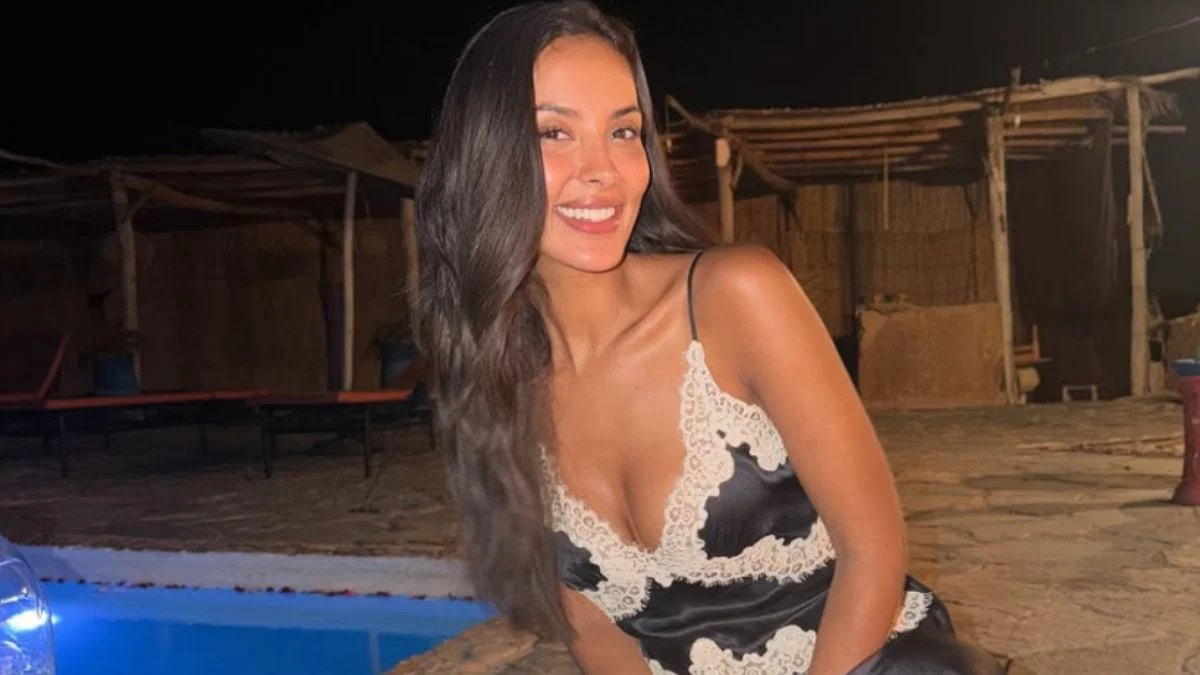
Maya Jama has long established herself not just as the charismatic face of the global phenomenon that is Love Island, but as a formidable fashion force in the modern television landscape. Her sartorial choices have become a secondary narrative to the hit reality series, with fans and fashion critics alike eagerly anticipating her weekly reveals. Her most recent appearance on Love Island: Aftersun—a daring, white lace, sheer gown—has sparked widespread conversation, cementing her status as a host who isn’t afraid to push the boundaries of television style.
Main Facts: A Masterclass in High-Fashion Risk-Taking
The ensemble in question, which debuted during the most recent broadcast of Aftersun, was a masterclass in architectural design and audacious styling. The gown, a floor-length creation, was defined by its completely sheer lace construction, leaving little to the imagination while maintaining a high-fashion aesthetic.
Key elements of the look included:
- The Silhouette: A figure-hugging, mermaid-style skirt that emphasized the host’s frame.
- The Bodice: An ultra-plunging neckline, accented with silver-toned stud embellishments that provided a metallic contrast to the soft lace.
- Structural Details: A corset-inspired waist featuring intricate lace-up detailing, which anchored the otherwise ethereal fabric.
- Softening Elements: Ruffled shoulder straps that introduced a romantic, almost bridal sensibility to the otherwise sultry design.
The interplay between the transparent floral lace and the underlying white thong was the focal point of the ensemble, generating immediate buzz across social media platforms. By balancing the sheer, skin-baring nature of the fabric with the delicate, ornate pattern of the lace, Jama managed to achieve a look that was simultaneously risqué and sophisticated.
Chronology: The Evolution of Jama’s Style on ‘Aftersun’
To understand the impact of this latest look, one must view it within the broader context of Jama’s tenure on the Love Island franchise. Since stepping into the hosting role, Maya Jama has systematically transformed the "presenter look."
The Early Days: Establishing a Brand
When Jama first took over the hosting duties, her style was characterized by bold, vibrant colors and structured mini-dresses. She leaned heavily into the "island vibe," utilizing tropical palettes and breathable fabrics that signaled a departure from the more traditional, conservative styling seen in reality television hosting in years past.
The Mid-Season Shift: Experimental Couture
As the seasons progressed, the styling evolved into more experimental territory. We witnessed a transition toward archival pieces, custom-made commissions, and a heavier reliance on textures—leather, velvet, and, as seen in this latest instance, delicate lace. The shift marked a transition from "outfit of the day" posts to "fashion event" moments.
The Recent Revelation: The Sheer Lace Moment
The timeline of this particular outfit began with the pre-recording sessions for Aftersun. As is standard practice, the look was kept under wraps until the moment the cameras began to roll. Once the images hit social media, the reaction was immediate. Within hours, the gown was being discussed on platforms ranging from Instagram to professional style blogs, marking a peak in the intersection between reality TV hosting and high-fashion editorial.
Supporting Data: The Digital Footprint of a Viral Look
The impact of Maya Jama’s fashion choices is not merely anecdotal; it is quantifiable through the digital engagement generated by her presence.
Engagement Metrics
When Jama posts her Aftersun looks to her own social media channels, she frequently sees engagement rates that double or triple the average for television hosts. The white lace gown, specifically, saw a surge in search traffic for the terms "sheer lace dress" and "corset-inspired gowns" within 24 hours of the broadcast.
The Economics of the "Jama Effect"
The "Jama Effect" refers to the sudden spike in retail interest for the designers she wears. By opting for gowns that feature unconventional textures—such as the silver-studded neckline of this particular piece—she provides exposure to high-end designers while simultaneously influencing the "fast fashion" market, which moves rapidly to replicate the silhouettes she popularizes.
Official Responses and Stylist Insights
While Maya Jama herself has remained focused on her hosting duties, her styling team—led by industry experts known for their work with A-list talent—has previously spoken on the collaborative nature of her wardrobe.
"The goal," one insider noted during a previous cycle, "is to create a wardrobe that feels like an extension of Maya’s personality: confident, unapologetic, and fun."
Regarding the white lace gown, fashion commentators have noted the deliberate choice of a "bridal-inspired" aesthetic. "It’s a clever subversion," says fashion critic Elena Vance. "By taking a fabric synonymous with purity and tradition—white lace—and using it to create a completely sheer, high-cut garment, the styling team is playing with expectations. It’s not just a dress; it’s a statement about the modern woman’s autonomy over her own image."
Implications: Changing the Standards for Television Hosting
The implications of Maya Jama’s style choices are significant for the broader television industry. For decades, the "TV presenter" uniform was strictly defined by modesty and neutral palettes designed to avoid distracting from the show’s contestants.
Breaking the "Modesty Barrier"
Jama’s willingness to wear sheer fabrics, daring cutouts, and provocative silhouettes has dismantled the unspoken rule that a host must blend into the background. She proves that a host can be the central focal point of a show’s aesthetic appeal without detracting from their professional authority.
The Normalization of Body Confidence
The discourse surrounding the "thong-visible" nature of the dress has also opened a broader conversation about body confidence in the public eye. By wearing an outfit that necessitates a certain level of physical ease, Jama is contributing to a culture where women in media are increasingly comfortable with their own sensuality, refusing to apologize for their personal style preferences.
Influence on Future Reality TV Fashion
As Love Island continues to be a trendsetter for Gen Z and Millennial audiences, Jama’s style is actively shaping the market. We are seeing a ripple effect where reality TV hosts are being treated with the same fashion-forward scrutiny as red-carpet celebrities. This shift demands that producers, stylists, and networks invest more in the "total look" of their talent, as the wardrobe is now recognized as a key pillar of the show’s marketing and brand identity.
Conclusion
Maya Jama’s white lace gown for Love Island: Aftersun was more than just a momentary headline; it was a deliberate, well-executed fashion statement that highlighted the evolution of television hosting. By blending elements of traditional elegance with modern, skin-baring trends, Jama continues to set the bar for how a television personality can own the screen.
As the industry watches, it is clear that Maya Jama is not just hosting a show; she is curating an aesthetic. Her ability to command attention, generate conversation, and maintain an air of effortless glamour ensures that every time she steps onto that stage, the world is watching—not just to see who gets dumped, but to see what she will wear next. In an era where digital engagement is the new currency of fame, Jama has mastered the art of the viral moment, proving that when it comes to style, she is, without question, in a league of her own.
 Neng Nana
 Azzam Bilal Chamdy
 Nana
Nana
