

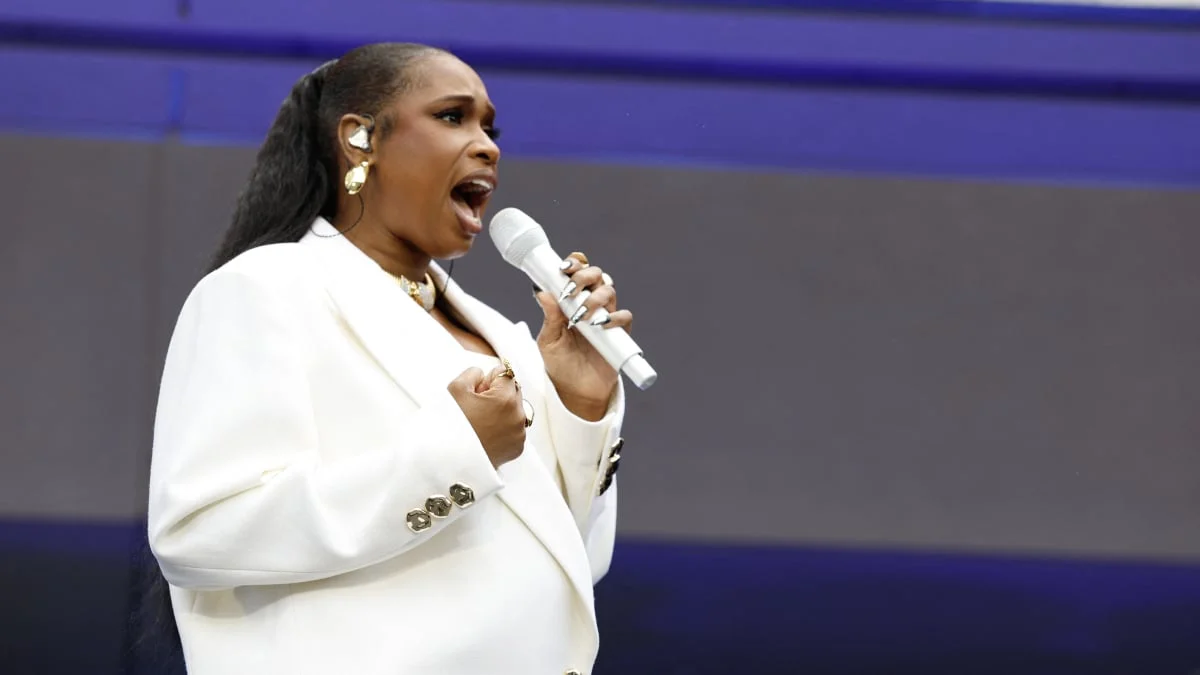
The FIFA World Cup final, a global pinnacle of sporting excellence, is traditionally defined by the clash of two nations, the tension of the pitch, and the pride of national identity. However, as the world turns its eyes to New York-New Jersey Stadium (MetLife Stadium) this Sunday, July 19, for the showdown between Spain and Argentina, the pre-match programming has ignited a firestorm of debate.
FIFA has officially announced that Grammy-winning vocal powerhouse Jennifer Hudson will deliver a "special rendition" of "The Star-Spangled Banner." While the anthem is a staple of American sporting culture, its inclusion in a match featuring two European and South American heavyweights—neither of which is the United States—has prompted immediate confusion, skepticism, and a broader conversation about the "Americanization" of the world’s most popular sport.
The Context: A Ceremonial Departure
The decision to feature the U.S. anthem at a neutral-ground final is part of a deliberate, high-production strategy by FIFA to mark the conclusion of a tournament hosted across three nations: Canada, Mexico, and the United States. FIFA’s official stance is that the performance, scheduled for 1:30 p.m. ET—exactly 90 minutes before the 3:00 p.m. kickoff—is not a reflection of the competing teams, but a tribute to the host nation’s contribution to the tournament’s logistics and cultural footprint.
This is not entirely without precedent. When the United States last hosted the men’s World Cup in 1994, the legendary saxophonist Kenny G performed the anthem during the closing ceremonies before Brazil faced Italy. However, the scale of the 2026 event and the current digital landscape have amplified the pushback. Critics argue that by highlighting the U.S. anthem while omitting those of co-hosts Canada and Mexico, FIFA is prioritizing the American market over the egalitarian spirit of the tournament.
Chronology of a Global Event
To understand the gravity of Sunday’s schedule, one must look at the timeline of the final’s production. FIFA has meticulously curated a "super-bowl-style" experience, shifting away from the traditional, minimalist approach common in international football.
- 1:30 p.m. ET: The closing ceremony commences. The event is designed as a multi-act, high-octane celebration of the tournament’s journey.
- The Anthem Performance: Jennifer Hudson takes the stage to perform "The Star-Spangled Banner," flanked by a host of global stars.
- The Pre-Game Extravaganza: Post Malone will headline the pre-game festivities, with appearances by Robbie Williams, Nicole Scherzinger, Laura Pausini, and digital creator IShowSpeed. Actor Tom Cruise is also slated to make a surprise appearance.
- Protocol: Once the spectacle concludes, the match returns to standard FIFA protocol. Spain and Argentina will each have their respective national anthems played before the whistle, ensuring the sport remains the ultimate priority.
- 3:00 p.m. ET: Kickoff.
- Halftime: A historic 11-minute intermission—the first of its kind in World Cup history—curated by Coldplay’s Chris Martin.
The Halftime Pivot: A New Era of Entertainment
Perhaps more controversial than the pre-game anthem is the introduction of a formal halftime show. In traditional soccer, halftime is a period for tactical adjustment and player recovery. FIFA’s decision to implement an 11-minute musical performance featuring a rotating cast of global superstars—including Madonna, Shakira, BTS, and Justin Bieber—has drawn significant ire from traditionalists.
The show, which also includes performances by Burna Boy, conductor Gustavo Dudamel, and the PS22 Chorus, is tied to the FIFA Global Citizen Education Fund. While the cause—expanding access to education and soccer programs for children—is objectively positive, the aesthetic change to the game’s structure is viewed by many as an unwanted import of American sports culture. Social media platforms have been flooded with commentary from fans who fear that the "theatrics" are eroding the organic, rhythmic flow of the sport in favor of commercial viability.
The Economic Engine: Following the Money
Why has FIFA invested so heavily in this shift? The answer lies in the numbers. FIFA projects a record-breaking $13 billion in revenue for the current World Cup cycle. A significant portion of this growth is attributed to the aggressive pursuit of the American casual viewer—the demographic that does not necessarily follow club football but engages with the World Cup as a "tentpole" media event.
The strategy is demonstrably successful. Data from the group stages indicates that Fox Sports’ broadcasts averaged over 5 million viewers per match, nearly doubling the audience figures from the 2022 tournament. Simultaneously, Spanish-language broadcasts on Telemundo and Peacock have shattered previous records, suggesting that the "event-ification" of the tournament is successfully capturing a wider, more diverse audience.
For FIFA, the "Americanization" of the final is a calculated risk. By leveraging American pop culture icons like Jennifer Hudson and adopting a halftime show format familiar to Super Bowl viewers, FIFA is betting that the influx of new viewers and the resulting advertising revenue will outweigh the vocal dissatisfaction of the traditional global fan base.
Official Responses and Public Sentiment
FIFA representatives have maintained that the ceremony is intended to be a "celebration of the host continent." Despite this, the lack of representation for Canadian and Mexican anthems remains a point of contention. When pressed on the inclusion of the U.S. anthem, officials pointed to the "extraordinary logistical complexity" of hosting a tournament of this magnitude in the U.S., noting that the performance serves as a thematic bookend to the tournament’s start.
The online discourse, however, tells a different story. Critics on social media have pointed out that the move feels like a corporate attempt to "claim" the sport for the U.S. market. Comments ranging from "This isn’t the Super Bowl" to "Respect the sport’s history" have dominated the conversation. Yet, for every detractor, there is a demographic of viewers who are tuning in specifically for the "show"—a fact that FIFA’s marketing department is well aware of.
Implications for the Future of Football
The implications of the 2026 World Cup final extend far beyond the pitch. We are witnessing a fundamental shift in how the world’s biggest sporting event is packaged. If the 2026 final proves to be a financial and ratings success, it is highly probable that the "halftime show" and the inclusion of high-profile, non-sporting entertainment will become standard practice for future iterations of the World Cup.
This transformation poses a critical question for the future of football: Can the sport maintain its soul while simultaneously striving to become the ultimate global entertainment product? For the purists, the answer is a resounding "no." For the executives at FIFA and their broadcast partners, the answer is found in the record-shattering viewership data.
As Sunday’s final approaches, the world waits to see how this experiment in mass-market entertainment will sit alongside the tension of a World Cup final. Regardless of whether the spectacle succeeds in elevating the sport or distracts from it, one thing is certain: the landscape of global football has changed. The game is no longer just about the 22 players on the field; it is about the global stage, the digital audience, and the massive, record-breaking machine that is FIFA.
How to Watch
For those looking to witness the culmination of this historic, albeit debated, tournament, the final between Spain and Argentina will be available through the following channels:
- English Language: Airing on Fox, with streaming options available via Fox One and the Fox Sports app.
- Spanish Language: Available on Telemundo and streaming live on Peacock, which has confirmed that all 104 matches of the tournament are available for replay and live viewing.
As the sun sets on the New Jersey horizon this Sunday, the world will watch as the final whistle blows—not just on a match, but on an era of football that has firmly planted its roots in the American spotlight.
 Nana Wu
 Neng Nana
 Reynand Wu
