

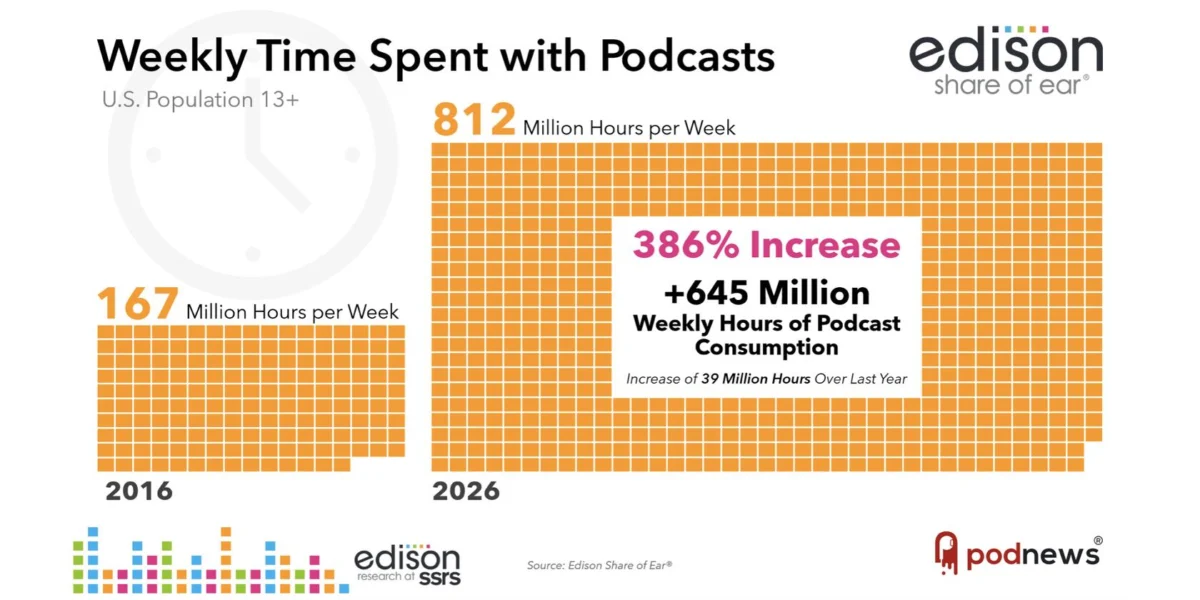
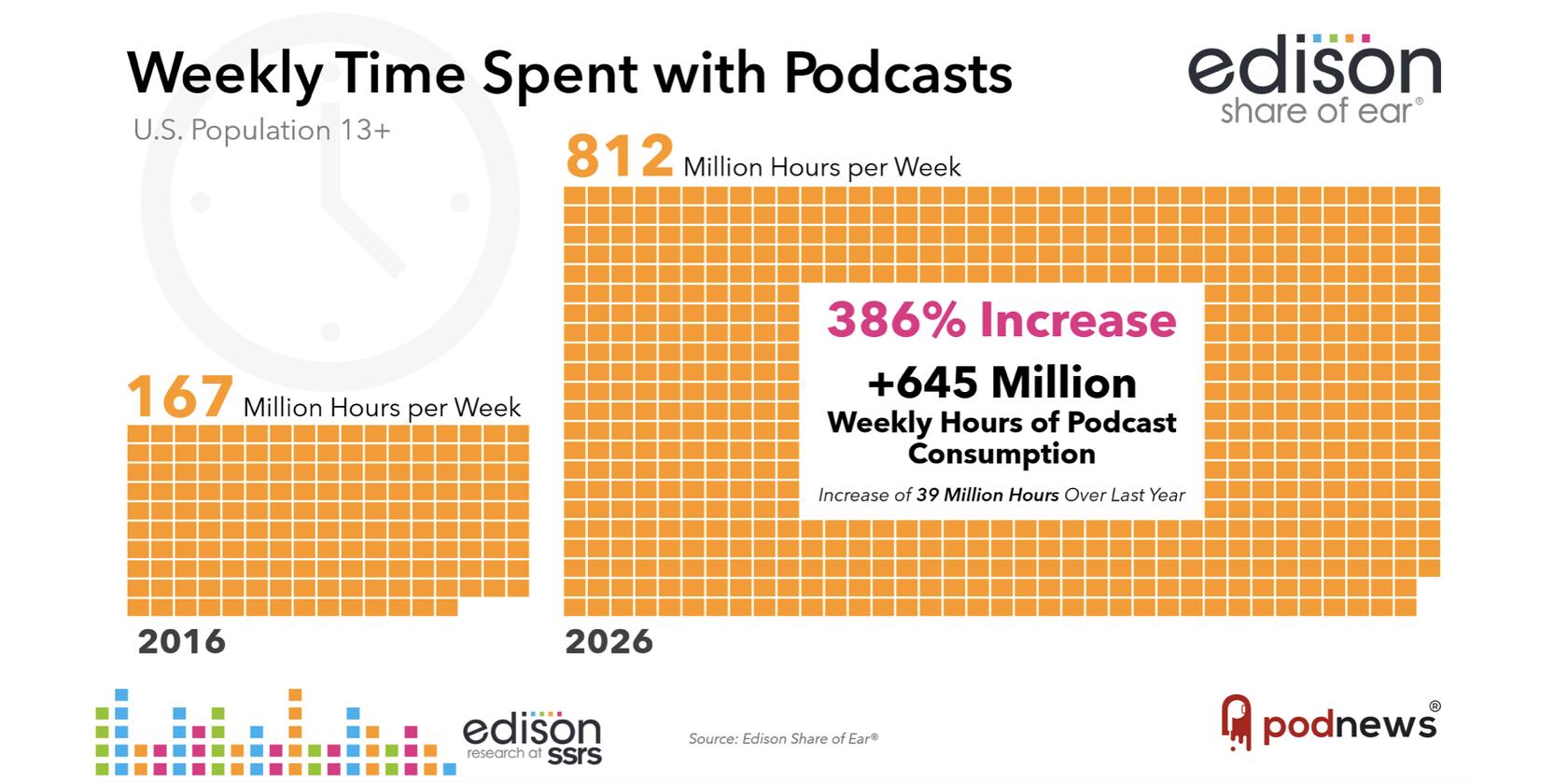
In the rapidly evolving digital media ecosystem, podcasting has solidified its position as a primary pillar of American entertainment and information. According to recent data from Edison Research, Americans are now consuming a staggering 812 million hours of podcast content every single week. This figure not only highlights the sheer scale of the industry but also underscores a fundamental shift in how audiences engage with long-form audio. As the medium matures, the infrastructure supporting it—from legal protections for creators to the professionalization of content—is undergoing a significant transformation.
Main Facts: The Massive Scale of Audio Consumption
The 812 million weekly hours figure represents a watershed moment for the medium. Podcasting has evolved from a niche hobbyist pursuit into a powerhouse of the attention economy. This consumption is driven by a diverse library of content, ranging from high-production investigative journalism to hyper-niche hobbyist discussions.
The democratization of audio production has led to an explosion in supply, which has been met with a corresponding increase in demand. Listeners are no longer treating podcasts as "background noise"; they are increasingly viewing audio as a primary medium for deep dives into culture, history, and education. This shift has significant implications for advertisers, who are increasingly shifting budgets away from traditional broadcast radio toward the highly targeted, intimate environment of on-demand audio.
Chronology: The Evolution of the Modern Podcast Ecosystem
To understand where the industry stands today, one must look at its rapid ascent over the last two decades:

- 2004–2006 (The Birth): The term "podcasting" is coined, and early RSS feeds allow for the first automated delivery of audio content to portable devices.
- 2014 (The "Serial" Effect): The massive success of the podcast Serial proves that long-form audio narrative can reach a mass-market audience, effectively legitimizing the medium for mainstream advertisers.
- 2019–2021 (The Consolidation Phase): Major media conglomerates and tech giants (Spotify, Amazon, SiriusXM) begin acquiring production houses and exclusive content rights, turning the fragmented market into a more corporate-aligned ecosystem.
- 2023–2026 (The Maturity Era): The focus shifts from sheer growth to sustainability. Creators are now prioritizing audience retention, professional insurance, and specialized monetization strategies, as evidenced by the rise of niche networks and B2B services like MusicPro Insurance.
Supporting Data: Behind the Numbers
While the 812 million hours figure captures the macro-view, the granular data from top platforms provides a clearer picture of what drives these numbers.
Current rankings show a mix of institutional legacy media and independent juggernauts:

- The Daily (Apple Podcasts): Remains a titan of news-based audio, maintaining a #1 ranking in the United States and proving that daily topical updates remain a cornerstone of user habits.
- The Joe Rogan Experience (Spotify): Continues to dominate the platform, illustrating the power of long-form, personality-driven interviews.
- Global Trends: The success of shows like The Great Simplification with Nate Hagens (Australia) and genre-specific hits like Haunted City (Ireland) demonstrates that the appeal of the medium is truly global.
These rankings highlight a "Barbell Effect" in the industry: on one end, massive, celebrity-led shows capture the bulk of the casual audience; on the other, highly specialized, "long-tail" content attracts passionate, loyal communities that drive significant engagement.
The Professionalization of Production: No Gear, No Gig
As the industry grows, so too does the need for professional infrastructure. A common pitfall for emerging creators is the misconception regarding business assets. Many podcasters operating from home studios mistakenly believe their existing homeowner’s insurance covers their equipment.

However, industry experts at MusicPro Insurance warn that if equipment is used to generate income, it is legally classified as "business equipment." In the event of theft, fire, or accidental damage, standard homeowner’s policies often deny these claims. This leaves the creator not only without their tools but also potentially unable to produce content, effectively ending their revenue stream.
The shift toward "white-glove" insurance services, such as those provided by MusicPro—a company with over two decades of experience backed by ASCAP and Sterling Risk—signifies that the industry is finally treating podcasting as a legitimate, high-stakes business. Protecting the tools of the trade is no longer just a recommendation; it is a critical requirement for any creator looking to scale their operations.

New Voices: Innovation in Content
The landscape is constantly refreshed by new entrants who challenge traditional formats. This week saw several notable launches that highlight the breadth of the current medium:
- A Different Take (Forbes): Hosted by Linda Boff, this podcast signals the move of major business media into high-production, narrative-driven marketing analysis. It bridges the gap between legacy corporate journalism and the modern podcast format.
- gay-i (Bubbler Media/iHeartPodcasts): A new addition focusing on the LGBTQ+ lens in marketing and media. This reflects the industry’s trend toward identity-focused, community-specific programming.
- abandoned: The All-American Ruins Podcast: An example of "immersive sound" podcasting. By using audio to explore themes of American history and mental health, it pushes the artistic boundaries of what an audio documentary can achieve.
- Tales From The Æther (Season 3): This anthology series proves that scripted fiction, once considered a difficult sell in the podcasting world, has found a dedicated, flourishing audience.
Implications: Where the Industry Goes from Here
The data provided by Edison Research serves as a bellwether for the future of media. As we look ahead, several implications become clear:

1. The Death of the "Amateur" Mindset
The era of the "bedroom podcaster" who ignores business, legal, and insurance realities is ending. As the market saturates, creators who treat their podcasts as professional enterprises—investing in proper gear protection, legal counsel, and diversified revenue streams—will be the ones who survive.
2. The Rise of "Niche-Scale"
While the biggest shows generate the most headlines, the real health of the industry lies in the millions of hours spent on niche content. Advertisers are increasingly realizing that a show with 5,000 highly engaged, dedicated listeners often provides a better return on investment than a general-interest show with 500,000 passive listeners.

3. The Integration of AI and Human Insight
The emergence of shows like A Different Take, which explicitly discusses the role of AI in advertising, shows that the industry is grappling with technological shifts. We will likely see a split: AI-generated content for low-stakes, high-volume information, and high-production human-centered storytelling for deep-engagement content.
4. Sustainability as a KPI
The "Podcast Gold Rush" of the early 2020s has cooled. Today, the metric that matters most is not just downloads, but listener lifetime value and sustainability. Whether it is through listener-supported models, specialized insurance, or community-based monetization, creators are building long-term businesses rather than short-term experiments.

Conclusion
The 812 million hours of weekly audio consumption in the United States is more than just a statistic; it is a testament to the endurance and adaptability of the podcasting format. As the industry continues to professionalize, the focus will inevitably shift toward protecting creators, refining content strategies, and deepening the connection between audio creators and their audiences. Whether you are a veteran producer or a newcomer with a microphone, the landscape is now defined by one simple truth: those who prepare for the risks and respect the craft will define the next decade of audio.
As we look toward the remainder of the year, it is clear that the "Golden Age of Podcasting" is not behind us—it is simply evolving into a more robust, mature, and essential part of the modern media diet.
 Asep Darmawan
 Jia Lissa
 Neng Nana
