

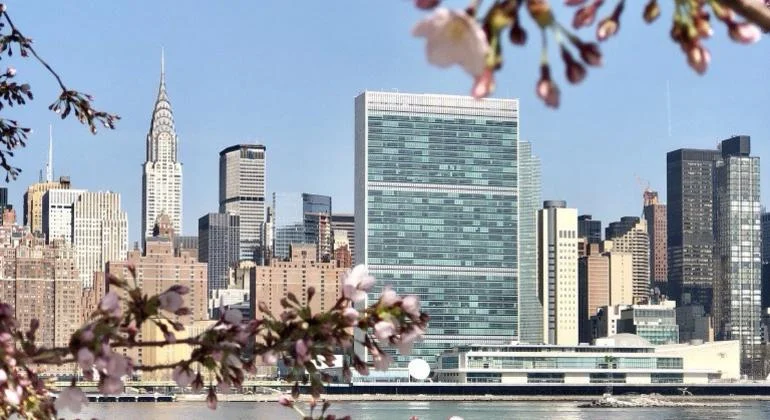
As September arrives, the eyes of the global community turn toward New York City, where the United Nations Headquarters transforms into the epicenter of international diplomacy. The 81st session of the UN General Assembly (UNGA) High-Level Week, commencing this month, arrives at a moment of profound uncertainty. With geopolitical fractures deepening and multilateralism under unprecedented strain, the assembly serves as the ultimate litmus test for whether the international community can move beyond rhetoric to address the existential threats facing humanity.
Presided over by the newly elected Assembly President, Khalilur Rahman of Bangladesh, the session is framed by a poignant and urgent theme: "Restoring trust, managing transformation: A United Nations that delivers for all." As the world navigates a landscape defined by overlapping crises—ranging from regional warfare to the climate emergency—the upcoming deliberations are not merely procedural; they are a vital attempt to recalibrate the global order.
The Main Facts: A Global Agenda in Flux
The High-Level Week is the most significant annual diplomatic gathering on the planet. For the 193 Member States of the United Nations, this period represents the primary venue to synchronize national priorities with collective global needs.
The agenda for the 81st session is, by any measure, exhaustive. It encompasses:
- International Security: Addressing the proliferation of armed conflict and the erosion of regional stability.
- Climate Resilience: Decarbonizing the global economy and addressing the immediate impacts of a warming planet.
- Sustainable Development: Closing the gap on the 2030 Sustainable Development Goals (SDGs), which are currently lagging behind schedule.
- Global Health: Building robust systems to prevent and mitigate future pandemics.
- Equity and Human Rights: Addressing systemic racism and ensuring the right to development for the Global South.
While the public speeches delivered from the iconic green marble podium garner the most media attention, the "real" work of the UN often occurs in the quiet, pressurized confines of bilateral meetings and corridor negotiations. It is here that allies and rivals alike test the boundaries of cooperation, seeking to find common ground in a world increasingly characterized by zero-sum competition.
Chronology of the 81st Session
The proceedings are structured to address specific pillars of global concern, ensuring that each day of the High-Level Week is dedicated to tangible action.
- 18 September – The SDG Moment: Ahead of the General Debate, leaders will convene to assess the status of the 17 Sustainable Development Goals. With fewer than five years until the 2030 deadline, the focus is on practical, scalable solutions to poverty, hunger, and energy access.
- 22 September – The General Debate Begins: The traditional opening of the debate allows leaders to outline their national agendas and articulate their visions for the future of the international system.
- 23 September – Climate Action and Human Rights: A dual-focus day. UN Secretary-General António Guterres will host a high-level event on Climate Action and the Just Transition, followed by a commemoration of the 40th anniversary of the Declaration on the Right to Development.
- 24 September – Addressing Sea-Level Rise: A dedicated summit to address the existential threat posed to small island developing states and low-lying coastal nations.
- 25 September – Pandemic Preparedness: A high-level session focusing on the lessons learned from COVID-19, emphasizing equitable access to medical resources and the strengthening of global health infrastructure.
- 28 September – Combatting Racism: Marking the 25th anniversary of the Durban Declaration and Programme of Action, the assembly will review the global fight against xenophobia and intolerance.
- 29 September – Nuclear Disarmament: The week concludes with a plenary meeting on the International Day for the Total Elimination of Nuclear Weapons—an issue that remains the UN’s highest disarmament priority since its inception.
Supporting Data: The Reality Check
The urgency of this assembly is backed by sobering data. The UN reports that progress on more than 50% of the SDG targets remains "weak and insufficient." The promise made in 2015 to "leave no one behind" is currently threatened by a trifecta of climate-driven instability, rising debt levels in developing nations, and the lingering socioeconomic scars of the pandemic.
Furthermore, the environmental indicators are stark. As global temperatures hit record highs, the focus on "Just Transition" is not just a policy preference but an economic necessity. For nations in the Pacific and Caribbean, sea-level rise is no longer a distant theoretical threat; it is a present-day reality that is already compromising freshwater supplies and critical infrastructure. The UN’s emphasis on these areas reflects an acknowledgment that the "business as usual" approach is no longer viable.
Official Responses: "We the Peoples"
The rhetoric emanating from the Secretariat highlights a shift toward a more grassroots, human-centric approach to global governance. Secretary-General António Guterres has been vocal about the need for the UN to reconnect with its foundational charter.
In recent briefings, the Secretary-General emphasized: "Not we the powerful. Not we the victorious. We the peoples—all of us—bound by a single conviction: that we are safer, stronger and more human when we stand together."
This sentiment serves as the unofficial mantra for the 81st session. It is an appeal to Member States to prioritize collective survival over national maneuvering. The UN leadership is signaling that the era of institutional complacency must end, and that the organization must evolve into a body that truly "delivers for all" rather than merely acting as a theater for geopolitical posturing.
Implications: A Changing of the Guard
The 81st session carries a unique historical weight. It is the final General Assembly to be overseen by Secretary-General António Guterres, whose second and final term concludes on 31 December 2026. This adds a layer of "legacy management" to the proceedings. Guterres is effectively using this week to cement the priorities for his successor, who will take office on 1 January 2027.
The transition process is already underway, and the successor will inherit a world that is fundamentally different from the one that existed when Guterres took office. The implications are clear: the next leader of the United Nations will face a world in the midst of a "great transformation." Whether this transition results in a more integrated, equitable global order or a further fragmented one depends largely on the outcomes of the meetings held in New York this month.
The Diplomatic Stakes
The success of this week will be measured by the commitments made behind closed doors. If nations leave New York having secured agreements on climate finance, pandemic response frameworks, and a renewed commitment to the SDGs, the 81st UNGA may be remembered as a turning point. If the week results in little more than a series of disparate, uncoordinated speeches, it will confirm the fears of those who believe the multilateral system is in terminal decline.
As leaders assemble, the message from the global public is loud and clear: the time for incremental change has passed. The world is watching to see if the delegates in New York can muster the political will to bridge their divisions and deliver on the promise of a safer, more resilient future. The UN Charter, written in the wake of the Second World War, remains a beacon, but as the 81st session begins, it is evident that the light is flickering—and it is up to this generation of leaders to ensure it does not go out.
 Lina Hope
 Layla Zulfa
