

In a significant push to reshape how users consume content, the social media platform X has officially rolled out a robust new "Custom Timelines" feature. This development marks one of the most substantial user-interface updates since the platform’s rebranding from Twitter, signaling a move toward hyper-personalized, topic-specific engagement. By leveraging the advanced analytical capabilities of the xAI tool Grok, the platform aims to provide a more curated experience that mirrors the granular control once offered by third-party clients like TweetDeck.
The rollout, which currently targets Premium subscribers on iOS, is part of a broader strategy by X to revitalize user retention by giving them the power to sculpt their own feeds rather than relying solely on the platform’s "For You" algorithm.
The Core Mechanics: How Custom Timelines Work
At its heart, the new Custom Timelines feature is designed to move beyond the monolithic, one-size-fits-all approach of traditional social media feeds. According to Nikita Bier, the head of product at X, these timelines are not merely static lists or hashtags; they are dynamic, AI-powered streams that adapt to the user’s preferences.
The Role of Grok
The engine behind these feeds is Grok, the xAI tool integrated into the X ecosystem. Unlike standard keyword-based filtering, which often captures irrelevant content, Grok is tasked with "understanding" the semantic context of every post. The algorithm analyzes the user’s historical engagement—likes, reposts, and dwell time—to build a unique profile for each custom timeline.
When a user initiates a new feed, the system cross-references that topic with the user’s established interests. If a user creates a feed for "Quantum Physics," for example, Grok doesn’t just pull in posts with the hashtag #physics; it identifies accounts and posts that discuss the subject matter with a level of depth that aligns with the user’s prior interactions.
Chronology of the Rollout
The launch of the Custom Timelines feature follows months of internal testing and anticipation. The timeline of events is as follows:
- Pre-Launch Phase (Mid-2024): X signaled a pivot toward more granular content management, with rumors swirling regarding an AI-assisted feed system.
- Official Announcement (Early Week): Nikita Bier took to the platform to announce that the feature was ready for public testing, emphasizing the significant engineering effort involved.
- The iOS Debut: On the day of the announcement, the feature was pushed to iOS Premium subscribers, with the company confirming that Android and web support are in the immediate development pipeline.
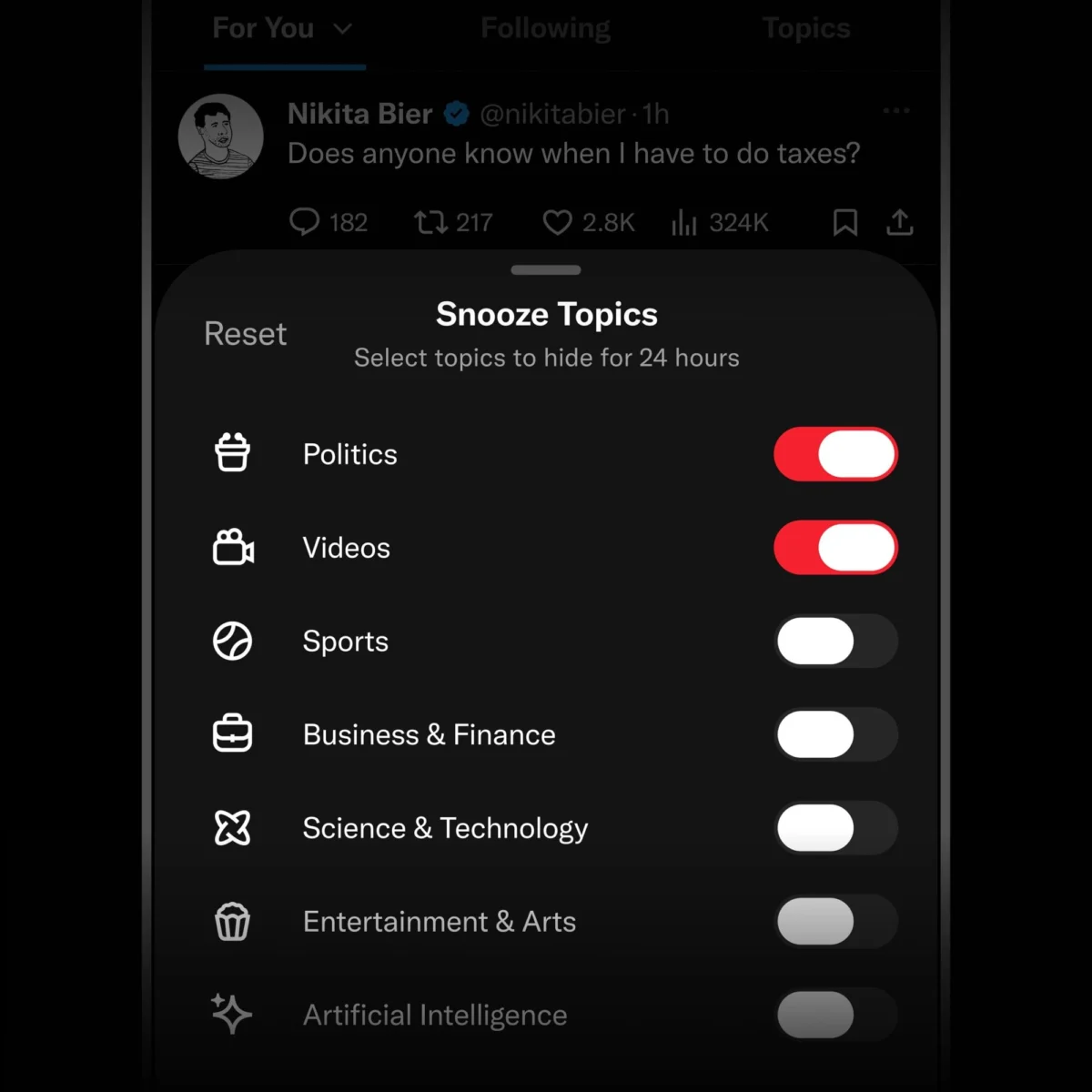
- Concurrent Releases: Alongside the Custom Timelines, X released a "Snooze Topics" feature, allowing users to temporarily mute specific themes, effectively giving them a two-pronged toolset for feed management: one for curating what they want to see, and one for filtering out what they don’t.
Supporting Data and Technical Implications
Early adopters and industry analysts have begun to stress-test the limits of the new feature. Podcaster Aakash Gupta, who has closely tracked the rollout, revealed that users are currently capped at creating up to 75 custom timelines. This is a massive expansion of utility, effectively allowing "power users" to segment their digital consumption into highly specific silos—ranging from professional industry updates to niche hobbyist content.
Data Harvesting and AI Training
Beyond the user-facing benefits, there is a significant data-driven incentive for X. Industry experts have noted that the creation of these specific timelines provides xAI with a goldmine of structured user intent data. By watching which users group certain topics together, the company can refine its large language models (LLMs) to better understand how humans categorize information. This feedback loop is likely to accelerate the maturity of the Grok model, potentially creating a "virtuous cycle" where the AI becomes more accurate the more the users utilize the feature.
Official Responses and User Interaction
The discourse surrounding the launch has been characterized by a blend of excitement, confusion, and direct communication between X’s product team and its user base.
Addressing the "Religion" Gap
One of the most notable interactions occurred when a user expressed frustration that they could not create a custom feed focused on Catholicism. Nikita Bier responded by clarifying that this was not a permanent omission but a quality-control measure. He noted that the feature was previously tested but pulled because the content curation did not meet the company’s internal "quality bar." He confirmed that the team is working to include religious categories within the next two weeks, highlighting the delicate balance between algorithmic accuracy and the sensitivity of the subject matter.

Troubleshooting and Feedback
Bier’s engagement also served as a help desk for users confused by the transition from "experimental" features to the official release. He explicitly instructed users to ensure their apps are updated, noting that some confusion stemmed from users interacting with older, legacy versions of the tool.
Implications for the Future of Social Media
The introduction of Custom Timelines suggests that the future of X lies in the "unbundling" of the social feed. By allowing users to carve their experience into smaller, manageable chunks, X is effectively positioning itself as a hub for multiple micro-communities.
The "Bleeding" Problem
However, the feature is not without its critics. Early feedback from users like @syssignals and @Hoxygo highlights a common hurdle for AI-based systems: "boundary bleeding." This occurs when the algorithm fails to strictly adhere to the topic parameters of a custom timeline, allowing content from the broader "For You" feed to intrude. For many, the ultimate test will be whether the AI can maintain the integrity of these silos over time. If the algorithm is too aggressive or too loose, the custom feeds may simply become replicas of the main feed, defeating the purpose of the feature.
Impact on Competitive Platforms
If X succeeds in perfecting this, it could pose a significant challenge to platforms that rely on static algorithmic feeds. By giving users the agency to build their own "curated reality," X is tapping into a demand for agency that has been largely ignored by the industry for a decade.
Expert Analysis: The Path Forward
The skepticism expressed by some users is understandable. As with any algorithmic update, the "growing pains" are inevitable. The current iteration of Custom Timelines is a "Version 1.0" product. Its success will depend on two factors: the frequency of updates and the transparency of the "Snooze" feature.
If users find that they can successfully suppress unwanted topics while simultaneously deepening their focus on specific subjects, the feature will likely become a cornerstone of the X experience. If, however, the AI remains prone to repetitive content or inaccurate categorization, it risks becoming another underutilized tool in the X interface.
For now, the platform is betting on the idea that users want to be the architects of their digital environments. As the feature expands to Android and web users, the sheer volume of data being fed into Grok will undoubtedly lead to rapid iterations. For the power user, this is a long-awaited homecoming to the days of manual, list-based control—but with the added, mysterious intelligence of a modern AI.
The coming weeks will be crucial. As X continues to refine the "quality bars" for sensitive topics and improves the "snooze" functionality, the broader user base will decide whether this is a transformative shift in content consumption or merely a novelty that provides temporary relief from the chaotic nature of the main timeline.
Summary of Key Takeaways:
- Customization: Users can create up to 75 personalized feeds.
- Intelligence: The feature is powered by Grok, focusing on semantic understanding rather than simple keyword matching.
- Accessibility: Currently limited to iOS Premium; Android and web versions are expected shortly.
- Control: The introduction of the "Snooze" feature allows for a cleaner, more intentional feed experience.
- Strategic Goal: To increase user retention by enabling granular, interest-based content discovery.
As we look toward the future, the success of these Custom Timelines will serve as a barometer for how much control users truly want over their algorithms, and whether AI can be the bridge between chaotic feeds and personalized, relevant digital spaces.
 Suro Senen
 Nana Wu
 Neng Nana
