

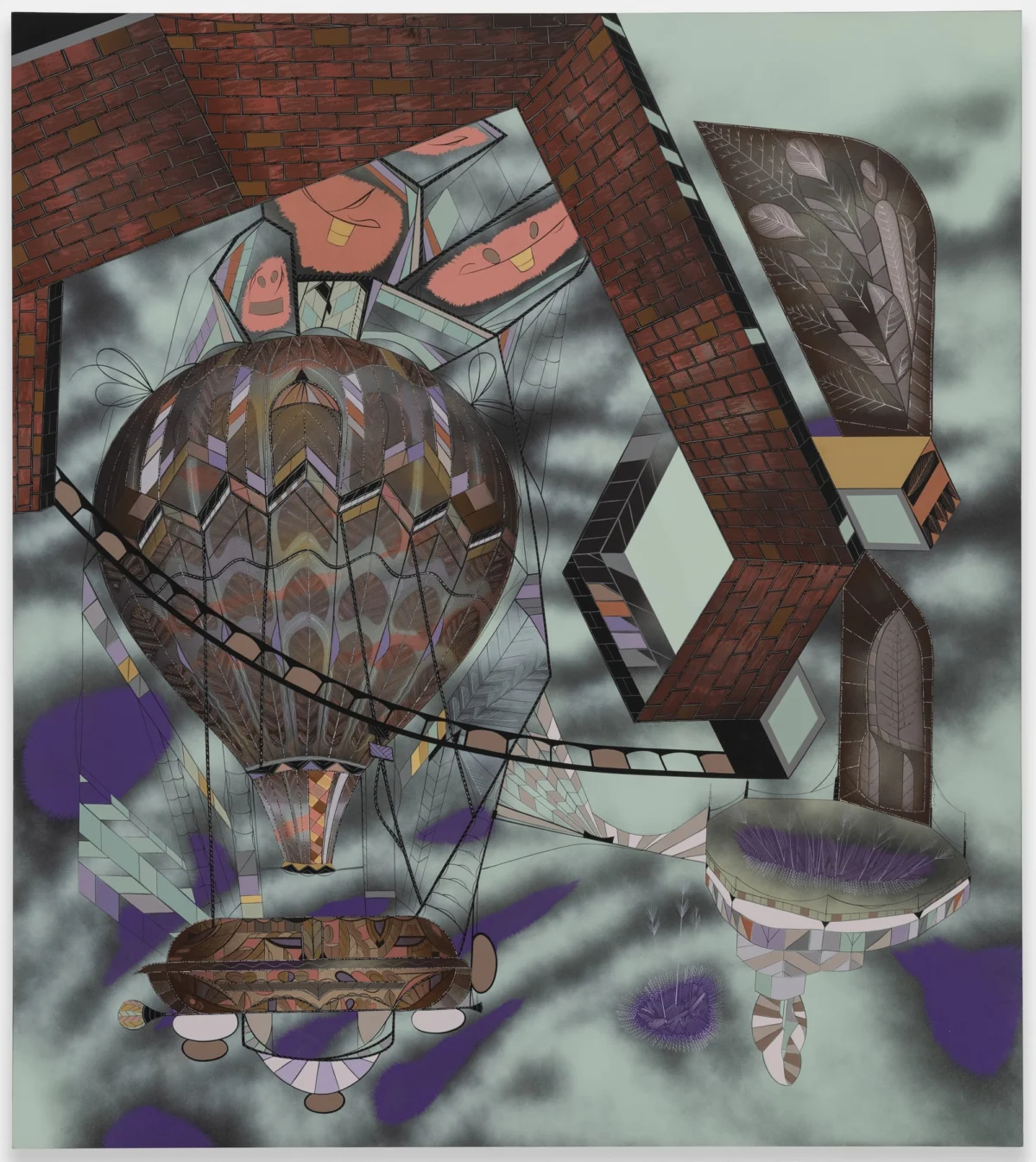
As part of Hyperallergic’s 2026 Pride Month series, we turn our gaze to the enduring influence of Lari Pittman, a titan of contemporary painting whose work has served as a vibrant, kaleidoscopic mirror to the American experience for over four decades. From his early explorations of identity during the AIDS crisis to his recent architectural critiques, Pittman has remained a singular voice—one that refuses to succumb to the flattening effects of digital acceleration.
The Architecture of Excess: A Career in Context
Lari Pittman’s practice is defined by a "cacophonous" visual language. His canvases are not merely paintings; they are densely layered, maximalist ecosystems that synthesize the high-brow with the kitsch. His work frequently juxtaposes typography, Victorian-era decoration, cartoon iconography, and architectural schematics to excavate the uncomfortable legacies of the Americas.
Chronology of a Visionary
- 1985: Pittman gains critical attention for works like "Plymouth Rock," which began his long-standing interrogation of American history and colonial identity.
- Early 1990s: The Needy series emerges. In the shadow of the burgeoning AIDS crisis, Pittman utilized his signature carnal, vibrant aesthetic to confront the trauma, grief, and political negligence defining that era.
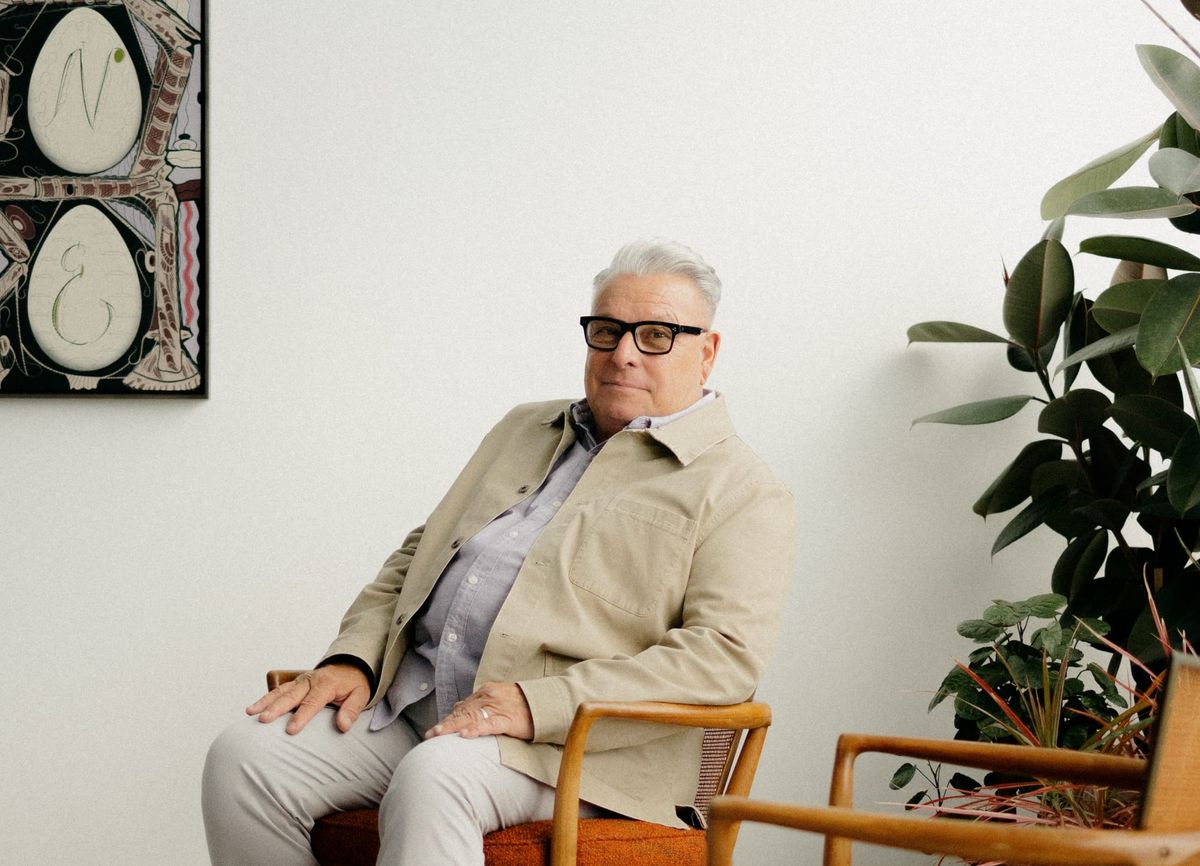
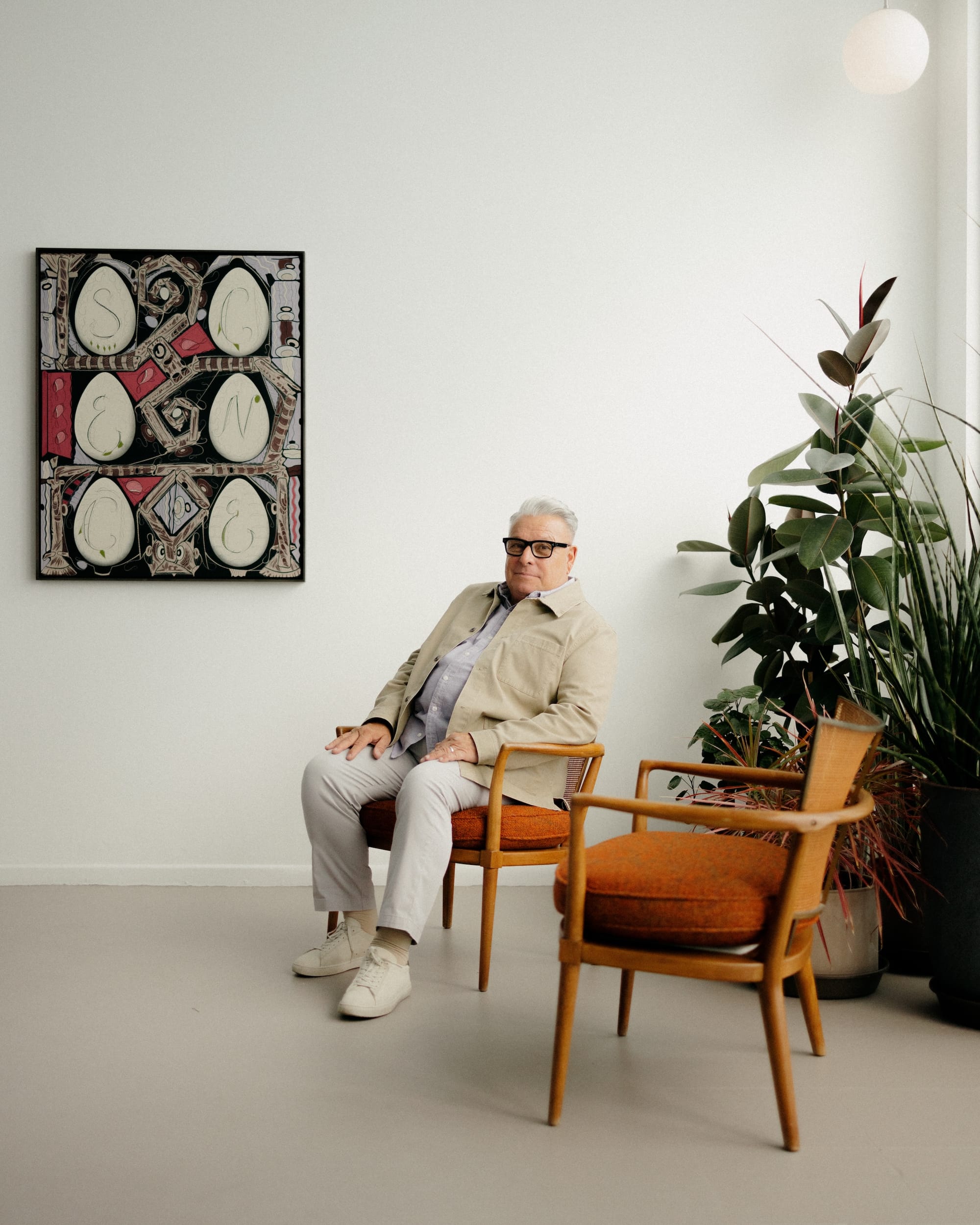
- 2022–2023: The Sparkling Cities With Egg Monuments series marks a shift toward critiquing civic phallocentrism, using ovoid forms to subvert the rigid, masculine geometry of urban planning.
- 2026: Pittman announces his upcoming exhibition, The Remedy of Analog Space and Time, at Lehmann Maupin in New York.
The Impetus for "The Remedy"
In our recent conversation, Pittman addressed his upcoming October exhibition at Lehmann Maupin, The Remedy of Analog Space and Time. He describes the collection not as a cure for the world’s ills, but as a temporary, topical salve for the pervasive malaise of modern life.
"I wouldn’t be brave enough to propose a cure," Pittman explains. Instead, he views his latest body of work as a deliberate pivot toward the "analog"—a resistance against the hyper-productive demands of late capitalism. For Pittman, the "analog" is synonymous with the forgotten virtues of boredom and irresolvability. In an age where every second is quantified, monetized, and digitized, Pittman’s work demands a slower, more ruminative engagement from the viewer.
Supporting Data: The Digital vs. The Analog
The significance of Pittman’s retreat into the analog cannot be overstated in the current cultural climate. As the art world increasingly grapples with the integration of AI and rapid digital reproduction, Pittman’s insistence on the solitary, manual process of painting functions as a form of protest.
- The Privilege of Pacing: Pittman acknowledges that the "analog space" he champions is often a byproduct of privilege. However, he argues that the potential for deep thought exists even in the margins. He notes that even a worker exhausted by the demands of a service-industry job can find radical transformation in the ten minutes before sleep—a brief, analog reprieve from the digital grind.
- The Studio as Sanctuary: Throughout the height of the COVID-19 pandemic, Pittman maintained his daily studio practice. He describes the process as intentionally "boring," though he clarifies that he uses the term without a negative connotation. It is the rhythmic, repetitive nature of manual creation that allows for the philosophical depth inherent in his work.
Official Perspectives: Navigating the Group Show
Pittman’s work occupies a liminal space in the contemporary art market. Recently featured in group exhibitions at Jessica Silverman in San Francisco and David Zwirner in Los Angeles, his paintings often stand out for their refusal to adhere to established "canonical" trends.
When asked how his work functions in such varied settings, Pittman admits to a vulnerability that is rare among established artists. "I’m aware that sometimes the work looks odd in those situations," he notes. He acknowledges that his art is neither "outsider" nor a direct descendant of minimalism or traditional abstraction. Instead, it sits in a category of its own—a sprawling, maximalist dialogue with history.
His honesty regarding his own insecurity serves as a cornerstone of his philosophy. "Usually, when I meet people, especially artists, if I don’t sense some insecurity about their work, it’s hard to be their friend," he says. This admission highlights a vital reality of the artistic process: that the drive to create is often fueled by the very fear that one’s work may not be fully understood.

The Implications of Queerness in Painting
Pittman’s contribution to the 2026 Pride Month series goes beyond the technical. His work serves as a living archive of queer resilience. By integrating the personal with the political, he has spent decades subverting the symbols of power—whether those symbols are institutional, religious, or architectural.
The implication of his current work is that queerness itself is a form of "analog time." It is a state of being that refuses to be "resolved" by the heteronormative or capitalistic structures that demand efficiency and binary clarity. By centering his practice on complexity and irresolvability, Pittman provides a blueprint for queer survival: the ability to exist within the "languorous, sequential chunks of time" that society tries to strip away.
Conclusion: Looking Toward October
As the art world prepares for the opening of The Remedy of Analog Space and Time this October, the focus remains on the longevity of Pittman’s career. He stands as a testament to the idea that an artist’s greatest strength is their consistency—the willingness to show up, day in and day out, to the "boring" work of painting.
In a world that is increasingly obsessed with the "next big thing," Lari Pittman’s commitment to the slow, physical act of painting is more than just a technique; it is a moral stance. Whether through his critiques of civic monuments or his exploration of the analog, he continues to push his viewers to find beauty in the unresolved, and perhaps, in that very irresolvability, to find a sense of peace.
As we celebrate the queer elders who have paved the way, Pittman remains a vital reminder: the most radical thing one can do is to slow down, pay attention, and make room for the complexity of the human experience.
 Basiran
 Muslim
 Evan Lee Salim
